Solo Travel in Europe for Beginners: Your First-Trip Guide
Planning your first solo trip to Europe? This practical guide covers budgets, destinations, transport & safety tips to help you finally book that trip.
I still remember sitting alone on a train with no real destination in mind. It was a regional line somewhere in Austria, the car was half empty, and I had an overstuffed backpack, a printed map that had already gotten wet, and this weird cocktail of excitement and low-key panic that I couldn't quite name. Nobody was waiting for me on the other end. That was the problem. And also, eventually, the whole point.
If you're thinking about doing your first solo trip to Europe, here's the most important thing I can tell you: the hardest part isn't the language barrier, the money, or figuring out the metro. It's actually committing to the idea before you buy the ticket. Once you book it, the trip kind of takes over from there.
A few things worth knowing upfront before we dig in:
- Europe's transportation infrastructure makes getting around solo surprisingly manageable
- A realistic daily budget ranges from around $40 to $100 USD depending on the country and your travel style
- The most beginner-friendly countries are Portugal, Czech Republic, and the Netherlands
- Travel insurance isn't optional. It's the first thing you should buy, before the flight
- Traveling solo doesn't mean traveling lonely. Connections with other travelers happen more naturally than you'd think
Are You Actually Planning, or Just Putting It Off?
A lot of people spend months "researching" their first solo Europe trip and never actually go. I've seen this pattern play out over and over. At some point, over-planning becomes a very sophisticated way of doing nothing.
Honest answer: you need to plan enough that you're not stranded in an airport at 2am with nowhere to sleep. That's genuinely it.
Here's what you actually need before you leave:
- A confirmed round-trip flight
- Accommodation booked for the first two or three nights only (just the first few)
- Active travel insurance that covers medical expenses and trip cancellations. If you're not sure which policy to get, look for one that has solid medical evacuation coverage and doesn't bury the good stuff in footnotes
- Cash for your first few days plus a card that doesn't charge foreign transaction fees. Wise and Revolut are the two I use consistently and both have saved me from those annoying 3% fees that add up fast
Everything else? You can figure it out as you go. I know that sounds terrifying, but it's actually true.
Where to Start If You've Never Traveled Solo in Europe
Not every European country is equally easy for first-timers. Some places are just more intuitive to navigate, more English-friendly, and have public transit you can figure out without a translator.
Portugal is my top pick for a first solo trip. Lisbon and Porto are manageable in size, English is spoken almost everywhere, and the hostel culture there is genuinely social in a way that makes meeting people effortless. Budget-wise, you can live comfortably on $60-70 USD a day including a hostel bed, local meals, and getting around the city.
Czech Republic, especially Prague, is another classic starting point. The city is compact, the metro is simple enough to figure out in about ten minutes, and there are so many solo travelers around that you never feel like the odd one out. Beer is absurdly cheap (under $2 USD at local spots), and decent hostel beds start around $15-20 USD a night.
The Netherlands works a little differently. Amsterdam is expensive, but the infrastructure is so efficient that getting lost or confused is genuinely rare. Everything is in English. And I mean everything, including the signs at the grocery store checkout.
What I wouldn't recommend for a first solo trip: France if you don't speak any French (Paris can feel unwelcoming when you're already feeling vulnerable), the Balkans in peak summer without reservations (accommodation fills up fast and options are limited), or trying to cover six countries in ten days. That's not solo travel. That's solo suffering.
How Much Does Solo Travel in Europe Actually Cost?
The honest answer is that it comes down to three decisions: where you sleep, how you get between cities, and whether you're eating at restaurants or grabbing food from markets and grocery stores.
Here's a realistic breakdown based on what I've actually spent:
| Region | Countries | Daily Budget (USD) |
|---|---|---|
| Western and Northern Europe | UK, Netherlands, Switzerland, Scandinavia | $90-130 |
| Central Europe | Germany, Austria, Czech Republic, Poland | $55-80 |
| Southern Europe | Portugal, Spain, Greece, the Balkans | $40-65 |
Western and Northern Europe is where your wallet takes the biggest hit. Hostel dorms in London run around $35-45 USD a night. Eating outside the tourist center helps, but a simple sit-down meal can still run $12-18 USD.
Central Europe is the sweet spot for value without feeling like you're roughing it. Berlin is still surprisingly affordable for a major capital. A solid hostel in a central neighborhood can cost $20-28 USD a night, and street food and local spots are genuinely cheap.
Southern Europe is where your money stretches furthest. Athens and Ljubljana are two cities where you can eat extremely well for around $10 USD, and the hostel scene is strong.
One thing a lot of first-timers don't think about: solo travel is more expensive per person than traveling with a partner, because you're not splitting room costs. The way to offset that is by staying in hostel dorms instead of private rooms. And no, hostels aren't just for broke 22-year-olds with questionable hygiene habits. European hostels in 2025 are often genuinely nicer than budget hotels, with better common areas, better vibes, and actual amenities.
Getting Around: The Part That Stresses People Out the Most (It Shouldn't)
Europe has one of the densest intercity transit networks in the world for its size. You've got high-speed trains, budget bus companies, low-cost airlines, and if you're feeling adventurous, the whole van life route (though that's a whole other rabbit hole).
For your first trip, I'd suggest deciding early on whether you're going to move primarily by train or by plane. They're different travel logics.
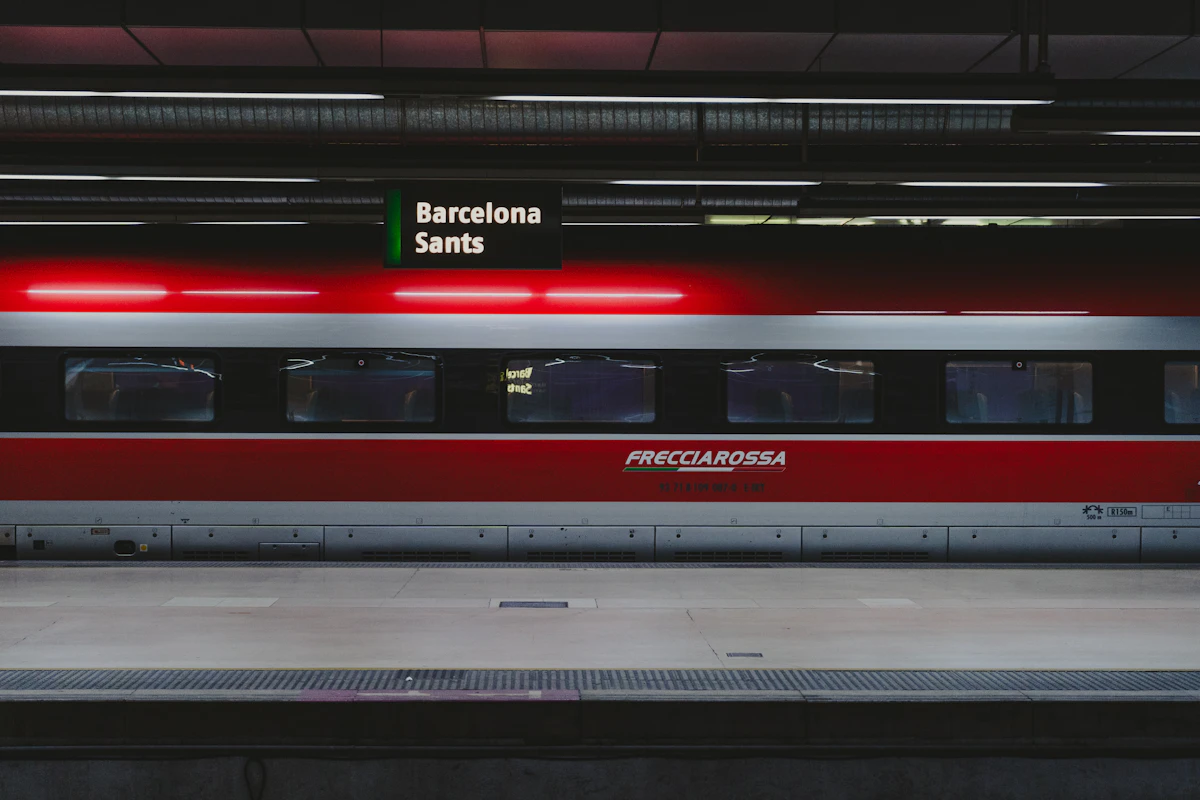
Trains are comfortable, generally punctual (Italy being its own chaotic exception), and drop you right in city centers. The Eurail pass is still a valid option for non-European travelers, though prices have crept up. It's worth running the math on whether a pass or individual tickets makes more sense for your specific route before you commit.
Budget airlines like Ryanair, Wizz Air, and easyJet can be significantly cheaper, but they come with traps. Carry-on baggage restrictions, seat selection fees, and airports that are located nowhere near the actual city. If you're flying Ryanair, read the fine print on their luggage policy before you book. I've watched perfectly smart people get hit with $50+ gate fees because their bag was two centimeters too wide.
A lesson I learned the hard way: if you're taking a late-night or early-morning flight and landing at an off-peak hour, always check if public transit is running when you land. Some European cities shut down their metro before midnight, and a taxi from the airport can cost as much as a night's accommodation.
Hostels: Yes, With Some Caveats
Hostels have a reputation problem that's only partially deserved.
The reality is that a well-chosen hostel is where you're going to do most of your socializing. The shared kitchen, the basement bar, the free walking tour that leaves Tuesday mornings at 10 from the front desk: these aren't accidents. They're deliberately designed to help solo travelers find each other. Some of the most interesting people I've met while traveling were people I sat next to at a hostel breakfast table.
That said, dorm rooms have their downsides. Noise chief among them. A solid pair of foam earplugs is genuinely one of the best $8-10 you can spend before a trip. I've had mine for two years and they've gotten me through dorms in Berlin, Bucharest, and an overnight train in Poland.
For picking a hostel, I use a combination of Hostelworld and Booking.com. I specifically sort by cleanliness score rather than the overall rating, and I read the negative reviews first. If all the bad reviews say the bathroom is small, I can live with that. If they mention stolen items or sketchy vibes, I move on.
Airbnb can work for solo travelers in cities where the hostel scene is thin, but you give up the social factor, and sometimes that matters more than you realize until you're sitting alone in a studio apartment on night three.
Safety: How Much Should You Actually Worry?
Europe is one of the safest regions in the world for solo travel, including for solo women, though I'll acknowledge my perspective there has limits.
The real risks aren't the dramatic ones. They're:
- Pickpockets in tourist-heavy areas of cities like Barcelona, Rome, and Prague. The fix is boring but effective: crossbody bag worn in front, nothing in your back pockets
- Unlicensed taxis without meters. Uber and Bolt both work across most of Europe and show you the price before you get in
- Losing your documents. Keep a digital photo of your passport stored in the cloud and a physical copy tucked separately from the original in your bag
- Getting stuck without data. A local SIM card or an international eSIM (Airalo is the one I use most) will save you from the very specific panic of being lost with no signal
Quick story: in Budapest, I paid 20 euros for what should have been a 10-minute, 5-euro cab ride because I didn't check the price upfront. The taxi technically had a meter. It just seemed to run at a rate that defied physics. I learned. It took a minute, but I learned.
Your First Day Alone in a New City
The first day of solo travel has a specific texture to it. You drop your bag, walk outside, and suddenly you're standing on a street in a European city with no one waiting for you and nothing you have to do. For some people, that's pure freedom. For others, it's the moment the existential "okay, now what?" panic sets in.
My advice for that moment: walk. No map, no itinerary, no agenda. Pick a direction that looks interesting and walk for 45 minutes. Go into the first coffee shop that smells good. Order whatever the person next to you is having. Then pull out the map.
This sounds like something off a motivational poster, but it actually works. It breaks the ice with the city before you switch into full tourist mode. And somewhere during that walk, almost every time, the first-day anxiety quietly shifts into something else.
What If You Don't Actually Like Being Alone?
This is the question people ask me most often, and it's the one that travel articles tend to dodge.
Uncomfortable truth: solo travel doesn't guarantee you'll enjoy solitude. There are moments, especially at dinner or on rainy afternoons, where the absence of company genuinely gets heavy. I'm not going to pretend otherwise.
But solo travel in Europe specifically has something going for it that other kinds of solo travel don't always have: social infrastructure is baked into the experience. Hostels are engineered for this. Free walking tours, which exist in almost every major European city, are one of the easiest ways to meet people and see a city at the same time. Apps like Meetup and Couchsurfing have active traveler communities in cities like Berlin, Amsterdam, and Madrid.
Also worth knowing: being comfortable alone is a skill that you build. The first night eating solo at a restaurant feels awkward. By the fifth night, you're reading a book at the table and grateful you don't have to negotiate the menu with anyone.
If you want to stretch your daily budget further so you can stay longer, it's worth looking into strategies that go beyond the usual "cook your own meals" advice, things like shoulder season pricing, city-specific discount cards, and knowing which transportation routes are actually cheaper by bus than by train.
One last practical note that people consistently forget: if you're traveling to or from the UK, pack a plug adapter. British outlets use a completely different three-prong system that won't work anywhere on the continent, and the reverse is also true. A simple universal travel adapter costs about $10-15 on Amazon and eliminates the very unpleasant experience of arriving at your hostel and realizing your phone is at 4% with no way to charge it.
Solo travel in Europe for the first time doesn't require extraordinary courage. It requires a purchased ticket and three nights booked somewhere. Everything else gets figured out along the way, sometimes gracefully, sometimes not, but almost always better than whatever your brain was predicting before you left.
What I can't promise you is that every moment is going to make sense while you're in it. Sometimes you end up sitting in a square in some city you didn't even expect to like that much, and you don't quite know what to do with the feeling. I've been doing this for ten years and I still don't have that part fully sorted. Honestly, I think that might be the point.
Compartir artículo