Madrid TV Locations: Money Heist & Valeria Travel Guide
Explore Madrid through the lens of Money Heist and Valeria. Discover real filming locations, costs, and tips for the ultimate binge-worthy trip.
A friend of mine told me this story over coffee a few months back: he went to Madrid for the first time with one goal, the Prado Museum, and somehow ended up wandering around for two hours trying to find a back alley he thought he recognized from a Netflix show. He never found it. He also wasn't entirely sure what he was looking for. But Madrid grabbed him anyway, which is exactly what that city does.
So when I heard that shows like Money Heist (La Casa de Papel) and Valeria have basically become informal tourist guides to Madrid, I wasn't surprised at all. I've been watching this shift happen for years. People don't travel just to check off monuments anymore. They travel to step inside a story. And Madrid, with its mix of ornate old buildings, neighborhood markets, tungsten-lit bars, and plazas where absolutely anything can happen, is basically a perfect film set waiting to be explored.
What These Two Shows Have in Common (And Why It Matters for Your Trip)
Money Heist and Valeria are wildly different shows. One is a high-stakes heist thriller with Dalí masks, hostages, and enough tension to make your jaw hurt. The other is a warm, funny dramedy about friendship, writing, and figuring out your thirties in a big city. But both of them do something that's surprisingly rare: they use Madrid as a real location, not just a backdrop.
This isn't postcard Madrid. It's the Madrid of neighborhood bars that have been there for fifty years, markets that smell like spices and grilled food, cobblestone streets in the old center that will absolutely twist your ankle if you're not paying attention. That's exactly what makes these locations so worth visiting. They're real places. You can walk in, sit down, and order something.
Here are the main spots that tie both shows together as a travel route:
- The Barrio de las Letras and Lavapiés neighborhoods, which form the heart of Valeria
- The Atocha area and the historic center, used for exterior shots in Money Heist
- The Mercado de San Miguel and surrounding streets, which show up in both productions
- Retiro Park, featured in multiple Valeria episodes as a key conversation setting between characters
Four locations. But each one is really an entire neighborhood. You could spend four full days in Madrid without repeating an area and without getting bored for a single afternoon.
Money Heist in Madrid: Where the Real Filming Locations Are
Fair warning: Money Heist plays a little bit of a trick on you. A lot of the interior scenes set inside the Royal Mint and the Bank of Spain were actually filmed on studio sets. But the exteriors are completely real, and they're absolutely worth seeing in person.
The Bank of Spain building at Plaza de Cibeles is probably the most iconic stop on any Money Heist tour. Stand on the sidewalk across the street, look up at that facade, and you'll immediately understand why the writers chose it. It looks impenetrable. There's a weight to it, the kind of building that feels like it's guarding something it definitely doesn't want you touching. The Bank of Spain actually opens part of its facilities to the public through free guided tours, though you'll want to check their official website for availability before you go. Spots fill up fast, especially in peak season.
Gran Via shows up in several chase sequences and general city atmosphere shots. It's the most cinematic street in Madrid: wide, packed with neon signs, and humming with that specific energy of a city that never fully stops. You can walk it at any time of day, but there's something about Gran Via at night that hits different.
Here's one location that almost nobody talks about: the exterior of the Ministry of Finance building on Calle Alcalá, which appears in the background of several shots during the second season. It's not marked on any tourist map, but if you've trained your eye to catch background details while watching the show, you'll recognize it immediately when you walk past.
I'll be honest, I'm simplifying things a little by calling these "locations" as if they're fixed points on a treasure map. The truth is that Money Heist uses Madrid more as an atmosphere than as a precise set of coordinates. The Madrid you see in the show is stylized, almost mythological. But that doesn't make the walk less interesting. If anything, it makes it better.
The Madrid of Valeria: Neighborhoods You Can Actually Live Like a Character
Valeria is a completely different experience. Here, Madrid isn't just atmosphere. It's a full-on main character with its own personality and sense of humor. The show, based on a book series by Spanish author Elísabet Benavent (worth reading if you want extra context, but totally skippable if you don't), takes place almost entirely in the neighborhoods of Malasaña, Chueca, and the area around Retiro Park.
The Mercado de Motores, held at the old Delicias Railway Museum, appears in specific episodes and is honestly worth the trip even if you've never seen a single frame of the show. It happens on the second weekend of every month and brings together vintage flea market stalls, food from what feels like every culture on earth, and that particular bohemian Madrid vibe that the series captures really well.
Fuencarral Street and the surrounding blocks in Malasaña are core Valeria territory. The specific cafes and terraces from the show aren't always labeled or marked, but if you walk through that neighborhood on a Saturday afternoon, you will immediately recognize the visual world of the series. The cafes with mismatched chairs, the tiny independent bookstores, people sitting on steps with paperbacks. All of it is real and all of it is still there.
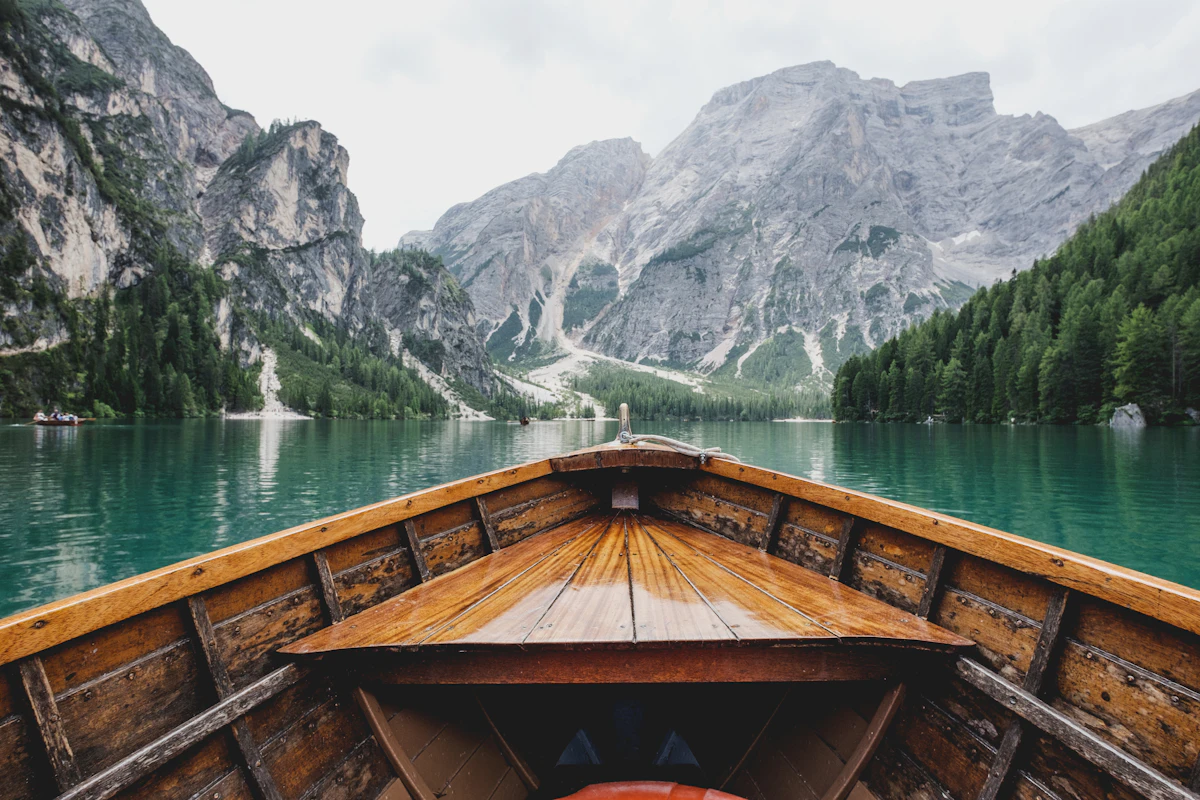
Retiro Park shows up in some of the show's most important conversation scenes. If you're a fan, head toward the big lake in the center of the park, which is where several of those sequences were filmed. You can rent a rowboat for around $6 to $7 for half an hour, and yes, it is absolutely worth it.
(Let me take a quick detour here: Retiro Park is one of those places that sounds exaggerated when you describe it to someone who hasn't been. "It's this massive park right in the center of Madrid with a lake, a crystal palace, sculptures everywhere, live musicians, people doing tai chi next to arguing couples next to tourists taking selfies." It sounds like you're overselling it. You're not. That's just what it is.)
How Much Does This Route Cost? A Real Budget Breakdown for 2026
Here's the good news: this is one of the cheapest travel routes you can do in a major European capital. Getting around Madrid and seeing its filming locations costs almost nothing.
Public transit is your best friend here. A 10-trip metro or bus card runs about $13 to $14 USD (roughly 12.20 euros, Zone A, which covers the entire city center). If you're staying three days or more, a monthly transit pass is around $58 USD (54 euros), but for a short visit the 10-trip card is plenty. The Madrid Regional Transport Consortium website has all the current fare info.
For food, Madrid has a secret weapon that most American travelers don't know about going in: the menú del día. Even in touristy areas near the city center, you can find a full three-course lunch with bread and a drink included for somewhere between $13 and $16 USD. In neighborhoods like Lavapiés or Carabanchel, it drops to $10 or even less. That kind of pricing is almost impossible to find in any other European capital.
Here's a rough daily budget breakdown:
| Expense | Budget Option | Mid-Range |
|---|---|---|
| Accommodation (per night) | $27-$43 (hostel dorm) | $65-$90 (private room) |
| Food (3 meals) | $20-$28 | $40-$55 |
| Local transit | $3-$4 | $3-$4 |
| Attractions and entry fees | $0-$10 | $10-$25 |
| Daily total | $50-$85 | $118-$174 |
According to Booking.com data from 2025, the average hotel price in Madrid for a standard double room in mid-season runs around $97 per night, which is genuinely reasonable for a European capital. Budget travelers doing this route on hostels and menú del día lunches can realistically manage on $65 to $80 per day, including everything.
Should You Book a Guided TV Tour in Madrid?
The honest answer is: it depends on what you want out of the experience.
Several tour operators run film and TV location tours of Madrid, with guides who know the production details and neighborhood context really well. These run between $16 and $27 per person, last about two hours, and are a solid option if you're arriving without much preparation or if you want the social experience of exploring with other fans of the same shows.
The alternative is doing it yourself with a downloaded map and some basic research, and for these two shows specifically, the DIY approach works just as well. The Valeria locations are entire neighborhoods meant to be wandered slowly, not specific GPS coordinates you need to track down. The Money Heist exteriors are so centrally located that you'll stumble across half of them just walking around anyway.
One thing I'd recommend regardless of which approach you choose: download the Visit Madrid tourism app before you leave home. It has offline maps and solid information about accessibility and public space hours, which is genuinely useful when you're trying to figure out if somewhere is open on a Monday morning.
If you're flying in from the US or Canada, double-check your plug situation. Spain uses Type F outlets (the round two-pin style), which means American plugs won't fit without an adapter. I always travel with a universal adapter that has USB-A and USB-C ports built in, because otherwise you're fighting your hostel roommates for the one compatible outlet in the room.
TV Tourism Is Reshaping How People Experience Cities
I'll be honest with myself here: half the time I'm following filming locations, I'm not totally sure if I'm doing real tourism or just finding excuses to walk through neighborhoods I already wanted to explore. But the point is that it works. It pulls you toward corners of a city you probably wouldn't have found by following a conventional guidebook.
TV tourism in Madrid isn't a new thing. Before Money Heist and Valeria, a period drama called Gran Hotel was already pulling visitors to seek out the palatial locations used in the show. What's changed is the scale. Netflix's global distribution multiplies the effect by an order of magnitude. People in the US, Mexico, Colombia, Argentina, and Australia who had never seriously considered Madrid as a travel destination started putting it on their lists after binge-watching a series on a weekend.
And that comes with some complications worth acknowledging. Some bars and cafes in Malasaña that appear in Valeria have seen an uptick in visitors who show up specifically to take a photo and then leave without ordering anything. The neighborhood handles it with varying degrees of patience. If you visit a place because of its connection to a show, sit down. Order a coffee. Treat it like the actual business it is, not like a film set prop.
When to Visit Madrid for This Route
Spring, roughly April through early June, is probably the sweet spot. The weather is stable, the terraces are open, and you're not dealing with the August crush when Madrid fills with tourists while half the locals flee to the coast. Temperatures in that range stay between about 64 and 75 degrees Fahrenheit, which is ideal for spending full days walking between neighborhoods.
September and October are also excellent, with noticeably fewer tourists than summer and a city energy that feels like it's recalibrating after the August slowdown.
If you have any flexibility at all, avoid July and August. Madrid in July is not joking around with temperatures, highs above 100 degrees Fahrenheit are genuinely common, and while the city still functions, the experience of walking through Lavapiés or Malasaña under that sun is not quite what you pictured while watching the show from your couch with the AC running.
Here's a quick seasonal comparison:
| Season | Temps (F) | Crowds | Terrace Weather | Cost |
|---|---|---|---|---|
| Spring (Apr-Jun) | 64-75 | Moderate | Perfect | Mid-range |
| Summer (Jul-Aug) | 85-104 | Very high | Brutal heat | Higher |
| Fall (Sep-Oct) | 60-72 | Low-moderate | Great | Often lower |
| Winter (Nov-Mar) | 40-55 | Low | Cold but cozy | Lowest |
Madrid Is Way More Than the Shows, Even If the Shows Are What Got You There
The real risk of building your entire trip around a filming location route is missing what Madrid has going on outside the script. The Rastro flea market on Sunday mornings, which is complete chaos but the good kind. La Tabacalera in Lavapiés, a self-managed cultural space that never makes it into tourist brochures but is genuinely fascinating. The Dehesa de la Villa park in the northwest, where locals go specifically because tourists haven't found it yet.
Madrid is that rare city that feels familiar before you arrive, because you've seen its streets in too many movies and shows. And then you get there and realize you didn't actually know it at all.
There's something I keep coming back to when I think about this kind of travel: the question of whether TV tourism is making people travel more, or just making them travel differently. I genuinely don't know the answer. But I'm glad that something, whether it's a Netflix series or a recommendation from a friend or just a random algorithm, is getting more people to walk into that bar in Malasaña and order a beer. Even if the reason they walked in was because they saw it on a screen first.
That's a perfectly fine way to fall in love with a city.
Compartir artículo