Murcia to Barcelona by Train: Schedules, Prices & Tips 2026
Planning a Murcia to Barcelona train trip in 2026? Discover real prices, schedules, transfer tips, and how to score tickets from $20. Read before you book!
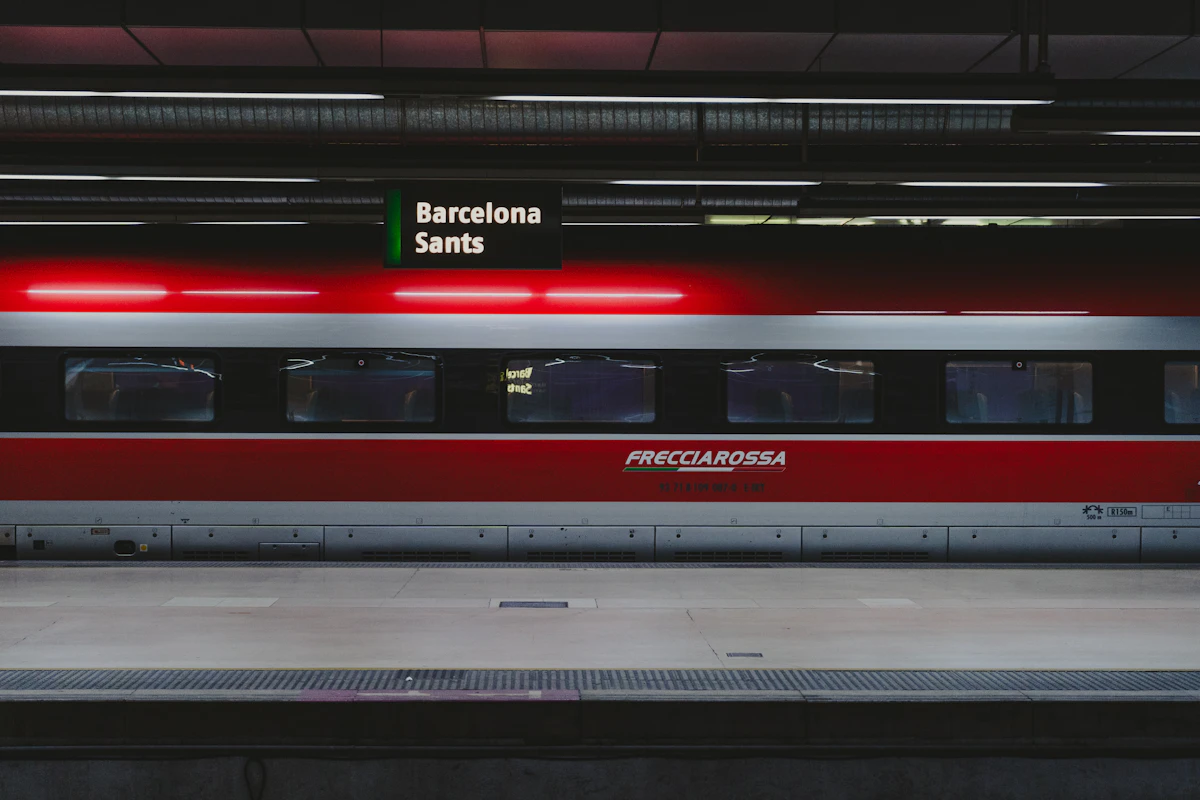
A buddy of mine was convinced that taking the bus from Murcia to Barcelona was the only smart move because "the train is way too expensive." He'd been telling himself that for years without ever actually looking it up. So I pulled out my phone, opened Renfe, and showed him a ticket for around $20. He just stared at the screen for a second. That face said everything.
The Murcia to Barcelona train is way more affordable than most people think, but there are some things you need to know before you book. Prices can range from roughly $20 on a promotional fare all the way past $100 if you're buying last minute without doing any research. Here's the quick version of what you're getting into:
- There are two main departure points in the Murcia region, and the route depends on where you start
- The cheapest trains tend to run early morning or in the evening
- Renfe's Promo tickets sell out fast and require advance planning
- Total travel time varies a lot depending on which train combination you grab
How Long Does the Murcia to Barcelona Train Actually Take?
This is the first thing everyone wants to know, and the honest answer is: it depends. Like, really depends.
If you're leaving from Murcia city center (Murcia del Carmen station) or from Cartagena, the most common route goes through Alicante or Valencia, and the total trip can run anywhere from 4.5 to over 6 hours depending on the service. There's no single direct high-speed train running the full Murcia-Barcelona stretch in one go, so don't expect a Madrid-to-Barcelona style ride where you're sipping coffee and suddenly you're at your destination in under three hours.
In 2026, the typical setup is to catch a regional train or Intercity service from Murcia up to Valencia or Alicante, then transfer to a high-speed AVE or Euromed train into Barcelona Sants. Renfe sells these as combined tickets (they call it "Combinado Cercanías+Larga Distancia"), which makes logistics a lot easier even though you do have to change trains at some point.
Here's a rough breakdown of travel times you can realistically expect:
- Murcia del Carmen to Barcelona Sants with a transfer in Alicante or Valencia: roughly 4h45 to 6h30
- Direct Intercity or Alvia services with a combined ticket: around 5 hours on a good day
- If you miss your connection due to a delay: that's a whole separate conversation (more on that below)
Compare that to the bus, which takes 7 to 9 hours. Suddenly paying a little more for the train starts making a lot of sense.
Real Prices in 2026: What Nobody Tells You About the "Cheap Ticket"
Here's how the pricing game actually works, and it's worth understanding before you start searching.
Renfe uses dynamic pricing, just like airlines do. The exact same route can cost $20 or $100 depending on when you buy, what day you're traveling, and how many seats are left. It's standard yield management, nothing mysterious about it.
The lowest prices I've seen in 2026 for the full Murcia-Barcelona journey sit around $20 to $26 on a Promo fare. These tickets come with real restrictions: no changes, no refunds (or a steep penalty if you try), and you need to buy them well in advance, usually 30 to 60 days out.
The Promo+ fare runs a bit higher, somewhere between $37 and $58, but it does allow changes. And the Flexible fare, which can hit $85 to $125, lets you change or cancel without fees.
Which one is actually worth it? Honestly, if your travel dates are locked in, Promo makes total sense. If there's even a small chance your plans shift, the price difference between Promo and Promo+ might be worth it for the peace of mind. I've talked myself out of flexibility upgrades before and regretted it exactly once, which was enough.
My actual move for this route: set up fare alerts on Renfe's official site and also check Trainline, which aggregates schedules and sometimes surfaces combinations that aren't as easy to find on Renfe's own interface. Trainline might add a small service fee, but it's useful for seeing the full picture at a glance.
The Transfer Situation: Not a Big Deal, But Don't Ignore It
When you book a combined Renfe ticket and your first train runs late, Renfe is technically required to find you an alternative for the second leg. That's the official policy. In practice, I've heard stories where that process takes longer than you'd want, and you end up waiting in Valencia or Alicante longer than planned.
My honest recommendation: if your itinerary includes a transfer, aim for at least 30 to 40 minutes of buffer time between trains. That might sound like a lot, but regional trains out of Murcia heading north are not always perfectly on time, and showing up in Valencia with 8 minutes to catch your AVE is basically gambling.
There's also the option of booking the two legs as completely separate reservations. Sometimes this actually comes out cheaper (search Murcia to Valencia and Valencia to Barcelona independently). The catch: if the first train is delayed, the second ticket is entirely your problem. No Renfe protection, no guaranteed rebooking. Go in with eyes open on that one.
Quick story that actually happened to me: I was once trying to catch a connecting service in Valencia after a regional train from the south showed up 45 minutes late. I missed the connection, stood in the station trying to figure out my next move, and spent way more time staring at departure boards than I ever planned. I eventually got where I was going, but the margin I'd left myself was way too thin. The point is, buffer time is not wasted time. It's insurance.
Most Popular Departure Times in 2026
The busiest departure windows from Murcia del Carmen toward Barcelona tend to cluster in the early morning (roughly 6:30 to 9:00 AM) and in the late afternoon to early evening (around 4:00 to 7:30 PM). Early morning trains are typically the cheapest, and also the most packed during peak travel periods.
For the return trip, Barcelona Sants has southbound departures on a similar schedule. Before you book anything, I'd strongly suggest opening the Renfe app or website, dropping in your travel dates, and filtering for options labeled "Combinado." Those are the connections Renfe officially guarantees as coordinated, meaning if the first leg is late, you have some protection on the second.
If you're using the Murcia-to-Barcelona train as the first leg of a bigger European adventure, it's worth asking whether an Interrail pass covers this stretch. For purely domestic travel within Spain, buying directly through Renfe almost always comes out cheaper than using a pass, but it depends on how many other countries you're adding to the trip.
Train vs. Bus vs. Plane: The Honest Comparison
No romanticizing here. Let's just look at the actual tradeoffs.
Bus: Alsa and FlixBus both run Murcia to Barcelona routes. Tickets start around $16 to $26, but you're looking at 7 to 9 hours of travel time. If you're on a super tight budget and traveling overnight, it can work. Personally, I cannot sleep on a bus to save my life, but plenty of people can.
Plane: Vueling and Ryanair fly out of Murcia-Corvera Airport into Barcelona. Fares can be aggressively low when there's a sale, sometimes under $20. But Corvera Airport sits a solid 45 minutes outside Murcia city, and you need to factor in getting there early, the airport experience itself, the flight, and then ground transportation from Barcelona El Prat into the city center. Add all of that up, and you're looking at 4 hours minimum door to door on a good day. The train to Barcelona Sants, which drops you directly into the metro system, starts looking pretty competitive once you run those real numbers.
Train: More comfortable than the bus, no question. And here's something that surprises a lot of people: high-speed trains in Spain statistically have better on-time rates than domestic flights. The Murcia-Barcelona train isn't pure AVE the whole way, so that edge is a bit softer here, but you still land in the heart of Barcelona without the airport circus.
Here's the table version for easy comparison:
| Option | Price Range | Total Travel Time | Arrives At |
|---|---|---|---|
| Train (Renfe combined) | $20 to $105 | 4h45 to 6h30 | Barcelona Sants (city center) |
| Bus (Alsa/FlixBus) | $16 to $26 | 7 to 9 hours | Barcelona Nord Bus Station |
| Plane (Ryanair/Vueling) | $15 to $80+ | 4+ hours door to door | El Prat Airport (outside city) |
For this specific route, the plane doesn't automatically win even if the base fare is cheaper. Once you honestly count the full door-to-door time and the stress factor, the train holds its own.
Where to Book and How to Avoid Overpaying
Renfe's website is the official source and usually has the lowest prices for domestic Spanish trains. The search interface for combined tickets can be a little clunky at times, so if you're not finding what you need, Trainline and Omio are both solid alternatives for visualizing transfers and comparing options. They may add a small booking fee, but the cleaner interface is sometimes worth it.
Tips for locking in the best price:
- Book 30 to 60 days out when possible
- Search midweek travel days, Tuesdays and Wednesdays tend to have lower demand
- Avoid Friday afternoons and Sunday evenings, those are almost always the most expensive
- Check the Renfe app's deals section, it updates regularly with limited Promo fares
- If you have any eligible discount cards or loyalty status with Renfe, always apply them at checkout
My personal rule: the moment I decide on a trip, I check prices that same day, even if travel is two months away. If a Promo fare is available and my dates are firm, I buy immediately. I've watched the same train go from $23 to $63 in under a week. It's not worth waiting to see if prices drop, because with Renfe's dynamic system, they usually don't.
Watch Which Station You're Actually Booking
In Murcia, the two main departure points for this route are Murcia del Carmen (in the city) and Cartagena. If you're starting from Cartagena, Renfe includes that first leg as part of the combined ticket, so it's not a separate purchase.
On the Barcelona end, you'll almost certainly arrive at Barcelona Sants, which is honestly the best possible station to land at. It connects directly to the metro, the commuter rail network, and the airport bus. You couldn't ask for a more central arrival point.
One thing I've seen trip people up when booking online: Renfe sometimes autofills the origin station in a way that doesn't match where you actually are. If you're searching from a Cartagena address but Renfe defaults to Murcia del Carmen, your ticket won't match your actual starting point. Double-check the origin field before you hit pay. It sounds like an obvious thing to catch, but it happens more than you'd think.
Packing for the Trip
The Murcia to Barcelona train doesn't require any special gear, but if you're combining this with more travel, keeping your bag light makes everything easier. Unlike flying, there are no liquid restrictions or luggage size rules on the train, so you have real flexibility there.
That said, if any part of your broader trip involves a budget airline, making sure your bag fits carry-on dimensions saves you real money. A 40x20x30 cm backpack that meets Ryanair and Vueling specs works perfectly on the train and doubles as your carry-on for any flight legs, which is exactly the kind of flexibility that matters when you're mixing transport modes.
The bottom line on the Murcia to Barcelona train: it's not the fastest rail journey in Spain, and the infrastructure between the two cities isn't fully high-speed the whole way. But it works, it's reasonably priced if you plan ahead, and it drops you in the middle of Barcelona without any of the headaches that come with flying. My friend from the cafe ended up booking his trip for the following month. Whether he paid $20 or more, he didn't say. But he stopped calling the train expensive, and that's a start.
Compartir artículo