Lille, France in 2026: The Reinvented City Worth Your Time
Discover why Lille, France is one of Europe's most underrated city breaks in 2026. Real costs, local tips, and honest advice for first-time visitors.
A friend of mine said something over coffee a couple years back that stuck with me: "Lille is that city people mention as an afterthought when they're talking about the Eurostar." And honestly? I didn't push back, because I didn't have much to say either. I'd passed through its train station twice without a second thought, treating it like a layover airport with a French accent. That was a mistake I'm genuinely embarrassed about now.
Lille is the kind of city that reinvents itself quietly, without asking anyone for permission. For decades it was the industrial heartbeat of northern France: coal, textiles, steel foundries. Then, like so many European cities in the 1980s, the whole thing collapsed. But instead of sitting in the wreckage and feeling sorry for itself, Lille did something different. Today it has a food scene that will genuinely surprise you, Flemish architecture you'd never expect to find in France, and a university energy that keeps the whole place alive without turning it into a tourist theme park.
Lille in 2026: What Kind of City Are You Actually Walking Into
Let's get something straight from the start: Lille is technically French, but it feels wonderfully strange in the best possible way. Northern France has a completely different identity from the rest of the country. Red brick facades, covered markets, craft beers served in oversized glasses... it all has way more in common with Belgium and the Netherlands than with Paris. The city sits just 24 miles from the Belgian border, and you feel that on every street corner.
Before you arrive, it helps to understand the city's basic geography:
- Vieux-Lille is the historic old town, packed with restaurants, bars, independent shops, and a main square (the Grand'Place) that genuinely stops you in your tracks the first time you see it. This is also where you'll find the Vieille Bourse and the Palais des Beaux-Arts, one of the largest fine arts museums in France outside of Paris.
- Euralille is the modern district built in the 1990s around the high-speed rail station. It has that whole corporate sci-fi city vibe that does absolutely nothing for me personally, but it serves its logistical purpose just fine.
Then there are the neighborhoods the basic guidebooks skip entirely: Wazemmes, with its Sunday market and vinyl record bars, and Moulins, which is deep in the middle of a transformation and where the city's creative scene is quietly taking root. That reinvention story Lille keeps talking about? These are the neighborhoods where it actually has a face.
What Does It Cost to Travel to Lille? A Real 2026 Budget Breakdown
This is where Lille starts pulling ahead of other northern European destinations. It's not dirt cheap, but compared to Paris, Amsterdam, or Brussels, your money goes noticeably further.
Accommodation: A decent hostel dorm bed runs about $25 to $35 per night. A private room in a well-located 3-star hotel in Vieux-Lille will cost you between $80 and $120 depending on the season. Based on Booking.com data from early 2026, prices spike hard during La Braderie (the first weekend of September) and on matchdays at Stade Pierre Mauroy, home of LOSC Lille.
Food: I'll get into the food scene properly in its own section, but here are the numbers upfront. A no-frills lunch at a local brasserie with a drink comes in around $13 to $20. A beer at a neighborhood bar is about $3 to $4. Eating at the Wazemmes market on a Sunday, you can eat extremely well for $9 to $11.
Getting around: Lille's metro is fully automated (it was actually a pioneer in driverless metro technology back in the late 1980s, which is a fun fact to drop at dinner). A single ticket costs around $1.90. If you're planning to move around a lot, a 10-ride carnet is the better value.
Attractions: The Palais des Beaux-Arts charges around $8 to $9 for general admission, but it's free on the first Sunday of the month, which is genuinely one of the best travel hacks in the city. The Vieille Bourse is free. Many of the best things to do in Lille cost nothing at all.
A smart traveler can get by very comfortably on $65 to $85 per day including a hostel bed, local food, and transit. With a private room and a proper sit-down dinner or two, budget $110 to $140 per day.
To be fair, that range shifts quite a bit depending on whether you're traveling in peak season and whether you have the discipline to avoid the tourist-trap restaurants clustered around the historic center. Those places will charge you more for a worse meal. The point is: Lille is accessible without being painful on your wallet.
Getting There: Why the Train Changes Everything
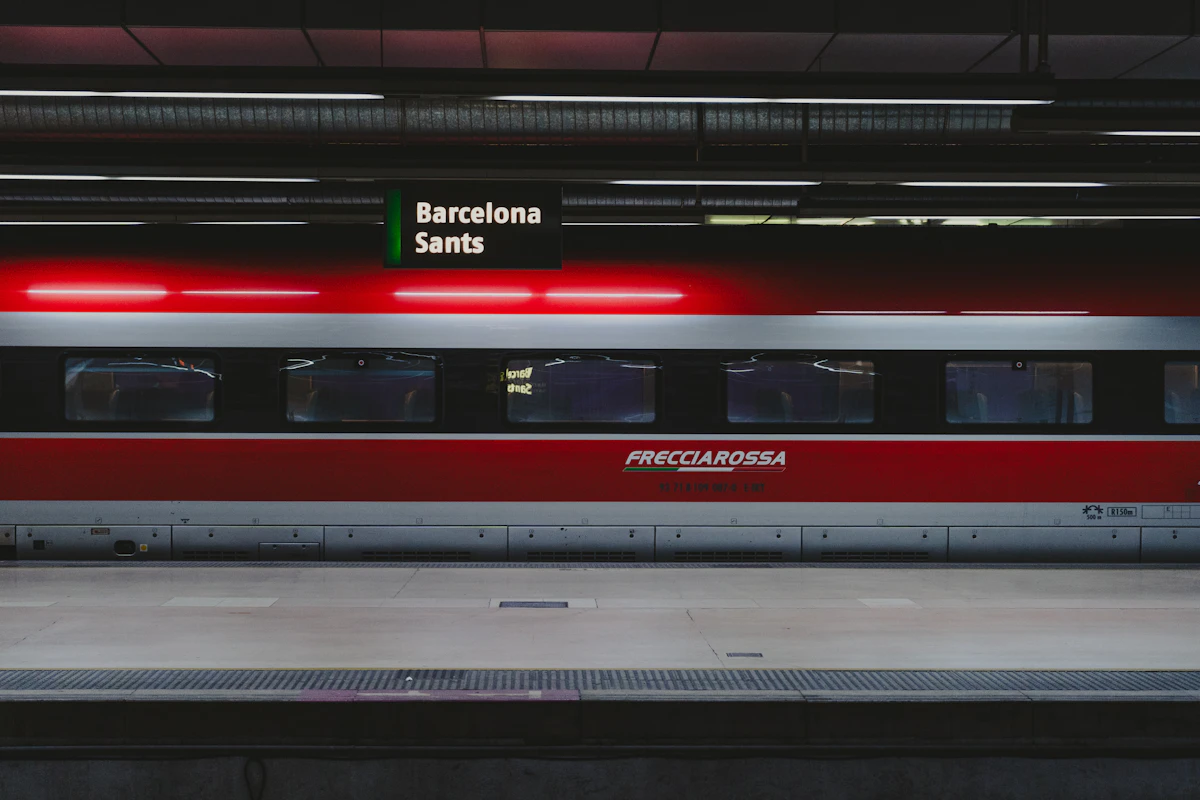
Lille has a logistical advantage that most travelers don't fully take advantage of. It's connected by high-speed rail to Paris (about 1 hour on the Eurostar or TGV from Gare du Nord), Brussels (38 minutes, and yes, that number is correct), and London (1 hour 20 minutes direct on the Eurostar). If you're planning a broader European train trip, Lille is close to a perfect hub for building out your route.
After years of moving around Europe, I'm completely convinced: arriving by train fundamentally changes how you experience a city. You pull into the center, skip the immigration lines, skip the 45-minute transfer from an airport that's technically in a different county, and just start your trip. Flying from Paris to Lille makes zero sense. Not even worth discussing.
If you want a full breakdown of how to plan a train-based European trip, including current prices and route options for 2026, Traveling Europe by Train in 2026: Routes, Prices and Rail Passes has all of it laid out in detail.
The Honest, Unfiltered Take on Lille
Here's something most travel blogs won't tell you: Lille has parts that are straight-up ugly. The area around the main train station is chaotic and gritty, some of the outer neighborhoods make a rough first impression, and if you show up without any orientation you might feel like someone oversold you on this place.
But that's also, paradoxically, part of what makes it feel real. Lille is not designed for Instagram. It doesn't have that polished tourist-ready gloss that some northern European cities wear like a second skin. People actually live here. They study here, they work here, they eat lunch here on a Tuesday without a selfie stick in sight. That translates directly into restaurants filled with locals, bars with actual neighborhood regulars, and a complete absence of anyone trying to sell you something on the street.
Honestly, sometimes I'm not entirely sure whether what I value in a city is "authenticity" or just the fact that no one charged me $25 for a salad. But maybe those are the same thing.
What to See in Lille Without Following the Usual Tourist Script
The Palais des Beaux-Arts: go. I already mentioned it, but it's worth repeating. The Flemish art collection is outstanding, and you can stand in front of a Rubens painting in relative peace. In another city, that same canvas would have a crowd around it three people deep.
The Vieille Bourse deserves more attention than most visitors give it. It's a 17th-century building with an interior courtyard where, on Sundays, a secondhand book market sets up alongside locals playing chess for entire afternoons. I was there on a gray November Sunday, light drizzle coming down, watching a couple of older guys run through a match under the arches. Nothing happened. I didn't learn anything particularly useful. But some travel moments just land, and that one did.
In the Wazemmes neighborhood:
- The Sunday market at Place de la Nouvelle Aventure is organized chaos in the best possible sense. Fresh produce, clothing, spices, street food from what feels like every corner of the world. Get there before 11 a.m. if you want to see it at full intensity.
- The bars along Rue Gambetta have a nightlife scene that mixes students, artists, and longtime locals. No confused tourists staring at Google Maps.
- The venue Le Splendid is small and books acts that will genuinely surprise you. Check the calendar before you arrive.
The Citadelle of Lille: Built by the military architect Vauban in the 17th century, it's surrounded by a park that functions as the city's green lung. Weekends bring joggers, families, and people doing absolutely nothing in particular. It's not essential if you're tight on time, but if you're staying two nights or more, a walk through there is worth the hour.
Should You Visit Lille on Its Own or Combine It with Another City?
It depends on how much time you're working with. If you're carving out two or three days specifically for Lille, yes, it stands completely on its own. The city has enough depth, especially once you get into the neighborhoods.
If you're doing a broader northern Europe loop or working with a shorter window, pairing Lille with Brussels is one of the most logical combinations in European travel. Thirty-eight minutes by train. They complement each other without overlapping: Brussels brings the institutional weight of the EU and serious chocolate culture; Lille brings that rougher northern energy and the Flemish masters in its museum.
Paris plus Lille also works really well as a short trip structure. Two nights in Paris, one or two in Lille, and you've got a compact trip with two completely different urban experiences without boarding a single plane.
If you're trying to make that kind of itinerary work on a reasonable budget, starting with flights and accommodation is always the right call. The strategies in How to Travel Cheap in 2026: The Complete Guide to Saving Money on Every Trip have helped me trim real money off routes a lot like this one.
Northern French Food: This Is Going to Surprise You
The cuisine of northern France doesn't get the same glamorous reputation as Provencal cooking or Bordeaux-region food, but if you like bold flavors, quality beer, and cheese that smells like a science experiment gone beautifully wrong, you've found your people.
The signature dish is called welsh (yes, Welsh, it's a long story). It's basically thick toast topped with melted cheese and beer. It sounds simple, and it will keep you full until the following morning. The other classic is carbonnade flamande, a beef stew slow-cooked in blonde or dark beer depending on who's behind the stove. The traditional brasseries in Vieux-Lille do it right. Avoid anything served with a laminated tourist menu outside.
The beer culture in the north deserves its own moment. The region has a distinct brewing tradition centered around a style called bière de garde, which has more body and complexity than your average lager. Order the house pour at any brasserie and you'll rarely go wrong.
One note on the cheese: Maroilles, the emblematic northern French cheese, has a smell that may cause your travel companion to question your judgment. It is absolutely delicious. It also requires either courage or a single-occupancy hotel room. You've been warned.
Best Time to Visit Lille and How the Season Changes Your Trip
Summer (June through August) gives you the best weather, the longest daylight hours, and the most terrace energy throughout the city. It also brings higher prices and more tourists, particularly in July.
Spring and fall are my preferred seasons for northern European cities in general. Reasonable prices, manageable crowds, and that overcast northern light that a lot of people find depressing but that I personally enjoy because it pushes everyone into bars and museums where the real atmosphere lives anyway.
Winter is cold and wet, but Lille's Christmas market on the Grand'Place is, according to multiple locals I've spoken with, one of the most genuine in the entire northern region. It doesn't have the overwhelming crowds that hit the Alsace markets in Strasbourg or Colmar. If you can handle the cold, it's a legitimate option.
La Braderie de Lille (first weekend of September) is the largest flea market in Europe. Over two million people reportedly pass through the city that weekend. If you want to go, book accommodation months in advance and accept that prices will be significantly higher. If you don't want to deal with the madness, that weekend is precisely when you should avoid Lille entirely.
Quick practical note: France uses Type E electrical outlets (the standard two round pin European style), so if you're coming from the UK or anywhere using Type G plugs, you'll need an adapter. I always travel with a multi-port adapter so I can charge my phone, camera, and headphones from a single outlet, which becomes extremely relevant when your hotel room has exactly one available socket.
Lille Doesn't Quite Finish Explaining Itself
And I think that's actually part of what makes it worth visiting, even if that sounds like something off a tourism poster.
There's something unresolved about the city, and it's not a flaw. The neighborhoods still mid-transformation, the industrial spaces being converted into something new, the ongoing tension between a French identity and a Flemish one that never fully settles. When Lille was named European Capital of Culture in 2004, it was a turning point: the city decided it could become something else without erasing what it had always been.
If you're looking for a city where everything is polished and perfectly signposted and ready to be photographed, Lille probably isn't it. If you show up with genuine curiosity and a loose itinerary, it gives back more than you expected.
One last practical note: if you're doing the Paris-Lille-Brussels train circuit, you'll be carrying your bag on foot through stations and city streets. A well-organized carry-on makes a real difference. The tips in our carry-on packing guide cover a few things I wish I'd known before certain chaotic moments in European train stations.
Whether Lille is quietly becoming the next big northern European destination or whether it'll stay the city people mention in passing, I genuinely don't know. Maybe that uncertainty is exactly what it's got going for it.
Compartir artículo