World's Most Dangerous Airport: Why It's Still Open
Discover which airport pilots call the world's most dangerous, why it keeps operating, and what really makes an airport deadly. Find out now.
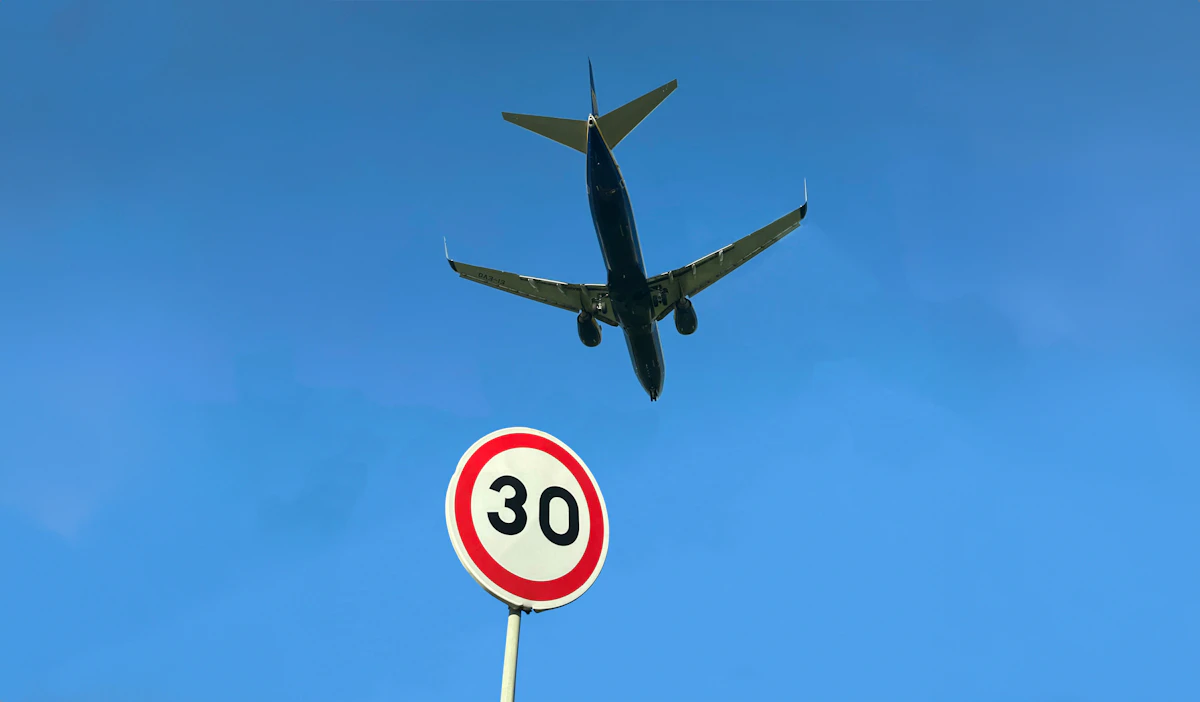
A few years back, I was nursing a coffee at a guesthouse in Kathmandu, watching planes thread between buildings on their final approach into Tribhuvan International Airport. A pilot sitting at the same table, completely relaxed over his tea, said something I haven't been able to shake since: "Landing here isn't flying. It's negotiating with the mountains."
I still don't know if he said it with pride or resignation. But I've been thinking about it ever since.
And every time I pass through some sketchy airstrip in a remote corner of the world, the same question comes back: which airport actually holds the title of most dangerous in the world? And who decided it gets to stay open?
The World's Most Dangerous Airport: The Direct Answer
The airport most consistently named the world's most dangerous is Tenzing-Hillary Airport in Lukla, Nepal, and once you understand the basic facts, it's not hard to see why.
The runway stretches just 1,729 feet (527 meters). One end drops off a cliff more than 2,000 feet straight down. The other end runs directly into a mountain. There is no go-around. Once you're committed to landing, you land.
Here's what makes it genuinely extreme:
- The runway has a 12% gradient, meaning planes land uphill and take off downhill
- It sits at 9,334 feet (2,846 meters) above sea level, where thin air measurably reduces engine performance
- There are no instrument approach systems: pilots land entirely by visual reference
- Weather changes in minutes: thick fog, crosswinds, and sudden rain can roll in with almost no warning
- Only Nepali carriers with specific route certification are allowed to operate here
That said, the full picture is more complicated than any single ranking can capture. "Most dangerous" means different things depending on who you ask and what kind of danger you're measuring. More on that in a second.
Lukla Isn't Alone: The Short List of Truly Extreme Airports
There are a handful of airports around the world where pilots openly admit the margin for error is basically zero. Lukla leads the conversation, but it has serious company.
Paro Airport in Bhutan is surrounded by peaks topping 16,400 feet (5,000 meters), and the approach procedure is among the most restricted on the planet. According to Druk Air, the national carrier, only around 30 pilots worldwide are certified to land there. That alone tells you something.
Congonhas Airport in São Paulo, Brazil is a completely different kind of dangerous. It's fully surrounded by dense urban development, operates a shorter runway than its traffic volume warrants, and has a documented accident history that includes the catastrophic TAM Airlines crash in 2007, one of the deadliest aviation disasters in Latin American history. You can't write about dangerous airports and leave that one out.
Gibraltar International Airport has a feature that sounds made up until you Google it: a public road crosses the active runway. Not a pedestrian path. An actual road with cars, trucks, and buses, controlled by traffic lights that stop vehicles when a plane needs to land or take off. Winston Churchill Avenue literally intersects the tarmac. It's as wild as it sounds.
And then there's Barra Airport in Scotland, where the runway is a beach. A literal tidal beach. Flights are scheduled around low tide, and the airport physically disappears when the water comes in. The flight schedule depends on the ocean.
The point is that "dangerous" covers a wide spectrum: technical difficulty of the approach, accident history, poor infrastructure, or simply the fact that nature holds more authority than the air traffic controller. Lukla scores high on almost all of those fronts, which is why it keeps topping the lists.
Why Pilots Keep Bringing Up Lukla Specifically
Lukla's reputation didn't come from one viral article. It came from a documented history of incidents and from the technical reality that pilots face every time they fly that route.
The Aviation Safety Network has recorded multiple accidents at this airport going back to its opening in 1964. I'm not going to manufacture specific numbers here because incident data varies significantly depending on the source and time period analyzed, but the pattern is consistent enough that experienced pilots treat this route differently than any other short-haul flight in the region.
The reason Lukla stays open is straightforward: it is the only practical gateway to the Everest Base Camp trek. Without it, trekkers would need several additional days of hiking just to reach the traditional starting point. Mountain tourism is a cornerstone of Nepal's economy, and shutting down Lukla would be economic self-sabotage.
Here's the uncomfortable math someone in the Nepali government presumably ran at some point: the revenue generated by Everest trekking tourism versus the cost of the risk. The airport kept its operating license. Draw your own conclusions.
The airport was originally funded in the 1960s by Sir Edmund Hillary, the first person to summit Everest, which is how it got its current name. It was never built for jets. It was designed for small propeller aircraft, and that's exactly what operates there today.
What Landing at Lukla Actually Feels Like
I'll be straight with you: I haven't personally landed at Lukla. But I've talked to enough travelers who have that a clear pattern emerges in how they describe it. The first thirty seconds of the approach feel completely normal. Then the mountain wall appears directly in front of the windshield, the plane touches down almost simultaneously, and your brain processes what happened about three full seconds after it's already over.
What I can speak to from personal experience, from flying into Kathmandu's Tribhuvan, into Pokhara, and through some similarly demanding airstrips in South America, is the very specific sensation that the pilot is making real-time judgment calls that no onboard computer is helping with. There's no automation buffer. There's a person up front looking at the runway and deciding. That feeling is either deeply reassuring or deeply unsettling depending on how you're wired.
Flights to Lukla depart primarily from Kathmandu. Expect to pay roughly $180 to $220 USD each way during peak trekking seasons, which run March through May and again September through November. Prices vary by airline and how far in advance you book.
Cancellations due to weather are extremely common, and "common" might actually be underselling it. If you have a tight itinerary with a flight connection on the other end, Lukla is not your friend. Build in buffer days. Seriously.
Before any trip involving remote airports like this, it's worth understanding exactly what your travel insurance covers, because multi-day weather delays at a high-altitude airstrip in Nepal are precisely the scenario most people don't think to plan for until they're already stuck there.
The Uncomfortable Truth About "Dangerous" Airport Statistics
Here's the take that most travel blogs won't give you: the airports that dominate "world's most dangerous" lists are not necessarily the ones with the highest fatality rates per number of operations.
The deadliest accidents in aviation history happened at perfectly modern airports with state-of-the-art instrumentation, experienced air traffic controllers, and runways measuring thousands of meters. Human error, mechanical failure, and traffic congestion have killed far more people at major international hubs than the sloped tarmac at Lukla ever has.
What makes Lukla feel like the most dangerous airport in the world is that the physical margin for error is nearly nonexistent. A serious failure at Lukla has no recovery path. A serious failure at a major international airport often does. That gap in perception is real, but it's not the same thing as the gap in statistical risk.
I'll be honest: I'm not always sure whether what I feel flying over the Himalayas is objective danger or just my brain reacting emotionally to an environment that looks hostile. It's probably both at once.
If you're interested in the opposite end of the aviation spectrum, the rise of Gulf hub airports like Dubai and Doha is reshaping global routing in ways that make for a fascinating contrast with places like Lukla. The infrastructure gap between those two worlds is genuinely hard to comprehend.
Airports That Deserve More Attention Than They Get
A few others that belong in this conversation but rarely show up:
Courchevel Airport in the French Alps has a runway of just 1,762 feet (537 meters) with an 18.5% gradient, making it one of the steepest in Europe. It operates primarily during ski season and requires a special certification for pilots to use it.
Matekane Airstrip in Lesoto ends at the edge of a cliff dropping more than 1,800 feet (550 meters). Planes that don't reach takeoff speed in time essentially fall off the edge. That's not dramatic language. That's just the physics of the situation.
Toncontin International Airport in Tegucigalpa, Honduras requires pilots to execute a sharp banking turn on final approach to avoid the surrounding mountains. It has a documented incident history and is consistently ranked among the most technically demanding approaches in Latin America.
Each of these airports represents a different category of risk: extreme gradient, terrain clearance, or approach complexity. None of them are casual.
Should You Actually Fly Into Lukla?
I get this question a lot, and my answer is always the same: it depends entirely on why you want to do it.
If you're trekking to Everest Base Camp and Lukla is part of the plan, then the flight is just part of the experience. The Nepali carriers operating this route are not reckless. They're specialists. They train specifically for this environment, and the certification requirements for pilots on this route are not something any generic regional carrier can replicate. You're in more experienced hands than you might think.
If you want to fly there just to say you landed at the world's most dangerous airport, well, there are worse reasons to book a flight. But go in with realistic expectations about delays and limited luggage allowances.
Speaking of which: pack light. Aircraft operating at Lukla have very strict weight limits, and your carry-on needs to fit in a genuinely small space. For the broader Nepal trip between Kathmandu and other cities, a well-structured hard-shell cabin bag works well and protects your gear at airports that aren't always gentle with luggage. If you're combining the Himalayan portion with a longer trip through Asia or Europe, a two-piece set with a main bag and personal item gives you more flexibility without pushing weight limits on any single leg.
The Regulatory Gap Nobody Talks About
This is the part that I find genuinely unsettling: there is no single international body that certifies an airport as "too dangerous to operate." The International Civil Aviation Organization (ICAO) sets global standards, but individual countries enforce those standards with wildly different levels of rigor.
Nepal has its own civil aviation authority. Lesoto has its own. Gibraltar falls under UK regulation. Each one decides what "acceptable" looks like within its own legal framework, and what's acceptable sometimes has less to do with objective safety and more to do with how much economic activity that airport generates.
That's not a moral indictment. It's just how the system works. But it's worth keeping in mind the next time you're looking at a route map and assuming every dot connected by a line comes with the same safety guarantees.
The ICAO's official website (icao.int) has extensive documentation on international safety standards if you want to go deep on the technical side, though it reads more like a regulatory manual than a travel guide.
The Final Word
Lukla is staying open. It will keep operating every trekking season. Hundreds of travelers will board those small propeller planes, press their faces against the windows, and take pictures of the Himalayas without thinking too hard about the physics happening just outside the fuselage.
Maybe that's confidence in aviation. Maybe it's risk acceptance. Maybe the view of those peaks just overrides certain alarm systems in the human brain.
Probably all three. And honestly, I'm not sure that's wrong.
Compartir artículo