Train Travel in Europe 2026: Routes, Prices & Interrail Passes
Plan your 2026 European train adventure with expert tips on Interrail passes, best routes, night trains, and real costs. Start planning smarter today!
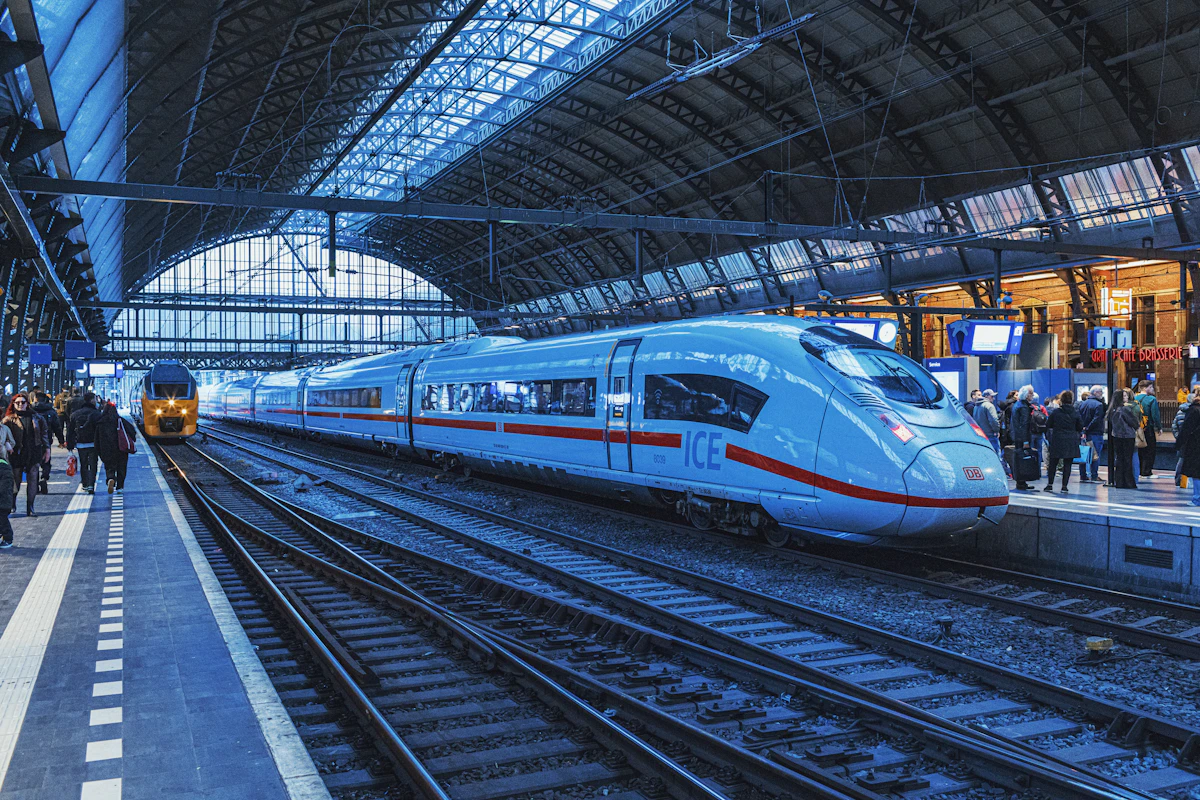
There's a specific moment I keep coming back to: I was standing on the platform at Amsterdam Centraal, backpack wedged between my ankles, staring up at the departures board, and suddenly realizing that in 40 minutes I could be heading to Brussels, or Cologne, or I could just stay and wander a neighborhood I hadn't even thought about yet. No budget airline has ever given me that feeling. Not once.
Traveling Europe by train is still one of the best ways to move around the continent in 2026. Interrail passes start around $235 USD for adults with flexible options, and the rail network connects more than 30 countries without you ever setting foot in an airport security line. Before you buy anything, here are the key things to understand:
- Interrail passes come in flexi versions (a set number of travel days within a window) or continuous versions (unlimited travel for a stretch of consecutive days)
- Not every train is covered without an extra reservation fee: high-speed trains like the Frecciarossa, Thalys, and most night trains charge a supplement on top of your pass
- Booking popular routes 2-3 months out makes a real difference in what you pay for those reservation fees
- Travelers under 28 get a youth discount; travelers over 60 also save
Interrail in 2026: What's Changed and What Hasn't
Interrail has been around for decades, but it's evolved a lot in recent years. The biggest deal for 2026 is that the pass is now fully digital. No printing anything, no getting your ticket stamped at every station (something that caused me actual anxiety on my first trip). You manage everything through the Rail Planner app, which works offline once you've downloaded it. That sounds like a minor thing until you're crossing the Alps with zero cell service and you need to show your pass.
The four main pass types available in 2026 are:
- Global Pass (covers all participating countries): the most popular option, available as flexi passes with 4, 5, 7, 10, or 15 travel days within a 1 or 2-month window, or continuous passes running 15 days, 22 days, 1 month, 2 months, or 3 months
- 2-Country Pass: solid choice if your route is straightforward and you're sticking to two countries
- 1-Country Pass: makes sense in big countries like Italy, France, or Germany where you want to cover serious ground
- 4-Country Pass: good if you have a regional focus, like Scandinavia or Central Europe
One thing worth knowing: if you're a non-European traveler (including Americans), you'll be buying a Eurail pass instead of Interrail. Same concept, slightly different branding, and typically 10-15% more expensive than the equivalent Interrail pass. It's not exactly fair, but that's how it works.
The Routes Worth Your Time (and One That's Overrated)
I could list 20 routes. I'm not going to do that. Here's what I'd actually do and why.
The Classic Northern Route: Start in London (via Eurostar) or Amsterdam, work your way down through Brussels and Cologne, then connect east toward Berlin or Prague. This route has an insane density of culture, the trains run on time, and costs on the ground are reasonable outside of peak summer. Berlin to Prague is about 4 hours and the scenery makes every minute worth it.
Italy North to South: Milan, Florence, Rome, Naples. The Frecciarossa high-speed train makes this smooth and surprisingly fast. The catch is that in peak summer (July-August) trains fill up fast and reservation fees run an extra $10-45 per leg on top of your pass. Book early or go in May or September when things calm down significantly.
The Balkans by Rail: This is where things get complicated in the best possible way. The Balkan rail network is, with all due respect, a beautifully chaotic mess. Some routes are slow, some trains look like they've been running since the Cold War, and not every country participates in Interrail (Albania, Kosovo, and North Macedonia aren't included). But honestly, that's exactly what makes it interesting for a certain kind of traveler. It's not for everyone, but if you're the type who gets excited by unpredictability, it's unforgettable.
The Overrated One: Paris-Barcelona-Madrid. Yes, the Eurostar and the TGV are comfortable and fast. But the mandatory reservation supplements on French and Spanish high-speed trains can run $33-65 per leg, which eats through the value of your pass pretty quickly on that corridor. Sometimes a budget flight genuinely comes out cheaper. I know that's painful to admit in a train travel article, but there it is.
Is an Interrail Pass Actually Worth It? An Honest Answer
Let me be straight with you here.
An Interrail or Eurail pass makes financial sense if you're planning at least 4-5 medium or long train journeys within a concentrated period. If you're doing 2 legs over 15 days, you're almost certainly better off buying individual point-to-point tickets in advance through Trainline or directly with national rail operators like DB in Germany, SNCF in France, or Trenitalia in Italy.
The pass delivers real value when:
- You're traveling without a fixed itinerary and want to change plans without losing money
- You're including night trains (which are expensive to book individually, but with a pass you only pay the berth supplement, typically $22-55)
- You're under 28 and taking advantage of the youth discount
- Your route cuts across multiple countries with different rail systems
The pass loses value when you're mostly doing high-speed routes with mandatory supplements, or when you have a locked-in itinerary you can book 3-4 months ahead.
A friend of mine who's traveled Europe extensively put it well over coffee in Ljubljana: "Everyone buys the most expensive pass thinking they'll maximize it, and then they end up doing the same route they could've done with point-to-point tickets." He's not entirely right, but he's not entirely wrong either.
The honest variable nobody else can calculate for you is what kind of traveler you are when things don't go according to plan.
Night Trains: The Game-Changer Nobody Talks About Enough
Night trains in Europe are having a serious comeback. After years where it felt like they might disappear entirely, operators like ÖBB's Nightjet (Austrian Federal Railways) are expanding and adding new routes every season.
With an Interrail or Eurail pass, on a night train you pay a supplement for:
- A reclining seat reservation (basic, around $6-11)
- A couchette (shared sleeping compartment with 4-6 berths, roughly $22-38)
- A private sleeper cabin (starting around $44-66)
You sleep and travel at the same time, which means you save a night of accommodation. In cities like Vienna, Paris, or Zurich, that's $65-130 staying in your pocket instead of going to a hotel.
Night train routes with solid operational reputations right now:
- Vienna to Hamburg (Nightjet, roughly 11 hours)
- Vienna to Paris (Nightjet, roughly 14 hours, expanded in 2024)
- Zurich to Barcelona (EuroNight, roughly 12 hours)
- Rome to Sicily (via the legendary Messina Strait ferry-train, something you have to experience at least once)
That last one deserves a moment. The train literally rolls onto a ferry in Villa San Giovanni, crosses the Strait of Messina, and arrives in Sicily. It takes longer than flying. It costs more than a bus. And yet, standing on the deck with the train behind you at 2am while the lights of Messina grow closer in the dark... some things don't optimize well into blog post format, and this is one of them.
What Does a Full European Train Trip Actually Cost?
The numbers matter, but context matters more.
Here's a realistic budget breakdown for a 2-week trip using a Global Interrail Pass with 10 travel days (the most popular flexi option for that length of trip), for a traveler over 28 in second class:
| Expense | Estimated Cost |
|---|---|
| Interrail/Eurail Global Pass (10 days) | $370-415 USD |
| Reservation supplements (6-8 legs) | $65-130 USD |
| Accommodation (hostel or budget Airbnb) | $22-44/night depending on country |
| Food and drink | $16-33/day depending on country |
Switzerland and Scandinavia will absolutely wreck your daily food and accommodation budget compared to, say, Czech Republic, Hungary, Poland, or Portugal. And here's the thing: the pass costs the same regardless of where you go. So routing through Prague and Budapest instead of Stockholm and Zurich saves you significant money on the ground while your rail pass costs exactly the same.
That's a planning insight that doesn't get mentioned enough.
Train Luggage: Less Stressful Than Flying, But Still Matters
Here's one genuinely great thing about European trains: there are no strict baggage limits the way airlines have them. You can technically bring whatever you want.
In practice though, if you're on busy summer routes like Rome to Naples or the early Friday morning Thalys from Brussels to Paris, the cars fill up completely and wrestling a giant suitcase into the overhead rack in a packed train is a nightmare for everyone involved. I always travel with a bag that fits above my seat or under it, without needing the overhead racks. It keeps me mobile and stress-free.
Traveling light on trains also gives you a kind of freedom that checked bags simply can't. You can hop off at an unplanned stop without the logistics of managing oversized luggage across cobblestone streets. And trust me, in cities like Dubrovnik or Toledo, that matters a lot.
Choosing a Home Base for Your Train Journey
If you're planning a European train trip and need to decide where to start, the most practical answer is usually a city with strong rail connectivity in multiple directions. Amsterdam, Brussels, Frankfurt, Vienna, and Zurich are probably your best options. From any of them, you have trains to 6-8 major destinations in under 5 hours.
Paris has the glamour and the mythology, but trains from Paris almost always require mandatory reservations with supplements, and the major Paris stations (there are six main ones) are enormous and genuinely confusing if it's your first time navigating them under pressure with a backpack.
Central European cities like Vienna or Frankfurt often make more practical sense as a hub because connections flow outward in every direction with less friction and lower supplement costs.
The Apps You Actually Need (And the Ones You Don't)
Rail Planner (the official Interrail/Eurail app) is what you use to manage your pass and check timetables. It works offline once set up, which makes it non-negotiable. Download it before you leave home and get comfortable with it.
For buying individual tickets or reservation supplements, Trainline is the most convenient option for English speakers, though it charges a small service fee. The DB website (Deutsche Bahn, Germany's national rail) has competitive prices for German routes and sells international tickets too. SNCF (France's national rail) sometimes has the best prices for French routes, but their interface takes some patience.
One thing I figured out later than I should have: the ÖBB website (Austrian Federal Railways) often sells Nightjet tickets at prices that beat Trainline. Worth checking directly if night trains are part of your plan.
Don't download 12 different train apps. Rail Planner, Trainline, and your bank's app for foreign transactions is genuinely all you need.
My Counterintuitive Take on All of This
Most travel blogs will tell you that taking the train in Europe is always better than flying. More sustainable, more scenic, more culturally authentic. And in many cases, they're right.
But here's what almost nobody says out loud: the European rail network is not equally good everywhere, and that gap is enormous. Germany, Austria, and Switzerland have outstanding networks. France has fast trains but they're expensive. Italy is excellent on the north-south corridor but weak on east-west connections. The UK is its own expensive, chaotic chapter that deserves its own article.
If your route spends significant time in Portugal, Spain, or Scandinavia (except Sweden, which is reasonably good), the train often loses out to flying or even buses on both cost and logistics. FlixBus across southern and eastern Europe is slow but cheap, and on certain routes it genuinely beats the train.
You won't hear that from many travel bloggers because it disrupts the romantic narrative of European rail travel. But I've lived it on multiple trips, and I'd rather give you the real picture.
The bottom line on whether you should buy an Interrail or Eurail pass for 2026 comes down to one question that only you can answer: how do you travel when the plan falls apart?
If you love the flexibility to change course, if the idea of deciding at a train station which direction to head next genuinely excites you rather than stresses you out, the pass is almost certainly worth it. If you're a planner who books everything months in advance and sticks to the itinerary, point-to-point tickets booked early will probably save you money on the same exact journey.
Both approaches are valid. The train, either way, is still one of the best ways to see this continent.
Compartir artículo