Strasbourg Travel Guide: River Cruises, Winstubs & Hidden Gems
Discover Strasbourg beyond the postcard shots. River cruises, authentic winstub dinners, and insider tips to experience this Alsatian city like a local.
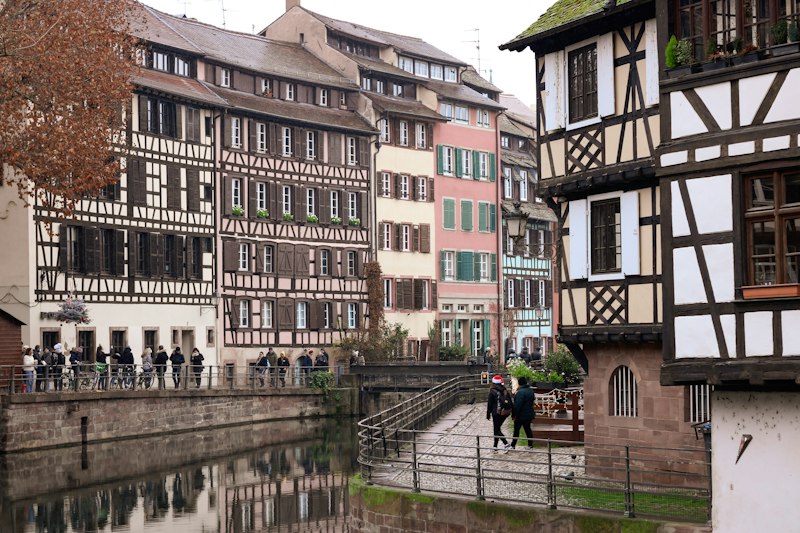
Strasbourg has a reputation as a layover city. People roll in on the train, snap a few photos of the cathedral, wander through Petite France for twenty minutes, and head back to Paris feeling like they've checked it off the list. Big mistake. I did exactly that the first time I visited back in 2019, and I left feeling like I'd somehow missed the whole point. So I went back in the fall of 2024, this time with four full days and zero agenda pressure, and I can tell you with complete confidence that this Alsatian city has way more going on than most travelers ever give it credit for.
What makes Strasbourg genuinely special is that weird, wonderful mix of French and German culture that you simply cannot find anywhere else. The half-timbered architecture, the canals cutting through the old town, the choucroute and tarte flambée on every menu, and the fact that this city has a real life that exists completely independent of tourism. Here are the highlights before we dig in:
- A river cruise along the Ill River and the old town canals (1 to 2 hours, departing from near the Palais Rohan)
- Dinner at a real winstub, the Alsatian version of a neighborhood tavern
- An early-morning walk through Petite France before the tour groups show up
- The Notre-Dame Cathedral, one of the tallest surviving Gothic structures in the world
- A stroll through the European Quarter to see the EU Parliament building
- Lunch at the covered market for cheap, delicious, very local food
The River Cruise: Way Better Than I Expected
I'll be upfront here. I almost skipped it. Urban boat tours have always felt a little gimmicky to me, like something you do when you have two hours left and nothing else on your list. But the Strasbourg river cruise completely changed my mind, and now I recommend it to everyone.
The ride runs about 75 minutes and takes you through the historic city center canals, past Petite France, under the medieval covered bridges (the "Ponts Couverts"), and along the edge of the Neustadt, Strasbourg's 19th-century German-built neighborhood that's now a UNESCO World Heritage Site. From the water, everything looks completely different. The brown-tiled rooftops, the window boxes overflowing with flowers, the half-timbered facades reflecting in the still water. It's the kind of view that makes you understand why people move here and never leave.
Boats depart from the Rohan Embarcadero, right next to the Palais Rohan, pretty much every day of the year. Tickets run around $16 USD for adults through Batorama, the official operator. If you're visiting in December, there's an evening version with the famous Christmas market as your backdrop, which by all accounts is absolutely magical, though prices go up and you'll want to book well in advance.
One practical tip: go in the morning, ideally before 11am. Afternoon lines get long and the midday light flattens everything out. Morning light on those canals is something else entirely.
Eating at a Winstub: The Best Thing I Did in Strasbourg
If you do one thing in Strasbourg, make it dinner at a winstub. Not just any restaurant. A proper Alsatian winstub, with wooden tables, wood-paneled walls, wide-brimmed wine glasses filled with local Alsatian whites, and a menu that is hearty, unapologetic, and deeply regional.
The word comes from the Alsatian dialect, "Winstub" meaning wine tavern, and the concept is straightforward: good regional food, local wine, and an atmosphere that makes you want to stay two hours longer than you planned. These places are not trying to be trendy. They're just really, really good at what they do.
I had dinner at S'Burjerstuewel, better known as Chez Yvonne, on Rue du Sanglier. It's famous, maybe a little too famous, but the choucroute garnie was genuinely one of the best things I ate all year. We're talking slow-cooked sauerkraut braised with Riesling, several different sausages, smoked pork ribs, and bacon, all arriving on one enormous plate for around $24 USD. My travel companion ordered the Baeckeoffe, a slow-cooked casserole of three different meats with potatoes and white wine, which came in around $22 and prompted zero complaints from anyone at the table.
Other winstubs recommended by locals I met at my hostel:
- Au Coin des Pucelles: Quieter atmosphere, noticeably fewer tourists, great for a laid-back weeknight dinner
- Le Clou: Tiny, intimate, practically requires a reservation on weekdays
- Fink'Stuebel on Rue des Dentelles: Good balance of price and vibe, a solid choice if the others are booked
Alsatian wine deserves its own paragraph. Riesling, Pinot Gris, Gewurztraminer... if you're into aromatic white wines, you have landed in the right place. A glass at the winstub runs $4 to $7 USD. A bottle for the table is typically $19 to $32 USD depending on the producer. It's the kind of wine culture that rewards curiosity.
Petite France: Beautiful, But Only If You Time It Right
Everyone goes to Petite France. The problem is when they go. Show up on a Saturday morning in July and you'll be shoulder-to-shoulder with tour groups, selfie sticks, and matching bucket hats as far as the eye can see. The fix is simple: get there before 8:30am or go on a Sunday afternoon when the crowds have largely cleared out.
Petite France is the medieval heart of Strasbourg, all 16th and 17th century half-timbered houses, narrow canals, and those iconic covered bridges (the Ponts Couverts, complete with four medieval towers) that show up in literally every photo taken in this city. When it's quiet, it feels almost surreal. Like a movie set, except completely real and completely lived-in.
The first time I came to Strasbourg I made the classic tourist mistake of arriving at 10am on a weekend and just shuffling along with everyone else. I didn't enjoy it at all. In 2024, I showed up at 7:45am with a coffee I'd grabbed from a boulangerie on Rue du Bain-aux-Plantes, and I had the canals almost entirely to myself for nearly an hour. That's a memory that sticks with you.
From the Ponts Couverts, you can walk up to the Barrage Vauban, a 17th-century dam with a free rooftop terrace that gives you a panoramic view back over the whole neighborhood. It takes maybe ten minutes and it's absolutely worth it.
The Notre-Dame Cathedral: Look Past the Facade
Strasbourg's Gothic cathedral is one of the tallest surviving medieval structures in the world, and for almost two centuries it held the title of tallest building on Earth. That's not a small thing.
The west facade alone is worth standing in front of for a while. It's this incredibly detailed wall of rose-colored Vosges sandstone covered in Gothic sculptures, and it's easy to spend twenty minutes just looking at details most people walk right past. But the inside is where things get interesting. Most visitors walk in, look up, and walk back out. If you slow down, you'll find the 16th-century astronomical clock that still runs today, the Angel's Column (sometimes called the Pillar of Judgment), and a collection of medieval stained glass windows that genuinely reward a quiet ten minutes on a bench just looking at them.
Entry to the cathedral interior is free. Climbing up to the viewing platform costs about $7 USD and there can be a real wait in summer, so either go early or skip it if time is tight. On a clear day the view over Strasbourg's rooftops is one of those experiences you carry with you. On a misty fall morning it's even better, honestly.
Real Costs: What a Weekend in Strasbourg Actually Runs
Here's a breakdown based on what I actually spent during my fall 2024 trip, to give you a real-world baseline:
| Expense | Approximate Cost (USD) |
|---|---|
| 3-star hotel per night (city center) | $95 to $140 |
| Hostel private room per night | $58 to $80 |
| Batorama river cruise (adult ticket) | $16 |
| Winstub dinner (entree plus wine) | $27 to $37 |
| Lunch at the covered market | $11 to $16 |
| Cathedral viewing platform | $7 |
| Full-day public transit pass | $5.50 |
| European Quarter visit (exterior) | Free |
If you're going in December for the Christmas market, plan to multiply your accommodation cost by 1.5 to 2. Strasbourg runs one of the oldest and most famous Advent markets in Europe and hotels price accordingly. Book as early as you possibly can.
Getting there from most major US cities means connecting through Paris Charles de Gaulle or Frankfurt. From Paris, the TGV from Gare de l'Est takes about 2 hours and 20 minutes and can be shockingly cheap if you book early through the SNCF website. That train connection is often the fastest and most affordable way to get from a transatlantic flight directly into Strasbourg.
The European Quarter and the Neustadt: The Strasbourg Nobody Photographs
Here's something most visitors never think about: Strasbourg is the seat of the European Parliament, the Council of Europe, and the European Court of Human Rights. That gives it a political identity that's completely unique among European cities and actually worth engaging with, even if you're not especially into policy or diplomacy.
The European Quarter sits north of the old town and has some genuinely interesting contemporary architecture. The Parliament building itself is open for free guided tours if you reserve in advance through the official European Parliament website (europarl.europa.eu). Tours last about an hour and give you a real sense of how the institution actually operates day to day.
But my personal favorite underrated area is the Neustadt, the neighborhood built by Germany when Alsace was part of the German Empire between 1871 and 1918. Wide boulevards, imposing Wilhelminian architecture, late 19th-century buildings that look more like Munich or Berlin than anything you'd associate with France. The Neustadt was added to the UNESCO World Heritage list in 2017 and tourists still barely visit it. If you like cities with layered, complicated identities written directly into the architecture, this neighborhood is going to resonate with you.
If You Only Have One Day: An Honest Itinerary
One day is not enough, but here's what I'd do without hesitation if that's all I had:
Start early in Petite France and the Ponts Couverts. Grab breakfast at a neighborhood boulangerie. Walk up to the Barrage Vauban for the panoramic view. Head to the cathedral for a quick look inside, skip the tower climb if you're short on time. Lunch at the Marché Couvert or one of the casual spots around Place de la Cathédrale. Afternoon river cruise with Batorama. Dinner at a winstub. That's Strasbourg in a day, and you won't feel like you missed the essentials.
With two days you can add the Neustadt, the European Quarter, and maybe the Musée Alsacien, which covers traditional Alsatian life and culture and costs about $8 to get in.
Three or more days opens up a day trip to Colmar, just 30 minutes by regional train for around $11 USD round trip. Colmar is essentially Strasbourg in miniature, with slightly fewer tourists and equally good food. Absolutely worth the detour.
Frequently Asked Questions
What is the best time of year to visit Strasbourg?
Fall (September through November) is genuinely ideal: reasonable hotel prices, thinner crowds, and the Alsatian vineyard colors in full swing nearby. December is spectacular for the Christmas market but accommodation prices spike significantly. July and August bring the biggest tourist crowds and the hottest temperatures.
Do I need to speak French to get around Strasbourg?
Not strictly, but a few basic phrases go a long way. Hotels, major attractions, and tourist-facing restaurants generally have English-speaking staff. The more local winstubs might not, but navigating a French menu with a little goodwill and a translation app is very doable. Alsatians are generally warm and patient with visitors who make an effort to communicate.
How do I get from Paris to Strasbourg?
The easiest option by far is the TGV high-speed train from Gare de l'Est in Paris. The trip takes about 2 hours and 20 minutes. Tickets start around $22 USD if you book several weeks out through the SNCF website, and can climb to $85 or more if you're buying last-minute. Strasbourg also has its own airport with domestic French and European connections if you prefer to fly.
Is Strasbourg expensive compared to other French cities?
It's noticeably cheaper than Paris and roughly comparable to Lyon for most things. Accommodation jumps significantly in December. Winstub dinners with a glass of wine typically run $27 to $42 per person, which is very reasonable for the quality and portion sizes. Public transit is efficient and affordable, with trams covering most of the city for just a few dollars a day.
Strasbourg is not on most people's top-ten European cities list, and that is honestly a huge part of what makes it so good right now. You get the historic architecture without Amsterdam's overcrowding, the food culture without Paris's prices, and that genuinely fascinating Franco-German identity that makes every neighborhood feel like it has a story worth digging into. Book at least three days if you can swing it, eat at a winstub on your first night to get into the Alsatian mindset immediately, and get on that river cruise even if the weather looks gray. Especially if the weather looks gray. The canals on a foggy morning are something the summer travel photos never quite capture. You'll see what I mean.
Compartir artículo