Strasbourg Travel Guide 2026: More Than Just the EU Parliament
Think Strasbourg is boring? Think again. River cruises, wine taverns, and hidden neighborhoods make this French city unforgettable. Plan your trip now.
A friend of mine asked me something over coffee a few months back, totally offhand while we were waiting for our drinks: "Isn't Strasbourg just where the EU Parliament is? Like, does anything else actually happen there?"
I paused for a second. Because honestly? Before I went, I thought pretty much the same thing.
Strasbourg is one of those European cities that people mention but almost nobody actually visits. It sits right on the border between France and Germany, with one foot planted in each culture, and most travelers skip it entirely because it sounds like an administrative city, full of suits and committee meetings and not much else. Turns out, everyone is wrong about that. I was wrong about that.
Strasbourg in 2026: Is It Actually Worth the Trip?
Yes. Way more than most travel blogs will ever tell you.
What surprised me most when I got there is that Strasbourg doesn't have that over-touristed problem where everything feels staged for visitors. There's real life happening. Locals drinking Alsatian wine at three in the afternoon, markets with cheeses that smell incredible, and canals that honestly rival Amsterdam in terms of charm (Amsterdam just has way better marketing, but the actual experience in Strasbourg...).
If you're planning a European train trip, Strasbourg fits perfectly into a route that combines Paris, the fairytale town of Colmar, and maybe Freiburg im Breisgau once you cross into Germany. It's the kind of city that rewards you for going slightly off the obvious path.
The River Cruise: The Least Obvious Way to See the City
When someone first suggested a river cruise in Strasbourg, my internal reaction was immediate and wrong: that's something retired people do while wearing straw hats. I was completely off base.
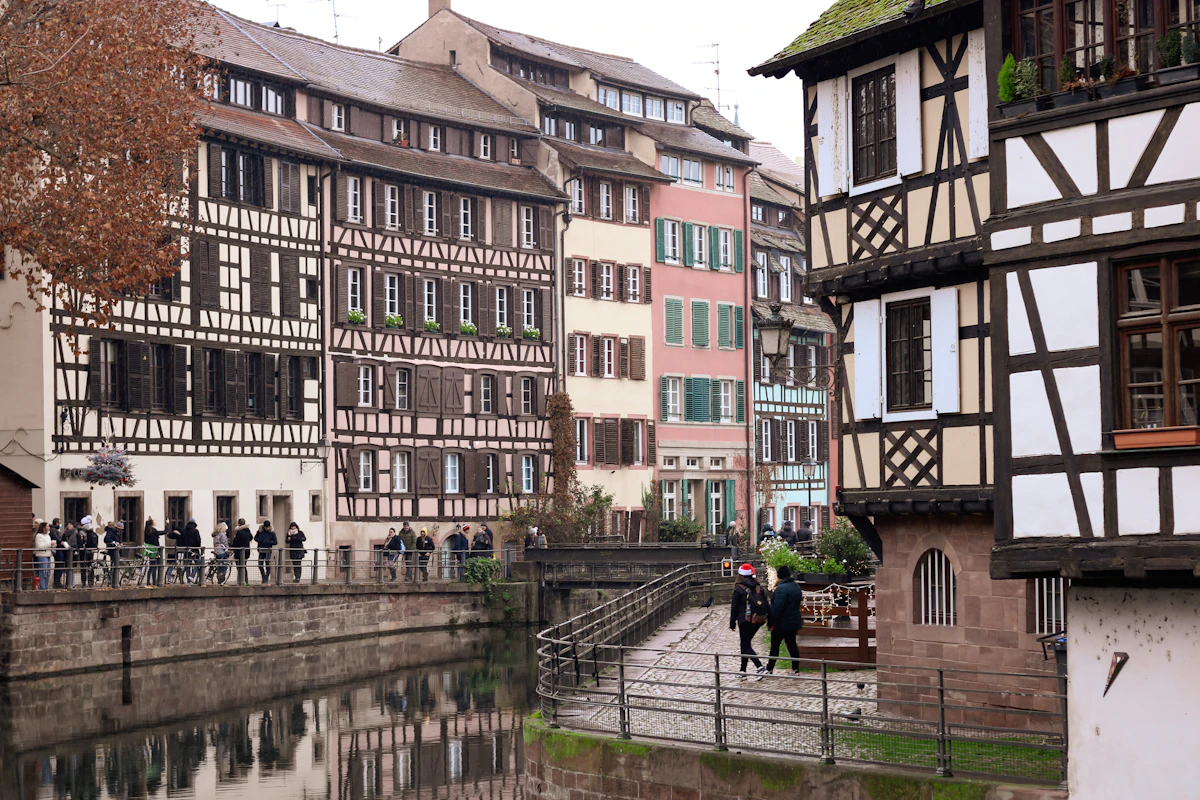
The Ill River winds through the city and forms a natural island around the historic old town. Doing the route by boat gives you a perspective you simply can't get on foot. You see the half-timbered houses of Petite France reflected in the water, the medieval bridges, the cathedral peeking above the rooftops. It's one of those rare cases where the tourist boat tour is actually the right call.
The boats operated by Batorama run about 75 minutes through the Ill and the central canals. As of 2025, tickets were running around $16-17 per adult, so budget something similar for 2026, maybe slightly more. It's not cheap-cheap, but for what you get, it holds up. If you're visiting during peak season, buy online in advance because these do sell out.
One practical note that nobody ever seems to mention: if you tend to get queasy on boats, or if the constant hum of a boat motor starts to wear on you after a while (I'm firmly in the second camp), the open deck seats are significantly better than sitting inside. The enclosed cabin has poor ventilation and starts to feel pretty stuffy after twenty minutes. Something I always travel with for situations like this is a solid pair of noise-reducing earplugs, because that constant low-frequency motor hum adds up over an hour-plus ride.
Eating at a Winstub: What Even Is That, and Where Should You Go?
A winstub is essentially a traditional Alsatian wine tavern. The word comes from German and roughly translates to "wine room," though that translation doesn't really capture what it feels like to sit in one. Think: small, wood-paneled space, warm lighting, people talking loudly at the next table, and a menu where flammekueche, the Alsatian flatbread pizza, is absolutely the star.
A winstub is not a regular restaurant. It's a neighborhood tavern experience where the local wine flows freely and nobody looks at you sideways for ordering multiple rounds of food.
Where to go? Here are the names that keep coming up when you ask locals:
- Chez Yvonne, on Rue du Sanglier, is probably the most famous one and has that "presidents have eaten here" energy, which is simultaneously a selling point and a warning that prices skew more tourist-facing than they should.
- Winstub du Sommelier, near the Cathedral Square, offers better value for your money in my opinion.
- S'Muensterstuewel in the Petite France neighborhood, quieter and more straightforward with its Alsatian cooking. No frills, no pretense. My personal favorite of the three.
A single flammekueche runs between $13 and $20 depending on the spot. A choucroute, which is the classic Alsatian dish of sauerkraut with various sausages and cured meats, will run you $17 to $24. It's not budget travel by Eastern European standards, but this is France with a heavy German influence, so you know what you're signing up for.
Petite France: Yes, It Looks Like a Movie Set, and That Doesn't Make It Less Real
Some places are so beautiful they look almost fake. Petite France is absolutely one of them. The 16th-century half-timbered houses, the canals with flower boxes in the windows, the cobblestone streets. It's the postcard image of Strasbourg.
And plenty of visitors show up, take a hundred photos in twenty minutes, and leave. That's a mistake.
The move is to get there early, before 9 AM, when the tour groups are still having hotel breakfast and the neighborhood is basically yours. The morning light on the canals is something else entirely. I'm not being dramatic about this.
It's also worth walking up to the Ponts Couverts, the medieval covered bridges that define the neighborhood's edge. They're not actually covered anymore like they originally were, but they offer views of the old defensive towers and the canal that make the short walk completely worth it. And it's free.
Quick historical footnote that I can't help sharing: the name "Petite France" has nothing romantic about its origins. The neighborhood was historically where soldiers suffering from syphilis, which was called "the French disease" at the time, were quarantined. Yes, it's uncomfortable. But it's actual history, not the sanitized version the walking tours hand you. I think it's more interesting to know the real story.
Is Strasbourg Expensive? A Real Breakdown by Day
Let me be straight with you here because this is what I wished I'd known before booking.
Strasbourg is not cheap. It's France. But it's also not Paris, and your wallet will notice the difference.
A decent hostel in the historic center runs between $32 and $48 per night in mid-season. A two-star hotel with a solid location goes for $85 to $120. Based on current Booking.com data for 2025-2026, prices jump hard in December because of the Christmas market, which is the city's most famous event and also its most crowded, with everything that implies.
Here's a rough daily breakdown:
| Expense | Estimated Cost (USD) |
|---|---|
| Hostel dorm bed | $32-48/night |
| 2-star hotel | $85-120/night |
| Bakery breakfast | $4-7 |
| Bistro lunch or daily menu | $13-19 |
| Winstub dinner with wine | $32-48/person |
| Flammekueche + Alsatian beer | $19-23 |
| Single tram ticket | ~$2 |
| Day transit pass | ~$4.50 |
| River cruise (Batorama) | ~$17 |
| Cathedral platform entry | ~$5.50 |
The urban transit system is genuinely great. Strasbourg has a tram network that covers the whole center and beyond. For getting around the old town itself, the locals ride bikes, and there's a shared bike system called Vélhop with reasonable daily rates that's worth looking into if you want to move around like an actual resident.
Realistically, $85-105 per day gets you a comfortable Strasbourg experience without luxury but without cutting corners. You can do $65 a day if you're staying in hostels and being thoughtful about where you eat. Below that starts getting complicated.
Strasbourg's Notre-Dame Cathedral Is Not the One in Paris, and That's a Good Thing
Here's what I consider a genuine travel injustice: the Strasbourg Cathedral lives entirely in the shadow of Paris, and it absolutely should not.
The Strasbourg Cathedral is, without exaggeration, one of the most impressive Gothic cathedrals in Europe. For a long time it was literally the tallest building in the world. It's built from pink Vosges sandstone, which gives it this warm reddish-orange color you won't find on any comparable structure. And the 16th-century astronomical clock inside still works, still marks the hours with mechanical figures parading across its face. Every day at noon and 12:30 PM there's an automated display that draws a small crowd, and it's worth timing your visit around it.
Cathedral entry is free. Climbing up to the viewing platform (not the full spire, which is closed to visitors) costs around $5.50 and gives you a view of the historic center that's worth every cent.
Beyond the Main Attractions: What Nobody Tells You to Do in Strasbourg
I'll be honest, I'm never totally sure when I'm traveling whether I'm genuinely exploring or just strategically avoiding the long lines at famous spots. But here are some things in Strasbourg that go beyond the standard itinerary:
- The Musée d'Art Moderne et Contemporain (MAMCS) has a strong permanent collection and the building itself, right on the riverbank, is worth seeing even if contemporary art isn't really your thing. Admission around $7.50, free on the first Sunday of the month.
- The Neustadt neighborhood, the German imperial-era city built when Alsace was German territory between 1871 and 1918, is architecturally totally different from the old town and almost nobody visits it. There's a quietness and a scale there that contrasts really well with the tourist chaos of Petite France.
- The European Parliament offers free guided tours when it's in session, though you need to book well in advance through the official EP website. For anyone curious about European politics or just wanting to see the building that shows up on every international news broadcast, it's a genuinely different kind of experience.
- The local markets, especially the Marché de la Krutenau on Wednesdays and Saturdays, are where you buy Munster cheese (the quintessential Alsatian cheese, which smells aggressively funky but tastes like a dream) and regional wines at prices far more reasonable than anything you'll find in a restaurant.
Getting to Strasbourg from most American cities means connecting through Paris Charles de Gaulle or Frankfurt. The other option worth knowing about is flying into Basel-Mulhouse-Freiburg Airport, the unusual three-country airport shared by Switzerland, France, and Germany, located about 47 miles from Strasbourg. From there you can get a direct train into the city.
My Honest, Slightly Unpopular Opinion About Strasbourg
Here's the contradiction at the heart of this city that I keep coming back to: Strasbourg is a perfect long-weekend destination, but genuinely frustrating if you try to do it in 24 hours, which is exactly what most tourists attempt.
The problem isn't that there aren't enough things to see. It's that the city operates at a slower pace that doesn't respond well to rushing. If you arrive Saturday at noon and leave Sunday afternoon, you'll leave feeling like you saw the postcards without actually experiencing anything. You need at least one extra night to sync up with that rhythm, to drink a glass of Gewürztraminer without watching the clock, to wander through the Neustadt without a specific destination in mind.
And here's my most contrarian take on Strasbourg, the one most travel content will never give you: skip December. I know the Christmas market is famous. I know everybody talks about it and the photos look magical and all of that is technically true. But prices spike significantly, the city gets so packed it loses most of what makes it special, and the most authentic winstubs get so slammed that the experience you came for basically evaporates. You wait 40 minutes for a table and then feel rushed out.
Strasbourg works better in October. The autumn colors in the Parc de l'Orangerie are genuinely stunning, the new vintage wines from the Alsace region start showing up in every bar, and you can actually walk into a winstub and get a table without planning your life around it.
Maybe some people love the December chaos and I'm completely off base. I'm not ruling that out. But the version of Strasbourg I'd send a friend to is the one that breathes a little, the one where the flammekueche comes out fast and the wine list isn't backed up because the whole city descended at once.
That version of the city, the mid-season, quiet-morning, second-glass-of-wine version, barely shows up in any travel guide. And I genuinely don't understand why.
Compartir artículo