Paris vs London 2026: Which City Should You Actually Visit?
Paris or London in 2026? We break down real costs, flights, food, and logistics to help you choose the right European city for your trip.
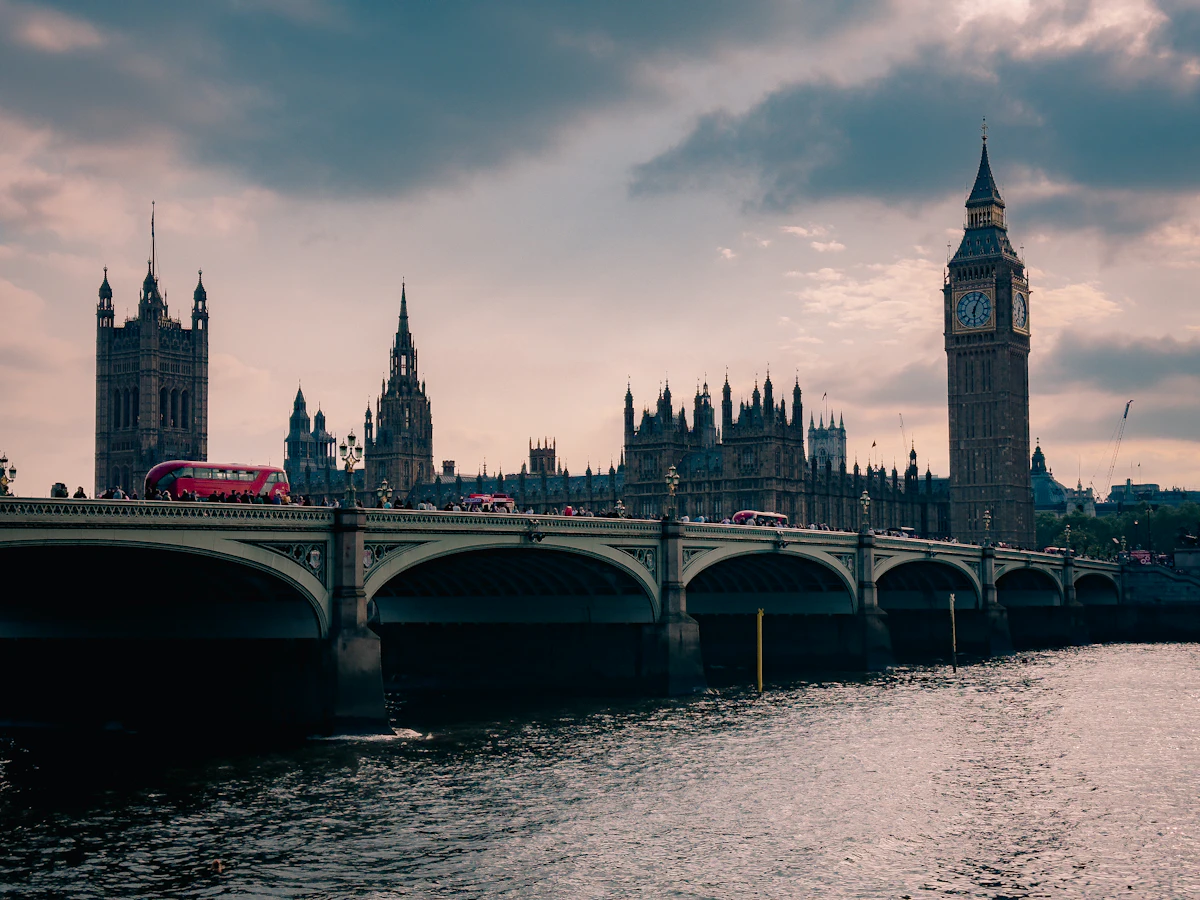
Someone asked me this question at an airport gate. She had a massive backpack, the look of someone who hadn't slept in two days, and about three hours before her flight started boarding. "Hey, you travel a lot. Paris or London?" Like I could answer something I've been thinking about for years in thirty seconds.
I said London. She frowned. "Really? I thought everyone said Paris." And that's exactly the problem. Most people aren't choosing between these two cities. They're choosing between the clichés of these two cities. This article is here to help you make the actual decision, based on what's really waiting for you, not on Instagram postcards or travel magazine fantasy.
The Short Answer (For People Who Scroll Straight to the Bottom)
If this is your first trip to Europe and you want to get the most out of your money, London wins on practicality and Paris wins on concentrated cultural richness. But it genuinely depends on what kind of traveler you are.
Here are the key factors that should drive your decision:
- Your real daily budget (not the optimistic one you wrote on a napkin)
- Whether you already speak English or French with any confidence
- How many days you actually have
- Whether you prioritize world-class museums and art or wandering neighborhoods and eating well
- Where you're flying from, because flight prices can shift the whole equation
How Much Each City Costs in 2026: Real Numbers, No Sugarcoating
I'll skip the "it depends on your budget" vagueness because those articles are useless. Here are actual numbers.
In London, a decent hostel in Zone 2 runs around $35 to $50 per night for a dorm bed. A three-star hotel in a central location will easily hit $170 or more, especially if you're not booking two to three weeks out. Getting around on the Underground with an Oyster Card costs roughly $3.50 to $4.00 per trip at current exchange rates. A meal at a basic pub lands between $13 and $20. Anything nicer, double it.
Paris is expensive. Full stop. But it's expensive in a different way. Hostels in tourist-heavy areas like Le Marais or near Montmartre run $40 to $60 per night. A coffee and a croissant at a sidewalk cafe on the Left Bank can hit $13 without blinking. The Paris Metro is actually cheaper than the London Underground: a weekly Navigo Découverte pass runs around $32, which gets you unlimited rides across the entire city. That's a huge advantage if you're staying four or five days.
Here's the counterintuitive take that almost no travel blog mentions: Paris can actually be cheaper than London if you know how to use it. A fresh baguette from a neighborhood boulangerie is about $1.30. French supermarkets like Monoprix and Franprix stock solid prepared meals for $4 to $7. The Louvre, the Musée d'Orsay, and the Centre Pompidou are free for visitors under 26 who are EU citizens or residents. If you're visiting from the US or elsewhere, you pay regular admission. But on the first Sunday of every month, the Louvre is completely free for everyone. I went on a Sunday in February when it was freezing cold and the line took about forty minutes. Absolutely worth it.
London has its own tricks. The West End is gorgeous but will drain your wallet fast. However, national museums like the British Museum, the National Gallery, the V&A, and the Natural History Museum are completely free to enter. That's remarkable for one of the most expensive capital cities on the planet.
The Language Factor (Which Nobody Wants to Talk About)
Travel articles almost never bring this up honestly, but the language you speak changes your entire experience.
If you're comfortable in English, London feels like home. You can ask questions, read signs without effort, joke around with the guy working the corner shop, and negotiate with taxi drivers. The city opens up completely.
In Paris, knowing even basic French makes a dramatic difference. It's not that Parisians are rude (that stereotype is tired and mostly wrong), it's that the city operates in French and that's just how it is. Getting by with English at cafes and shops works fine, but something is lost. The first time I visited Paris, I had zero French and survived. When I came back two years later with even a basic grasp of the language, the whole experience was different. I wandered into a place in a neighborhood that clearly wasn't meant for tourists and had one of the best meals of my entire trip for around $12. That doesn't happen when you're obviously fumbling through a translation app.
How Many Days Do You Actually Need?
London needs at least four days or you'll leave feeling like you barely scratched the surface. The city is enormous, and neighborhoods like Shoreditch, South Bank, Notting Hill, and Greenwich have almost nothing in common with each other. All of them deserve time. Two days in London means you hit the monuments and go home having seen a highlight reel.
Paris is more compact. Three solid, well-planned days can leave you genuinely satisfied. The historic center is walkable in a way London isn't: from the Louvre to Notre-Dame, from Montmartre down to the Seine, everything is connected by metro or on foot if you feel like exploring. One warning though: the Eiffel Tower is a massive time trap. The line to go up can eat two hours of your day if you don't book tickets online in advance. I learned this the hard way on my first visit and lost an entire afternoon.
The thing nobody tells you about the Eiffel Tower: watching it from the Trocadero at sunset with a baguette and some cheese from the supermarket is genuinely better than going up. Free, zero line, and the view is iconic. I was skeptical when someone at my hostel told me this. I was wrong to be skeptical.
Food and Nightlife: Which City Actually Wins?
London wins on variety without any real competition. Borough Market is one of the best food markets in Europe. Brick Lane for curry. Brixton for Caribbean and West African food. Chinatown in Soho. There's a reason London became one of the most exciting food cities in the world over the last fifteen years: its multiculturalism translates directly to what's on the plate.
Paris has French food, which is extraordinary. But if you're looking for the same level of international variety you get in London, you'll be a little disappointed. The northern neighborhoods like Belleville and La Chapelle have great North African and Asian food, but you have to know where to look.
Nightlife in London is expensive. A pint at a pub in a central neighborhood can run $8 to $10. In Paris, a decent glass of wine at a neighborhood bar is $6 to $9, and the atmosphere at a good old-school bistro is something you genuinely can't find anywhere else on earth.
Flights From the US: Where the Price Gap Shows Up
This detail shifts the whole calculation and almost no one talks about it directly.
From major US cities like New York, Los Angeles, Chicago, or Miami, direct flights to London are significantly more frequent than direct flights to Paris. Both British Airways and Virgin Atlantic run multiple daily transatlantic routes to Heathrow, and competition keeps prices more aggressive. You can often find round-trip deals to London that undercut Paris by $80 to $150 per person, especially if you book six to eight weeks out and stay flexible on dates.
Flying from Latin American cities like Bogota, Mexico City, or Buenos Aires? The gap is even more pronounced. Connections through Madrid or Lisbon tend to route more cheaply into London Heathrow than into Charles de Gaulle. Not always, but often enough that it's worth checking both destinations side by side before you commit.
Getting Between Paris and London: Eurostar vs. Flying
If you're already in Europe or planning to visit both cities on the same trip, this decision matters.
The Eurostar train runs through the Channel Tunnel and connects London St. Pancras to Paris Gare du Nord in about 2 hours and 20 minutes. Prices vary wildly: you can find tickets starting around $42 if you book weeks ahead, but during peak season or with short notice they can easily climb to $130 or $165 each way. Check current pricing directly on the Eurostar website because it changes constantly.
Flights between the two cities, typically from Gatwick or Stansted to CDG or Orly, can technically be cheaper but you lose a lot of time. Once you factor in getting to a secondary airport, security, boarding, the flight itself, and then making your way from a Paris suburb into the city center, the train wins on overall convenience almost every time.
I took the Eurostar in 2022. Left St. Pancras at 9 in the morning and was sitting at a cafe on Boulevard Haussmann before 2 in the afternoon. There's no way a budget flight comes close to that.
London Overwhelms You. Paris Exhausts You. Both Are Worth It.
London has this chaotic, layered energy. By day three, you feel like you're not getting to anything. The city constantly forces you to make decisions: Tate Modern or National Gallery? Borough Market or Chinatown? Camden or Portobello Road? Decision fatigue is real and it hits fast.
Paris wears you out differently, and it's mostly physical. You walk more than you plan to. The metro is efficient but the transfer stations are labyrinthine, especially Chatelet-Les Halles, which is basically an underground city where I lost my travel companion for forty minutes because neither of us had cell service. We laughed about it later. In the moment, not so much.
The Comparison Table (Because This Topic Demands It)
| Criteria | Paris | London |
|---|---|---|
| Average daily budget (backpacker) | $60-90 USD | $70-100 USD |
| Weekly public transit | ~$32 (Navigo pass) | ~$45-50 (Travelcard) |
| Top free museums | Louvre (first Sunday of month), others by age | British Museum, National Gallery, V&A, Natural History |
| Language needed | Basic French helps a lot | English is enough |
| Flights from the US | Fewer options, often pricier | More frequent, often cheaper |
| Minimum days recommended | 3 | 4-5 |
| Food variety | Great, but less diverse | Excellent, highly multicultural |
| Neighborhood character | Very distinct by arrondissement | Very distinct by borough |
So, Paris or London?
Go to London if: it's your first time in Europe and you want to move through the city without a language barrier slowing you down. If you're on a tighter budget and want world-class museums without paying admission. If food diversity and multicultural neighborhoods are a priority for you.
Go to Paris if: you're after a concentrated aesthetic experience, classic French food and wine, consistent historic architecture, and that sidewalk cafe atmosphere that genuinely does not exist anywhere else. If you have three focused days and want to get the absolute most out of them.
Go to both if you can. They're about two and a half hours apart by train. It's completely doable in a single trip, and the contrast between the two cities makes each one feel even more distinct.
Nobody at that airport gate asked me which city is objectively better. They asked which one to choose. And the honest answer is that the choice says more about the traveler than it does about either city. So which one sounds more like you?
Compartir artículo