Lofoten Islands Travel Guide: Mountains, Puffins & Auroras
Plan your Lofoten Islands trip with real costs, best seasons, puffin spotting tips, and honest advice from a traveler who's been there. Start here!
The Lofoten Islands are the kind of place that makes you question every other destination you've ever visited. Jagged peaks dropping straight into the Arctic sea, red fishing villages that look like they were painted by someone who had never heard the word "subtle," puffins staring at you with the energy of a philosophy professor, and on a clear night, northern lights that make you completely understand why Norwegians invented trolls.
But here's the thing nobody tells you upfront: Lofoten will absolutely drain your bank account if you show up without a plan. So before you start daydreaming about that iconic Reine photo, let's get the basics straight:
- Lofoten is in northern Norway, above the Arctic Circle, about 190 miles north of Bodø.
- Best time for northern lights: September through March. Best time for hiking and puffins: May through August.
- A realistic budget starts around $100-130 USD per person per day if you're traveling lean.
- The most useful nearby airport is Evenes (Harstad/Narvik), with connections through Oslo.
- Norway is expensive. Full stop. But there are real ways to make it work without selling a kidney.
I first got to Lofoten in September 2022, in a rental van with my partner after taking the ferry from Bodø. We brought a tent that we barely used, because the Arctic wind operates on its own agenda and does not care about your camping plans.
How to Get to Lofoten Without Blowing Your Budget Before You Even Arrive
The most straightforward route from the US is flying into Oslo (direct flights operate from cities like New York, Los Angeles, and Miami on carriers like Norwegian and SAS), and then catching a domestic connection to either Evenes or Svolvær. Airlines like SAS, Norwegian, and the regional carrier Widerøe handle these routes. An Oslo to Svolvær flight typically runs between $60 and $150 USD depending on how far in advance you book.
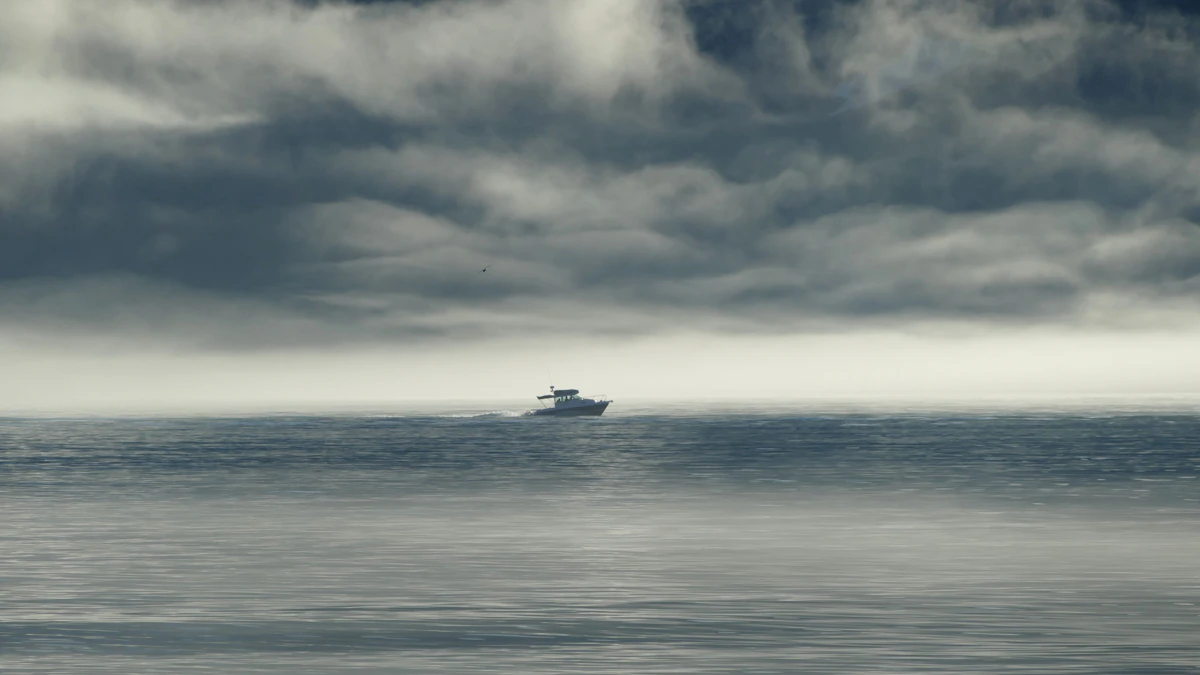
That said, my personal recommendation is the ferry from Bodø to Moskenes. It takes about 3.5 hours, costs around $30-45 USD per person (more if you're bringing a car), and the arrival into the archipelago with mountains slowly emerging through the fog is genuinely one of the most cinematic travel moments I've ever had. No film score required.
One mistake I made that I'd love to save you from: I booked the return ferry without confirming that the car spaces were actually included in my reservation. The result was that our car stayed in Bodø and we had to improvise getting around the islands. Lesson learned the hard way: book well in advance through Torghatten Nord, the company that runs the ferry, and read every single detail of your confirmation email.
What to See in Lofoten: The Must-Dos (and One That's Slightly Overhyped)
Reine and the Reinebringen Viewpoint
Reine is the village on every Lofoten postcard, travel magazine cover, and Instagram feed you've ever scrolled through. Red cabins reflected in still water, snow-dusted peaks in the background, golden light that makes even a mediocre photographer look talented. The real thing is genuinely that beautiful. It's also more crowded than you might expect, especially in July and August.
The Reinebringen viewpoint involves about a 45-minute uphill hike. It's steep and there's a bit of exposure near the top, but the view over the archipelago is absolutely worth the effort. No entrance fee, just wear proper shoes. I watched someone attempt this in flip-flops and the secondhand anxiety was overwhelming.
Svolvær: The Capital That Keeps It Real
Svolvær is the largest town in Lofoten and your landing point if you fly in directly. It lacks the postcard drama of Reine, but it has something arguably more valuable: actual grocery stores where you can stock up on supplies without paying restaurant prices. It also has the famous twin rock pinnacle called Svolværgeita that climbers famously leap between, and a solid selection of hostels.
I stayed two nights at Svolvær Sjøhuscamping, paying around $45 USD per night in a shared room. It was rustic, smelled like damp wood, and was exactly what I needed.
Henningsvær: Home to the World's Most Absurd Soccer Field
There is a soccer field built on rocks in the middle of the ocean here. It doesn't seat 80,000 fans and it's not hosting Champions League matches, but it might have the most improbable and spectacular backdrop of any sports venue on the planet. The village itself is charming, packed with art galleries and cozy cafes where a cappuccino runs about $7 USD. You'll adjust to Norwegian coffee prices faster than you'd think.
Nusfjord: Where the Troll Legends Actually Make Sense
Nusfjord is the oldest and best-preserved fishing village in Lofoten, and if you visit outside peak season, the silence here feels almost physical. The rorbu cabins (traditional fishermen's quarters converted into tourist accommodation) have centuries of history baked into their walls. When the fog drops between the peaks at dusk, you don't need anyone to explain why Norwegian folklore filled these landscapes with supernatural creatures. You just get it.
Honestly, if I had to pick just one village to spend a night in, I'd choose Nusfjord over Reine. Less foot traffic, more soul.
Hiking Munkebu and Ryten
The Munkebu trail is about a 5-hour round trip with sweeping views of Lake Stuvdalsvatnet and the surrounding peaks. Not technically demanding, but you'll want a decent base level of fitness before you tackle it.
Ryten is another classic: the trail ends at a cliff overlooking Kvalvika Beach, which is essentially a paradise beach accessible only by foot. It took me about 2.5 hours to reach it. Worth every single step.
Real Cost of Traveling to Lofoten: 2026 Budget Breakdown
Norway is expensive. I'm not going to dress that up for you. But with planning, you can do a meaningful trip without completely wrecking your finances.
| Category | Budget Travel | Mid-Range | Comfortable |
|---|---|---|---|
| Accommodation (per night) | $30-50 (camping/hostel) | $80-150 (basic rorbu) | $200-400 (premium rorbu) |
| Food (per day) | $25-40 (self-catering) | $50-80 (mixed) | $100+ (restaurants) |
| Internal transport | $10-20/day (bus/bike) | $30-50/day (rental car) | $50+/day (car + fuel) |
| Activities | $0-20 (free hiking) | $30-80 (guided tours) | $100+ (Arctic safaris) |
| Estimated daily total | $65-110 | $190-360 | $450+ |
The single most effective money-saving strategy in Norway: shop at budget supermarket chains like Rema 1000 or Kiwi (yes, the chain is actually called Kiwi) and cook your own meals at your hostel or rorbu kitchen. A generous sandwich you make yourself costs around $4-5 USD. That same sandwich at a cafe costs $18-22 USD. Multiply that difference over a week and you're talking about several hundred dollars, which is basically a night in a rorbu.
When to Visit Lofoten: Seasons and the Stuff Nobody Mentions
Summer (June-August): Midnight Sun and Crowds
The midnight sun is real, and it is genuinely disorienting in the best possible way. At 2 AM there's the kind of warm golden light you'd expect at 7 PM. Puffin colonies are active, primarily on Røst Island and along the cliffs of Runde. All hiking trails are open and accessible. Prices are at their peak and so is the tourist traffic.
Fall (September-October): The Sweet Spot
This is when I visited and it's my top recommendation. Fewer tourists, slightly lower prices, jaw-dropping autumn colors across the landscape (deep oranges, reds, and yellows against the dark rock), and the first northern lights of the season start appearing. The trade-off is unpredictable weather. I had three consecutive rainy days in Å, the village at the western end of the E10 highway.
Winter (November-March): Northern Lights and Polar Night
If the northern lights are your primary reason for coming, this is your window. But you're entering polar night territory: in December, you get maybe 2-3 hours of dim, twilight-quality light per day. Roads can be genuinely challenging. Many businesses and restaurants close for the season. You'll need proper technical gear for any outdoor activity.
According to Visit Norway, the Lofoten Islands receive more than 500,000 visitors annually, with about 60% concentrated in the summer months. If you visit in July, you are very much part of that statistic and you should book accommodation weeks in advance.
Where to Stay: Rorbu Cabins, Hostels, and Camping Under the Arctic Sky
The rorbu experience is the quintessential Lofoten accommodation. These are traditional red fishermen's cabins, usually built on stilts over the water, that have been converted into tourist rentals. The aesthetic is beautiful and the experience of waking up to a fjord view from your kitchen window is genuinely hard to beat. Prices range widely: from around $80 a night for the most basic options to $400 or more for newly renovated ones with high-end Nordic design.
I spent three nights in a rorbu in Sakrisøy, near Reine, for $110 USD per night for two people, kitchen included. The first two days were perfect. The third day brought so much rain that the picture window with a fjord view basically became a gray wall of water. Nordic magic includes the moody gray days. You accept the whole package.
For budget travelers, campgrounds charge roughly $20-35 USD per night and typically include showers and a communal kitchen. Camping in summer is completely viable. In winter, do not wing it unless you have serious cold-weather experience.
Puffins and Wildlife: What You'll Actually Encounter
Puffins are probably the most photogenic wildlife in Lofoten and also the most frequently overlooked by visitors who don't know where to look. They are not everywhere. The best sightings are at specific colonies, primarily on Røst Island (reachable by ferry from Bodø) and along certain cliffs on Vestvågøy.
They are small, slightly clumsy, brilliantly colored, and completely unbothered by human presence. You can get surprisingly close without disturbing them. That said, some basic rules apply: don't feed them, don't position yourself between a puffin and its burrow, and don't chase one around trying to get the perfect shot. I know that seems obvious. I watched someone do all three of these things in the same afternoon.
Beyond puffins, you can spot white-tailed eagles, seals lounging on rocks, and potentially humpback or sperm whales if you book a wildlife cruise out of Andenes or Stø.
Renting a Car, Driving the E10, and Why the Road Connects Everything
The E10 is the highway that runs the full length of the archipelago from east to west, passing through every major village. It covers about 106 miles in total. Renting a car is far and away the most practical way to explore it on your own schedule.
Car rental starts at roughly $60-80 USD per day for a compact. Fuel in Norway runs about $2.20-2.50 USD per liter (sometimes higher in remote spots), so budget accordingly. If you're used to American fuel prices, the sticker shock is real.
Intercity buses do cover the main route and cost between $5 and $20 USD per leg, but the schedules are limited and you lose a lot of flexibility. Getting from Svolvær to Reine by bus involves transfers and takes 2 to 3 hours.
There's also a community of cyclists who ride the entire E10. Beautiful? Absolutely. Comfortable? Not always. The Arctic wind has a very strong opinion about what direction you should be traveling, and it is rarely the direction you want to go.
Frequently Asked Questions
What is the best time to see the northern lights in Lofoten?
The ideal window runs from late September through mid-March, when there's enough darkness for auroras to be visible. September and October have the added benefit of relatively more stable weather. To actually see them, you need clear skies (the biggest challenge in northern Norway), distance from artificial light sources, and a willingness to be outside in the middle of the night. No app can guarantee aurora activity, but the Norwegian meteorological service at yr.no includes aurora forecasts alongside weather data.
Can you visit Lofoten on a tight budget?
Yes, but it helps to define what tight means in a Norwegian context. At $70-90 USD per day using hostels or campgrounds, cooking your own food, and sticking to free hiking, a Lofoten trip is doable. Below that range, things get difficult because Norwegian baseline prices have a high floor regardless of how frugal you are. The biggest lever you have is accommodation: one night in a premium rorbu can cost as much as four nights in a hostel.
Do Americans need a visa to visit Norway?
US citizens do not need a visa for tourist visits to Norway of up to 90 days. Norway is part of the Schengen Area even though it is not a European Union member. Just make sure your passport is valid for at least six months beyond your travel dates, which is standard practice for international travel. Check the Norwegian government's official immigration site for the most current entry requirements before you book.
How many days do you need in Lofoten?
Five days gives you enough time to visit the main villages (Svolvær, Henningsvær, Reine, Nusfjord, and Å) and complete two or three solid hikes. Seven to ten days lets you slow down, explore less-visited areas like the interior of Vestvågøy, and take the ferry out to Røst for puffin watching. Less than four days and you're going to leave feeling like you just scratched the surface.
There are destinations that look better in photos than they do in real life. Lofoten is not one of them. The landscape is every bit as dramatic in person as anything you've seen online, the villages have genuine character that hasn't been entirely smoothed over for tourism, and the experience of standing above the Arctic Circle in that strange, luminous Nordic light that doesn't exist anywhere else in the world makes the cost of getting there feel completely justified. My practical advice: go in September, book the ferry at least two weeks out, stock your kitchen from the local supermarket, and splurge on at least one night in a rorbu even if it's the most basic one you can find. The combination of rock, cold water, quiet, and that particular quality of northern light is something I would go back to without a second thought.
Compartir artículo