Do Planes Really Fly Over the Bermuda Triangle? The Truth
Do planes avoid the Bermuda Triangle? Discover the real facts behind the myth and what it actually means for your next Caribbean flight.
A buddy of mine asked me this over coffee a few months back, right after I'd been telling him about my layover in Miami on the way to the Caribbean. He looked me dead in the eye and said he'd read that airlines are actually banned from flying over the Bermuda Triangle. Like, officially prohibited. I stared at him for a second, not sure whether to laugh or launch into a full explanation. I ended up doing both.
The Bermuda Triangle and Planes: Let's Just Clear This Up
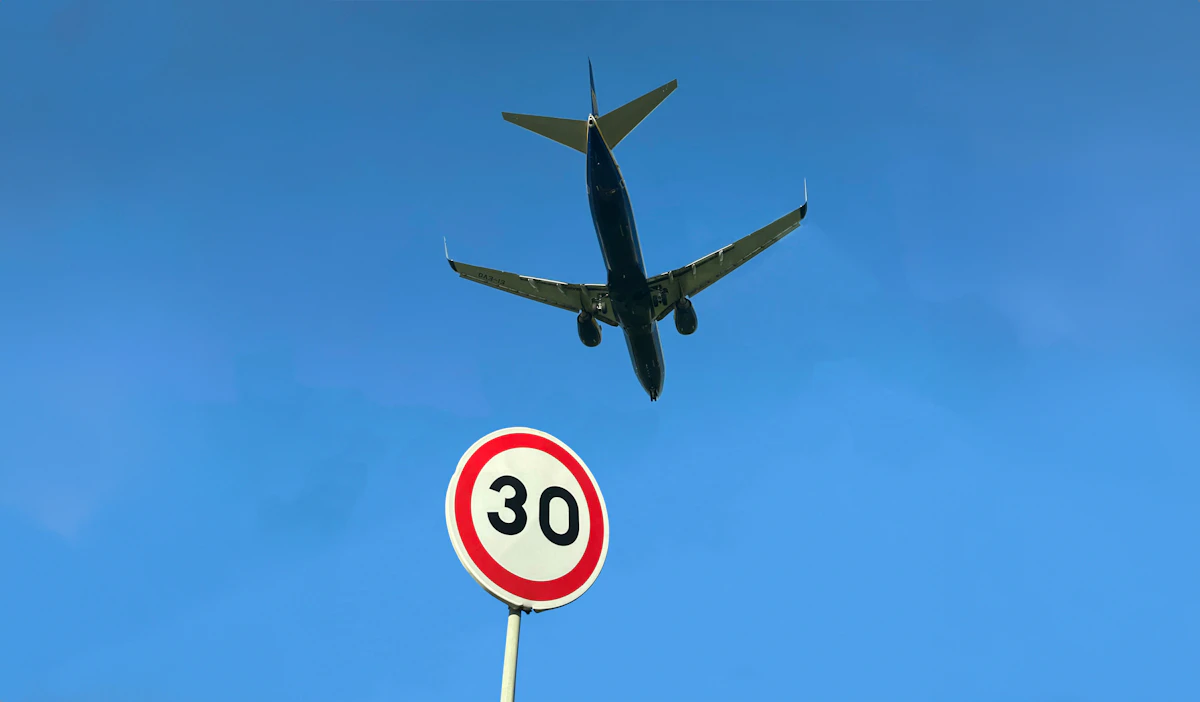
Planes fly over the Bermuda Triangle. All the time. Commercial flights cross that airspace multiple times a day with zero special protocols, no mandatory rerouting, and no official warnings telling pilots to steer clear. Not the FAA. Not ICAO. Nobody. There is no aviation authority on the planet that has designated that airspace as restricted or hazardous.
The idea that planes avoid the Bermuda Triangle is flat-out false.
That said, there are some genuinely interesting layers here worth unpacking, especially if you care about how aviation actually works and how flight routes get designed. So let's dig in.
What Even Is the Bermuda Triangle?
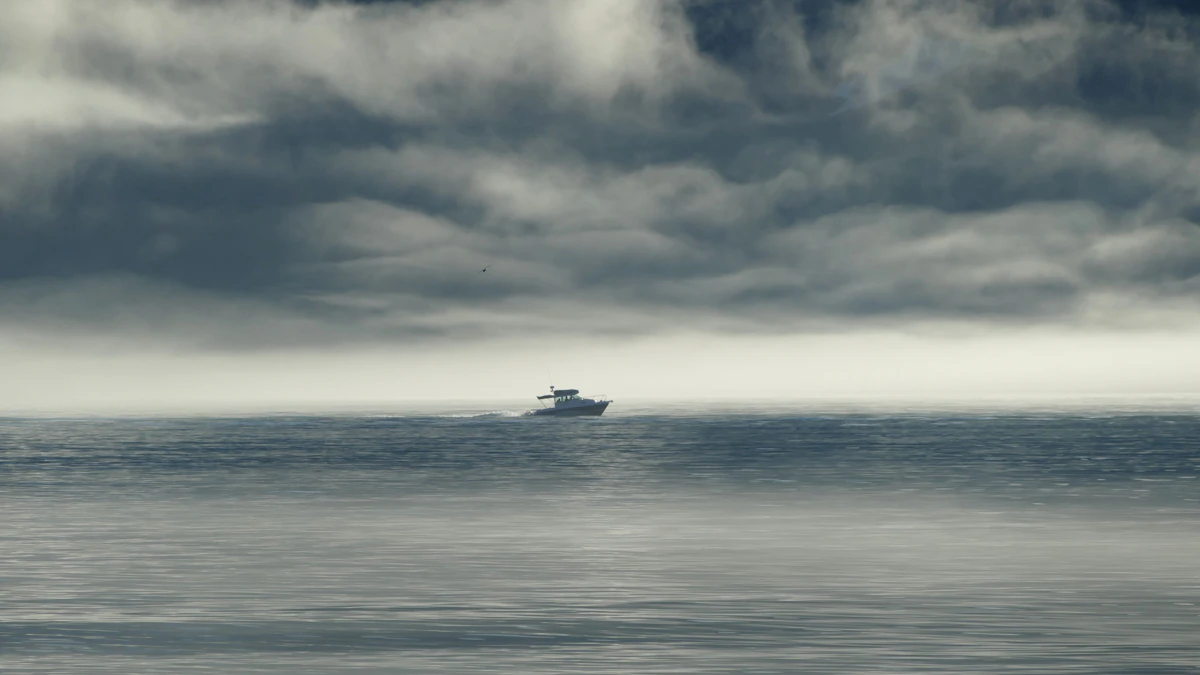
Just so we're all working from the same map: the Bermuda Triangle is a stretch of the North Atlantic roughly outlined by Bermuda, Miami (Florida), and Puerto Rico. It covers something in the neighborhood of 500,000 square miles of open ocean.
I say "roughly outlined" because that boundary was never official. It was popularized by author Charles Berlitz in a 1974 book, and from there it burned itself into the cultural imagination. Before that book, the area had no agreed name and no defined perimeter recognized by any maritime or aviation authority. A writer named Vincent Gaddis actually coined the term "Bermuda Triangle" back in 1964 in a pulp adventure magazine called Argosy, and Berlitz turned it into a global publishing phenomenon.
There's a certain irony in that. The "most mysterious place on Earth" got its name from an entertainment magazine. Not exactly the origin story people imagine.
So Why Do People Think Planes Avoid It?
This is where it gets interesting.
The confusion probably comes from mixing two separate things together: the real aviation accidents that happened in that region during the 20th century, and the storytelling that turned those accidents into something supernatural.
The most famous case is Flight 19, which went down in December 1945. Five TBM Avenger torpedo bombers from the U.S. Navy took off from Fort Lauderdale on a training exercise and never came back. A rescue aircraft sent to find them also disappeared. Fourteen people gone in a single afternoon.
That's a real tragedy. Fully documented. But the Navy's own investigation pointed to the most likely cause being pilot disorientation. The flight leader was having compass trouble and ended up guiding the formation in the wrong direction until they ran out of fuel over open ocean. No magnetic anomalies. No alien interference. A human error with devastating consequences, the same kind that has caused hundreds of accidents in aviation history, from the Atlantic to the Pacific to everywhere in between.
And here's the thing: the North Atlantic is a massive, unforgiving body of water with some seriously challenging weather, especially in the Caribbean and Gulf zones. But accidents in that region are not statistically more frequent than in comparable oceanic areas with similar traffic volume. Lloyd's of London, which is basically the global reference for maritime insurance risk, does not charge a premium for ships traveling through that zone. If the risk were real, the insurance market would have priced it in a long time ago.
The FAA and ICAO Have Never Flagged This Area as Dangerous
This is the point I most want to drive home, because it's the most verifiable.
The International Civil Aviation Organization (ICAO) is the body that regulates global airspace. Together with the FAA in the United States, they're the ones who establish restricted zones, mandatory flight corridors, and official alerts for pilots. You can search the entire NOTAM database (Notices to Airmen, which are the official notifications of aerial hazards or restrictions) and you will find exactly zero references to the Bermuda Triangle as an area to avoid.
Transatlantic and Caribbean flight routes are designed around wind optimization, fuel efficiency, and flight time. North Atlantic winds shift significantly between seasons, and airlines constantly adjust their routes to take advantage of favorable jet streams or sidestep known turbulence zones. If a flight from Miami to Lisbon looks like it's "avoiding" the triangle on a flight tracker map, it's because the pilots are chasing tailwinds, not because anyone is afraid of disappearing.
This is the same logic that explains why flights from the U.S. East Coast to Asia sometimes arc way up over Alaska. It looks weird on a flat map, but it follows the curve of the Earth and the most efficient winds. Flight routes follow fuel logic and physics, not folklore.
Are There Actual Challenges to Flying in That Region?
Yes, and this is the part most clickbait articles skip entirely.
The Caribbean and western Atlantic do come with some real operational considerations for aviators:
- Hurricane season runs from June through November. Tropical storms and hurricanes generate zones of severe turbulence that pilots actively avoid. But that applies to the entire Caribbean basin, not some mystical triangle with magic corners.
- The ocean floor in this region includes some of the deepest trenches in the Atlantic. When ships or aircraft go down in those depths, wreckage becomes essentially unrecoverable. That feeds the "disappeared without a trace" narrative when the reality is that the ocean swallowed the debris thousands of feet below the surface, just like it does in any deep-water zone anywhere on Earth.
- Magnetic variation in parts of the Caribbean does exist, but it's not unique or anomalous. There are several regions around the world where local magnetic variation can slightly affect older analog instruments. Modern navigation systems, including GPS, are not affected by this in any meaningful way.
The uncomfortable takeaway is that from an aviation standpoint, the Bermuda Triangle has nothing special going on. It's ocean. Big, deep, occasionally stormy ocean.
And here's my honest opinion, even if it's not a popular one: I think the myth stays alive because it's a better story than the truth. "Magnetic anomaly swallows Navy squadron" is a more satisfying explanation than "experienced pilot had a broken compass and made a bad call on a dark night over the ocean." That's understandable. But that preference for the better story is exactly why so many travel myths survive long past the point where anyone bothered to fact-check them.
How Many Planes Have Actually Disappeared There?
Nobody has a clean definitive number, and that's partly because the count depends heavily on what you include and what time period you're looking at.
But researcher Lawrence David Kusche published a book in 1975 called "The Bermuda Triangle Mystery: Solved" in which he went back through the original records of every documented "disappearance" and found that a significant number of cases had happened outside the geographic zone entirely, others had obvious explanations that Berlitz had simply left out, and some didn't show up in official records at all.
Kusche's conclusion was that the accident rate in the Bermuda Triangle was consistent with the volume of air and sea traffic in the region. Not above average. Just traffic-adjusted normal.
That book is nearly fifty years old, and the aviation industry has long treated it as a reliable reference. The problem is that Berlitz's book sold millions of copies and Kusche's book gets read mainly by people already looking for a rebuttal. The myth survives on volume alone.
Why Do People Still Believe This?
Because it works. As a story, as content, as something to bring up over coffee and watch someone's eyes go wide.
Every time someone asks me whether planes really avoid the Bermuda Triangle, I think about how easy it is to build a persistent belief on top of real accidents and selectively omitted details. A few dramatic incidents, some conveniently unexplained wreckage, a catchy name from a pulp magazine, and suddenly you've got a mythology that outlasts the people who created it.
The aviation industry has moved on. The FAA hasn't lost a minute of sleep over the Bermuda Triangle. Airlines route through it daily. Passengers sit on those flights scrolling Instagram with no idea they're supposedly in a zone of interdimensional peril.
What This Actually Means for Your Next Trip
Practically speaking? Nothing. And that's exactly the point.
If you've got a flight with a layover in Miami, Nassau, or anywhere else in the region, the Bermuda Triangle is not a variable in any equation that matters to you. It won't affect your travel insurance. It won't show up on any airline risk report. It shouldn't change a single decision you make.
What might actually change is how skeptically you look at articles claiming to reveal "the zones airlines secretly avoid" or "the places they don't want you to fly over." There's a whole genre of content built on that premise, and almost none of it holds up to basic verification.
For a real Caribbean trip, here's what genuinely matters:
- Hurricane season (June to November): Get travel insurance that specifically covers cancellations and delays due to weather events. Don't skip this.
- Miami connection times: MIA is a big, busy airport. If you're connecting through there, give yourself buffer time. Tight connections in Miami are where Caribbean trips go sideways.
- Carry-on size compliance: American carriers are getting stricter about this. Know the dimensions before you show up at the gate.
On that last point, I've started being a lot more deliberate about my carry-on setup when I'm doing Caribbean routes. The fewer bags I check, the smoother the whole trip runs, especially when you're hopping between islands on smaller regional carriers that get weird about luggage.
The Myth Isn't Going Anywhere, and That's Probably Fine
I mean that sincerely. The Bermuda Triangle as a cultural legend has value that has nothing to do with aviation safety. It's part of how humans have always told stories about the ocean, about the unknown, about the edges of the map. Medieval cartographers literally wrote "here be dragons" on uncharted waters. Same impulse, different century.
The fact that the legend is wrong in its specific details doesn't make it less interesting as a phenomenon. And if you ever do fly to Bermuda (which is a very accessible, very real destination with direct flights from New York and Miami, by the way), you'll cross exactly that airspace without anything happening. But I guarantee you'll still glance out the window. Knowing something isn't real doesn't always stop it from feeling real.
The Bermuda Triangle isn't dangerous. What actually costs travelers money and stress is making decisions based on myths that nobody stopped to verify. Bad information about flight routes, hidden fees, or travel insurance gaps has burned me far more times than any imaginary triangle ever could.
Compartir artículo