Digital Nomad in 2026: The Complete Guide to Working Remotely
Ready to work while traveling the world? This honest 2026 digital nomad guide covers visas, costs, top destinations, and what nobody tells you.
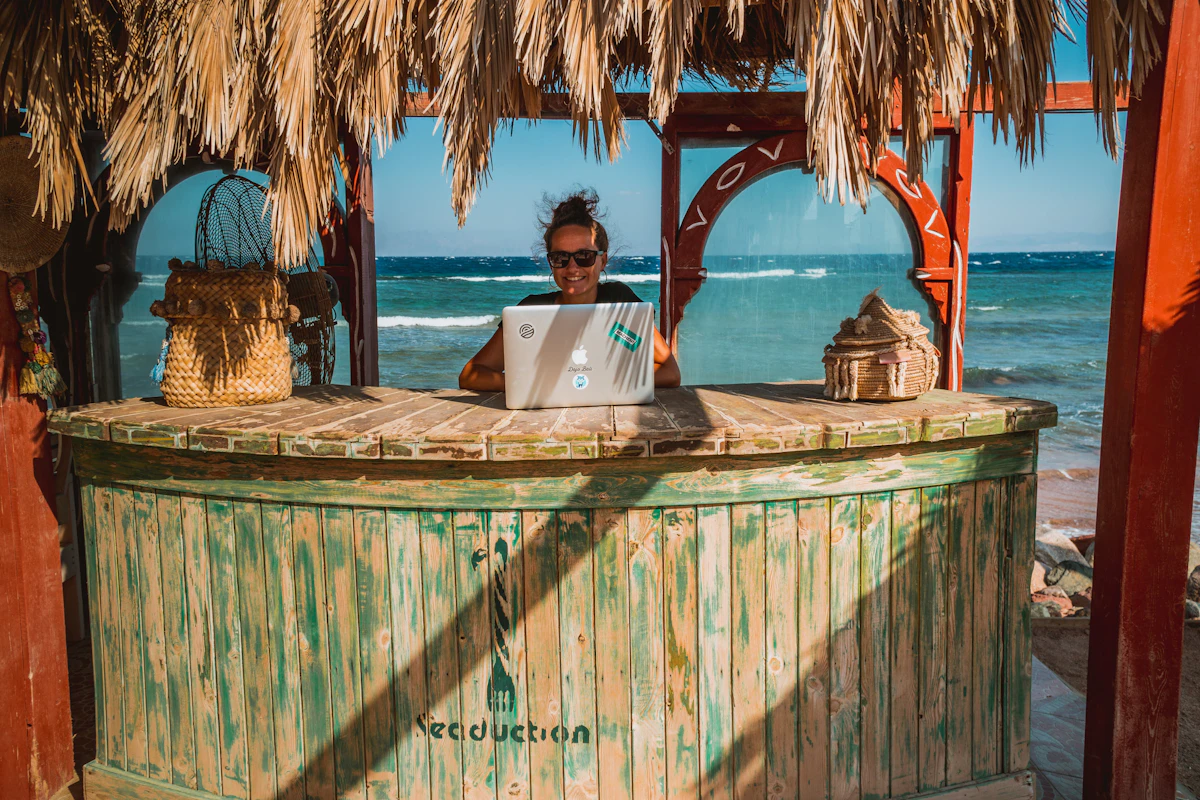
I remember the exact moment I made the decision. It was 7 PM on a Tuesday, I was sitting in an office in Austin, I'd been staring at the same spreadsheet for three hours, and someone had just microwaved fish in the break room. I had a laptop, a solid internet connection, and a job that could technically be done from anywhere on earth. So why was I still sitting there?
Being a digital nomad in 2026 is not the Instagram lifestyle people are selling you. It's logistics, it's bad WiFi at the worst possible moment, and it's explaining to your parents that no, you're not on vacation. But it's also waking up in Chiang Mai when it's 80 degrees out, grabbing a coffee for under a dollar, and starting your workday from a breezy terrace. Both sides are real. This guide covers both.
A few things worth understanding upfront before we dig in:
- You need to solve three things before you leave: stable income, a legal visa situation, and reliable internet
- The most popular digital nomad destinations cost between $800 and $1,800 USD per month, all in
- More than 60 countries now offer official digital nomad visas, and that number keeps climbing
- The biggest mistake people make isn't technical. It's failing to mentally separate "being somewhere new" from "being at work"
Can You Actually Work While Traveling, or Is It Just a Social Media Myth?
Honestly, it depends on who you ask and what kind of work you do.
If you're a web developer, designer, copywriter, marketing consultant, social media manager, video editor, or anything else that lives inside a screen, then yes, you can absolutely work from anywhere with a decent connection. If your job requires you to physically touch something, be present at a specific location, or operate machinery, this lifestyle is not for you and I'm not going to pretend otherwise.
According to MBO Partners, there were roughly 18 million American digital nomads in 2024. By 2026, that number has kept growing, driven largely by companies that adopted permanent remote work policies after the pandemic. What's interesting about that statistic is that most of those people aren't bohemian freelancers living off passive income. They're regular employees at normal companies who negotiated a remote arrangement.
That's the biggest shift of the past few years. You no longer have to quit your job or build your own business to live this way.
The Boring (But Critical) Stuff You Must Figure Out Before You Leave
Before you book that flight to Lisbon, there are three things that need to be fully sorted. Not 80% sorted. Fully.
Your income. Whether you work remotely for a company, have freelance clients, or run a digital business, you need to know exactly what's coming in every month. I'd recommend having at least three months of expenses saved before you leave. Not because making it work is impossible, but because Murphy's Law is real and the first month always runs over budget. When I landed in Berlin thinking I had everything figured out, I spent 40% more than projected in the first month alone, mostly on stuff I never thought to account for.
Your visa situation. This is where people get into real legal trouble. Entering a country on a tourist visa and working there for foreign clients is a legal gray area in many countries and outright illegal in others. The good news is that in 2026, more than 60 countries have created visas specifically designed for digital nomads, and a lot of them are surprisingly easy to get.
Some of the most accessible options right now:
- Portugal (D8 Visa): Allows non-EU citizens to live legally for up to a year, renewable. You'll need to show proof of income of at least around $3,300 USD per month
- Georgia: No visa required for most nationalities, you can stay up to 365 days, and the cost of living is remarkably low
- Costa Rica: Digital nomad visa valid for up to two years, requires proof of $3,000 USD per month in income, and the application process is relatively straightforward
- Mexico: No official digital nomad visa, but tourist entry allows up to 180 days and many people work legally under this status (it's a gray area, so know what you're getting into)
- Thailand: Launched its Long Term Resident (LTR) visa, valid for 10 years, designed specifically for remote workers with verifiable income
Your internet backup plan. This sounds obvious. It isn't. There are "nomad-friendly" cities where the cafe WiFi drops every 20 minutes, power outages happen weekly, and upload speeds are a joke. Always travel with a backup option: a local SIM card or an international eSIM. I personally use Airalo and genuinely recommend it with zero financial incentive. In destinations where I'm unsure about connectivity, I also pick up a local SIM on day one. It costs between $5 and $20 USD and has saved me more times than I can count.
The Best Destinations for Digital Nomads in 2026
This is the section most travel blogs get wrong. They hand you a pretty list of cities without telling you what to actually expect.
Medellin, Colombia is still probably the best value destination in the world for remote workers. The weather sits at a perfect 72 degrees year-round, neighborhoods like El Poblado and Laureles are packed with cafes that have strong, reliable WiFi, a decent cup of coffee runs about $1.50, and furnished one-bedroom apartments start around $500 USD per month. The nomad community there is massive. The one honest caveat: outside the main expat zones, the city requires real street smarts. It's not the paradise TikTok makes it look like, but it absolutely works as a productive base.
Chiang Mai, Thailand has something genuinely special going on. Coworking memberships start at around $80 USD per month (CAMP inside Maya Mall is legendary and open 24 hours), street food runs $1 to $2 a meal, and the whole city has an energy that feels built for people who want to work comfortably while abroad. I spent six weeks there and it was honestly one of my most productive stretches ever. The downside is real though: it's far from everything, and the connecting flights from the US can be long and expensive.
Tbilisi, Georgia is the best-kept secret of 2026. The city has this wild, gorgeous architecture that looks like nothing else in Europe or Asia, the natural wine is cheaper than bottled water back home, and most nationalities can show up without a visa and stay for up to 365 days with zero paperwork. A well-located furnished apartment runs between $300 and $600 USD per month. Internet is solid. The expat and nomad community has been steadily growing for years, which means the infrastructure around remote work has grown with it.
Lisbon, Portugal is the expensive option that still draws crowds for good reason. The city is beautiful, safe, has Western European infrastructure, and there's no language barrier for most travelers. The downside is that apartment prices have surged hard over the past few years. A one-bedroom in popular neighborhoods like Alfama or Bairro Alto can easily run $1,200 USD or more per month. If you're set on Lisbon, look at surrounding areas like Almada or Setubal where prices are significantly more reasonable if you're okay commuting in a few days a week.
| Destination | Estimated Monthly Cost | Internet Quality | Nomad Community | Easy Entry |
|---|---|---|---|---|
| Medellin, Colombia | $900-$1,400 USD | Good | Huge | Yes (90-day tourist) |
| Chiang Mai, Thailand | $800-$1,200 USD | Very Good | Huge | Yes (tourist visa) |
| Tbilisi, Georgia | $700-$1,100 USD | Good | Growing fast | Yes (365 days, no visa) |
| Lisbon, Portugal | $1,500-$2,200 USD | Excellent | Large | D8 visa required |
| Playa del Carmen, Mexico | $1,000-$1,600 USD | Variable | Large | Yes (180-day tourist) |
All cost estimates include housing, food, local transportation, and occasional coworking. Flights and insurance are not included.
The Tools I Actually Use (And the Ones I Dropped After Three Months)
Some blogs give you a list of 40 apps. I'm not doing that.
For finding accommodation, the combination that works best is Airbnb for the first week while you land and get your bearings, then Facebook Marketplace or local expat groups to find a monthly rental. Long-term Airbnb prices are typically 30 to 50% higher than what you can negotiate directly with a landlord. That gap can mean $300 to $400 USD per month. Over several months, that's serious money.
For finding remote work, the platforms with the most real volume in 2026 are LinkedIn for salaried remote positions, Toptal and Upwork for technical freelance work, and We Work Remotely for curated, high-quality remote job listings.
For coworking spaces, Coworker.com has the most comprehensive directory with reliable reviews. That said, here's something counterintuitive that took me a while to accept: a great cafe with fast WiFi is sometimes better than an expensive coworking space. Coworkings are worth it when you need to network with other nomads, or when you have an important call and need guaranteed quiet. Otherwise, find the cafe where the owner knows your order and the password never changes.
One tool that genuinely changed how I plan new destinations is using ChatGPT for initial logistics research. If you haven't explored that use case yet, there are some non-obvious ways to use it that go well beyond just asking for restaurant recommendations.
Nobody Tells You This: Most Digital Nomads Work More Hours, Not Fewer
I need to stop here and say something that almost no travel blog will admit.
During the first few months of nomad life, most people work more hours than they did in a traditional office setting, not fewer. The FOMO is relentless. You're in an incredible city, but you have a deadline. The guilt of "I should be out exploring" gnaws at you constantly. And pulling late nights to see the city followed by 9 AM work calls destroys both the quality of your experience and the quality of your work.
What actually works, after spending a full year doing it wrong: treat the first three days in every new destination as normal work days. No late nights, no marathon sightseeing sessions. Find your coffee spot, figure out the transit, get oriented. After that, the novelty fades enough that the pull to neglect work eases up significantly.
Night flights also have a cost people underestimate. Sleeping badly on a red-eye and then jumping straight into work is a terrible idea that I repeated way more often than I should admit. If you fly overnight, build in at least half a day of recovery before committing to anything work-related. For those long-haul flights, I keep a pair of quality earplugs in my jacket pocket at all times. The difference between landing feeling wrecked versus landing functional comes down to sleep quality in the air, and that starts with actually blocking out engine noise.
What Does the Digital Nomad Life Actually Cost?
The honest answer: somewhere between $800 and $2,500 USD per month, depending heavily on your destination and your lifestyle.
The $800 end is achievable in Georgia, parts of Southeast Asia, or smaller cities in Latin America. The $2,500 range puts you in Lisbon, Barcelona, Tokyo, or anywhere in Western Europe. Cities like New York, Singapore, or Zurich are basically off the map for most nomads trying to do this sustainably.
What people forget to factor in when they first run the numbers:
- International health insurance: $50 to $150 USD per month depending on your age and coverage level. SafetyWing is the most popular option in the nomad community and starts at around $56 USD per month
- Flights between destinations: If you're moving every two to three months, budget at least $200 to $300 USD per month for airfare. More if you're doing long-haul routes across Asia or the Southern Hemisphere
- Coworking costs: $80 to $200 USD per month if you're not always working from home or a cafe
- Local SIMs and data: $20 to $50 USD per month
Avoiding common financial planning mistakes is just as important in nomad life as it is when booking a regular vacation. A lot of the same budgeting errors show up in both contexts.
The Tax Conversation Everyone Wants to Skip
Yes, digital nomads pay taxes. Or they should be.
The specifics vary based on your home country's tax laws and residency rules, and this is genuinely one area where I'd encourage you to talk to an accountant who specializes in expats before you go anywhere. Not because it's unmanageable, but because the mistakes here carry real consequences.
What I can say generally: many countries have tax treaties that prevent you from being taxed twice on the same income. Georgia has a flat 20% income tax rate for remote workers using their visa program. Estonia has an e-Residency program that lets you set up a European company remotely. Portugal's NHR (Non-Habitual Resident) regime historically offered significant tax breaks for foreign residents, though it was modified in 2024, so check the current version before banking on it.
The tax piece is where a lot of nomads play dumb until they can't anymore. Don't let it sneak up on you.
Packing for Long-Term Travel: Backpack vs. Suitcase
For trips longer than a month, everyone eventually lands on this debate. My answer has changed over the years.
I used to be a full-on backpack purist. Now I travel with a carry-on sized hard-shell suitcase (roughly 16x8x10 inches) and a small daypack. Together they stay within most airlines' carry-on limits, which means I never check bags and never wait at baggage claim. Budget carriers have their own quirks about sizing and fees, so always double-check the specific airline's policy before you show up at the gate.
What's always in my bag: laptop plus a universal power adapter, a portable charger with at least 20,000 mAh capacity, three to four days of clothing I can hand wash and dry overnight, physical and cloud copies of all important documents, and a good memory foam travel pillow for any flight over five hours. After years of skipping that last item, I finally committed to one and the difference in how I feel after a transatlantic overnight flight is significant.
If you're new to checking bags for longer trips and worried about luggage getting lost, reading up on what to do when an airline loses your bag before your first long flight is genuinely time well spent. Knowing the process ahead of time makes a stressful situation much easier to handle.
This Life Is Not for Everyone, and That's Completely Fine
I'm not going to close this out by telling you that digital nomadism is the future of work and everyone should be doing it. That would be dishonest.
Some people need a stable routine to be productive. Some people have partners or kids and the logistics multiply in ways that aren't always worth it. Some jobs require physical presence regardless of what you wish were true. And some people, after three months of constant movement, genuinely miss their own bed, their friends, their neighborhood coffee shop where everyone knows their order.
I've done this life. It changed how I see the world in ways I struggle to put into words. It also gave me stretches where the loneliness weighed more than the freedom.
The question I get asked most often is whether I'd do it again. The answer is yes, and I'm still doing it. But the question you should actually be asking yourself isn't whether I'd recommend it. It's whether you, with your specific job, your financial situation, and your personality, are ready for your office to look different every three months.
If the answer is yes, the rest is just logistics. And logistics, unlike loneliness or bad WiFi at a critical deadline, is something you can actually plan for.
Compartir artículo