Corfu in the Footsteps of the Durrells: A Real Traveler's Guide
Discover Corfu through the eyes of the Durrell family. Find the real filming locations, hidden beaches, and honest budget tips for 2026.
A friend texted me a while back: "Dude, have you seen The Durrells on PBS? I want to book a flight to Greece like right now." I told him yeah, I'd seen it, and that Corfu in real life is somehow even more absurdly beautiful than it looks on screen. Which honestly shouldn't surprise anyone. But what actually did surprise me the first time I visited was how accessible the island is. You see those photos of turquoise water, ancient olive groves, and those gorgeous Venetian facades in Corfu Town, and you assume it's going to cost you a small fortune. It doesn't. Not necessarily.
Corfu is one of those Greek islands you can actually do on a reasonable budget if you know where to avoid the tourist traps. The so-called Durrell tourism, driven by the ITV series The Durrells and Gerald Durrell's classic memoir, has put the island on a completely different radar: the curious traveler who wants more than a beach chair and a bucket of sunscreen. And for those of us who travel looking for layers, that's genuinely great news.
Who Were the Durrells and Why Does Corfu Still Remember Them
The Durrells arrived in Corfu in 1935. Louisa, the mother, decided to uproot her family from rainy England and move to a Mediterranean island they barely knew anything about. She brought along her kids: Larry (the writer Lawrence Durrell, who would go on to become pretty famous), Leslie, Margo, and young Gerald, who at just 10 years old was already collecting animals with an obsession that was, let's say, borderline alarming but turned out to be kind of genius.
Gerald Durrell wrote about those years in My Family and Other Animals, one of those books that genuinely makes you want to quit your job and move to an island. If you're planning a trip to Corfu and haven't read it yet, just stop what you're doing and download it tonight. It's required reading before you board that plane.
The family lived in several houses around the island between 1935 and 1939. Those houses, the surrounding landscapes, the village of Perama, the bay of Kalami where Larry used to write... all of it is still there. Modified, sure. Partially turned into tourist attractions, absolutely. But still recognizable if you know what to look for.
The Durrell Houses: Where to Find Them and What to Expect
I want to be upfront about something here: there's no official "Durrell House Museum, $15 entry, audio guide included" situation going on. The whole thing is more scattered than that, and depending on the season, some spots have decent signage and others have absolutely nothing.
The main locations worth visiting:
-
Villa Anastasiou (the "Strawberry Pink Villa") near Perama is probably the most photographed of the Durrell homes. That salmon-pink facade you've seen all over the show is completely unmistakable. It sits along the coastal road south of Corfu Town and you can see it from outside without paying a dime.
-
The White House in Kalami, on the island's northeast coast, is where Lawrence Durrell actually lived and wrote. It operates today as a restaurant and guesthouse. Eating a full meal there costs more than the food really justifies (it's decent, not amazing), but grabbing a cold beer on the terrace while staring out at Kalami Bay and thinking about the fact that Lawrence Durrell wrote Prospero's Cell right here? That part is genuinely worth it.
-
Kontokali and the surrounding bay area were the backdrop for several scenes. There's less to specifically seek out here, but the bay itself is beautiful at sunset and the vibe is much quieter than the main tourist zones.
There's no official marked trail connecting all of these, so the most practical approach is to rent a car or a scooter, load up a list of GPS coordinates on your phone, and connect the dots at your own pace. I did it on a 125cc scooter I rented for about $25 a day in Corfu Town, and it was genuinely the best decision of that trip.
If you'd rather have someone else do the navigating, local guides offer themed Durrell tours. You can find them on Viator or just ask at the tourist information offices in Corfu Town. A half-day tour runs roughly $35 to $45 per person depending on the season.
Is the Durrell Trail Worth a Trip on Its Own?
Short answer: no. Long answer: the Durrells are the excuse, but Corfu itself is the real reason to go.
That's not a criticism of the literary trail at all. It's just that the island has so much more going on that it would genuinely be a shame to reduce your whole trip to a checklist of filming locations. Corfu Town is a UNESCO World Heritage Site. The Old Town has this rare architectural mix of Venetian, French, and British colonial influence, all layered on top of each other from different eras of occupation. The lanes in the Campiello neighborhood, with laundry strung between balconies and cats napping on every doorstep, are some of the most beautiful I've seen anywhere in the Mediterranean. And I've seen a fair amount of Mediterranean towns at this point.
The Esplanade, the main square facing the Ionian Sea, is one of those public spaces that genuinely helps you understand why people choose to live in the Mediterranean. It has a certain quality of afternoon light that's almost impossible to describe without sounding like you've had one too many glasses of ouzo.
If you go to Corfu just for the literary route and skip everything else, you're going to leave feeling like you missed something important.
How Much Does It Cost to Get Around Corfu in 2026
Your daily budget is going to depend a lot on how you move around the island. Corfu has that typical split personality of popular Greek islands: it can be surprisingly affordable, or it can drain your wallet fast if you wander into the tourist-oriented spots without thinking.
Here's a realistic breakdown based on what I've personally spent and what I've seen other budget-conscious travelers pay:
| Expense | Estimated Cost (USD) |
|---|---|
| 125cc scooter rental | $20-30/day |
| Meal at a local taverna (not the harbor) | $10-15/person with a drink |
| Hostel or family guesthouse outside Corfu Town | $25-45/night (mid-season) |
| Public bus between towns | $1.75-2.25/ride |
| Corfu Archaeological Museum entry | ~$7 |
| Palace of St. Michael and St. George entry | ~$7 |
Public transportation exists but it's limited. KTEL Kerkyras runs regular bus lines between Corfu Town and the main villages. For the more remote spots where some of the Durrell houses are located, the bus simply doesn't go. You need a scooter, a rental car, or a taxi, and taxis add up quickly if you're relying on them for multiple trips.
The North Coast: Best Beaches and the Fewest Crowds
If you visit in July or August, Corfu Town and the southern beaches are going to be absolutely packed. That's just the reality. The north coast, particularly the stretch between Kassiopi and Agios Stefanos (the northern one, not the southern one, yes there are two and yes it's confusing), has coves that remain manageable even in peak season if you time things right.
Kalami, where Lawrence Durrell lived, has a small beach but the water is that shade of blue that looks fake in photos. Kouloura, just a few kilometers away, is one of the smallest and most beautiful coves on the entire island. A fishing dock, a handful of boats, a few restaurant tables. In August it fills up, but if you show up at 9am you can still have the water almost entirely to yourself.
The best time to visit the north coast is May through June or September. The water is already warm (or still warm), the crowds are thinner, and prices are noticeably more reasonable. If you have any flexibility at all, avoid August, especially if what you're looking for is something close to the quiet, unhurried atmosphere the Durrells actually experienced. In August, Kalami has a line to sit on the terrace of the White House.
Corfu Town Deserves at Least a Day and a Half, Not an Afternoon
Here's the opinion that most travel blogs skip over: Corfu Town is not just your arrival point. It's a destination by itself. A lot of visitors fly in, walk around the Esplanade for an hour, buy a magnet, and head straight for the beach. That's a real mistake.
The Old Town has museums that are genuinely worth your time. The Corfu Archaeological Museum (around $7 entry) has one of the best-preserved archaic Gorgon sculptures in all of Greece. The Palace of St. Michael and St. George now houses the Museum of Asian Art, which is such a random and wonderful cultural combination that it earns a visit on the weirdness factor alone.
Do yourself a favor: walk through the Campiello neighborhood without a map. Get a little lost. Find a cafe where the people inside look like locals rather than tourists, order a Greek coffee, and just sit there for a while. That costs almost nothing and it's where Corfu actually shows you something real.
How to Get to Corfu Without Overpaying
Corfu has its own international airport, Ioannis Kapodistrias Airport (CFU). It sits right next to the water and the landing approach is one of the most spectacular in Europe because the runway basically ends at the sea. The landing itself is worth getting a window seat for.
Direct flights from major US and European cities operate mainly from May through October. Budget carriers like Ryanair and Wizz Air run seasonal routes from European hubs, and connecting through Athens or another European city can get you there for a reasonable total. For the best fares, the standard advice still holds: search 6 to 8 weeks out and stay flexible on travel days.
Outside of peak season, flying into Athens and catching a ferry from Piraeus is often the cheapest option. The overnight crossing takes around 11 to 12 hours, but if you book a basic cabin you arrive rested and the ticket can run as low as $35 to $55. Ferries are operated mainly by Anek Lines and Minoan Lines.
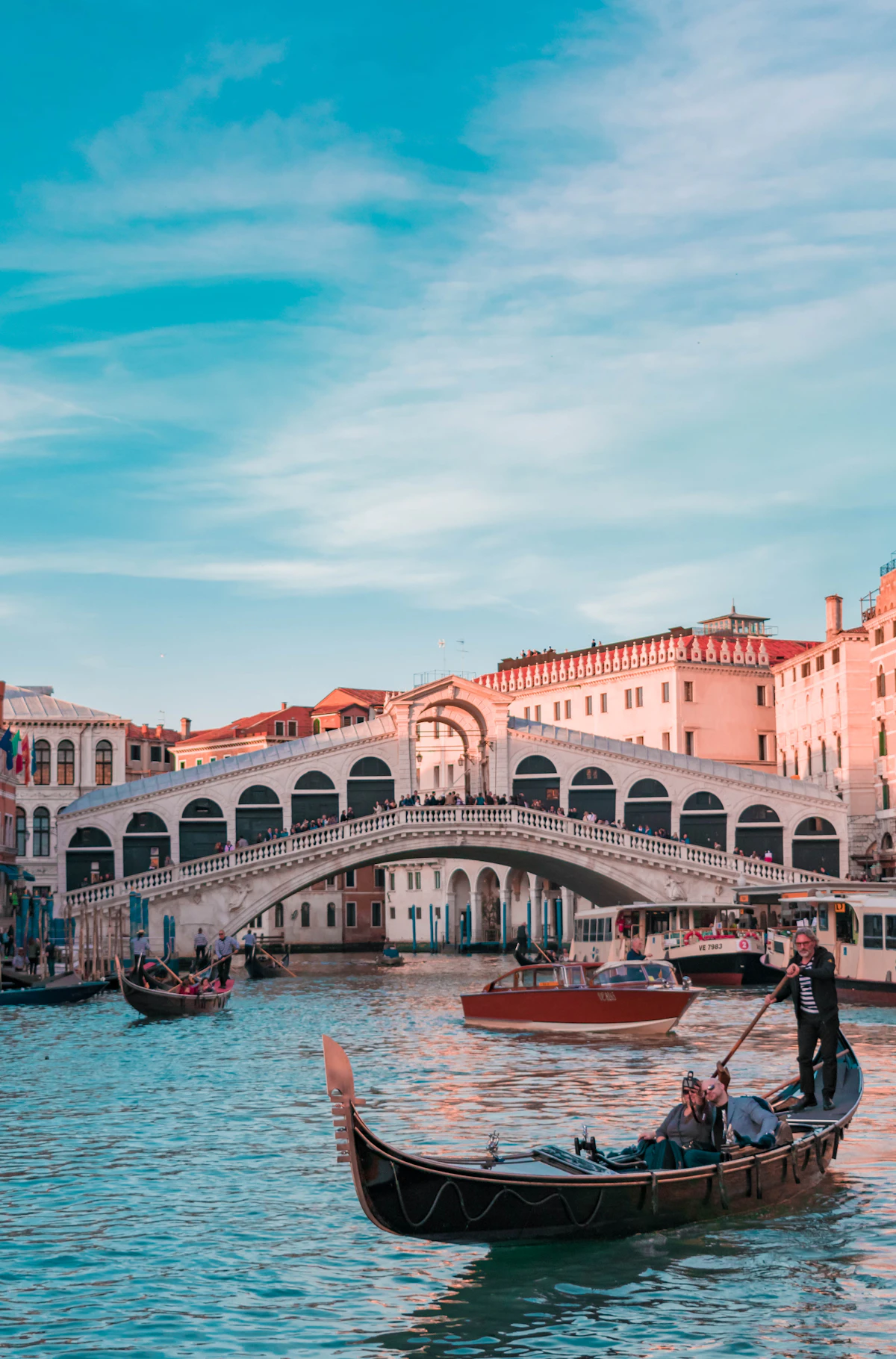
If you're doing a broader European trip, there are also ferry routes from Ancona, Bari, and Venice in Italy, which pairs beautifully with an Interrail pass if you're already moving across Europe by train.
One practical note that almost nobody mentions: Greece uses Type F outlets (the standard round European plug). If you're coming from the US or the UK, pack a universal travel adapter before you leave. It's one of those things that feels obvious until you're standing in your guesthouse at 11pm with a dead phone.
What Nobody Actually Tells You About the Real Corfu
Here's the honest version: Durrell tourism has brought a different kind of visitor to the island, and that's quietly starting to change certain corners of it. Kalami, for example, was a near-unknown fishing village a decade ago. Today there are yachts anchored in the bay in August and the prices at the White House restaurant reflect exactly that shift. That's not necessarily a criticism. It's just what happens when a place becomes visually iconic on British television and Instagram simultaneously.
The locals I've gotten to know in Corfu (I've been back twice, so there are a few familiar faces in certain Corfu Town cafes) have a complicated relationship with the Durrell legacy. On one hand, literary tourism tends to attract visitors who are actually interested in the culture and the landscape rather than just the beach. On the other hand, Gerald Durrell's writing portrayed Corfiots with that particular brand of affectionate but condescending humor that was common among British writers observing "the locals" in the 1930s. It reads differently now, and the people of Corfu know it.
There's nothing wrong with the island leaning into the interest. But the version of Corfu that the TV series sells, this timeless, dreamy, unhurried paradise frozen in 1937, doesn't fully exist. It probably wasn't entirely accurate even back then.
That said, I'm not going to pretend the reality is a letdown. When you get up into the north of the island and you're looking at ancient olive trees and deep blue water at the same time, and the afternoon heat is doing that heavy, specific thing it does in the Greek islands... you get it. You understand exactly why Louisa Durrell looked around and said "this is where we're staying." I can't fully explain what that feeling is, and I'm not sure it needs explaining.
Compartir artículo