Campervan Road Trip Through Cordoba's Subbética Region
Discover the ultimate campervan road trip through Cordoba's Subbética region. Real costs, best stops, and honest tips for slow travel in southern Spain.
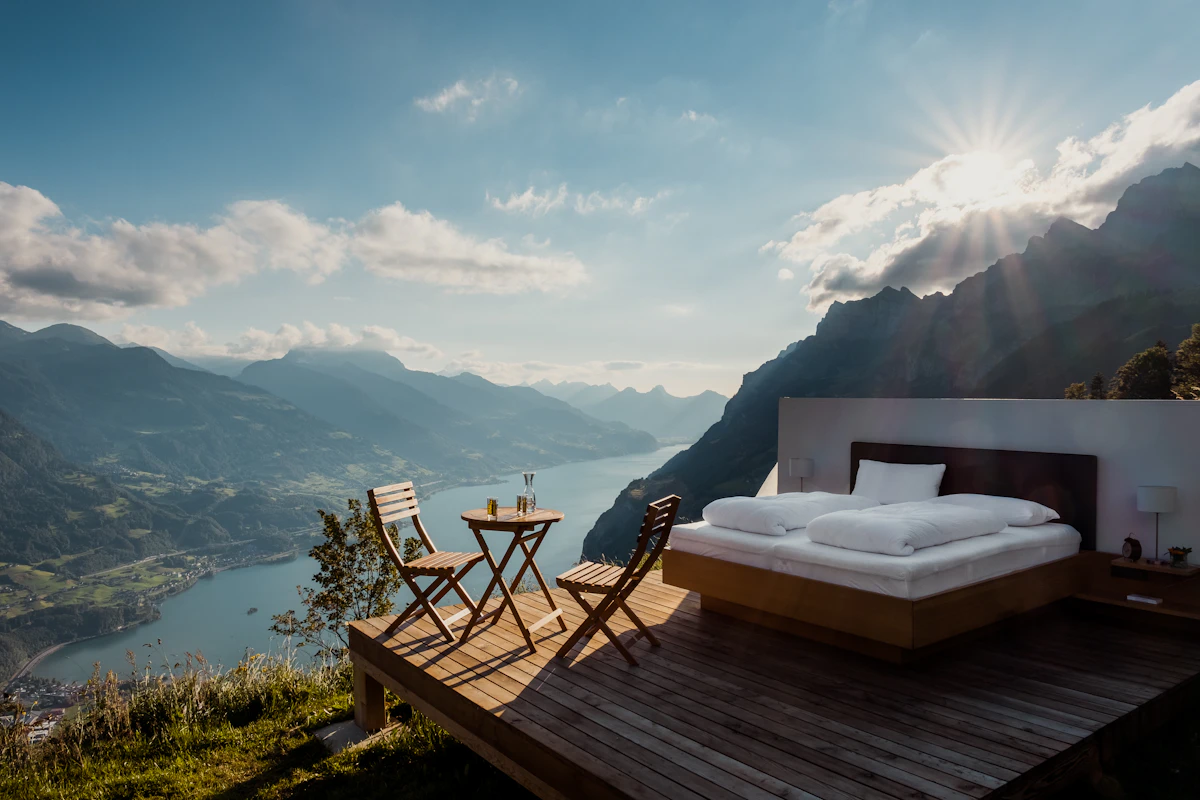
There's a weird thing that happens when you've been traveling for years: you start completely ignoring what's right in front of you. I'd crossed three continents chasing jaw-dropping landscapes and it turned out that two hours from Córdoba there's a corner of southern Spain that looks like Tuscany had a love child with classic Andalusia. Rolling olive groves as far as you can see, whitewashed villages perched on hilltops, and air that actually smells like wild thyme. The Subbética region of Córdoba province. And me, someone who could navigate Bangkok's backstreets better than most Spaniards could, showed up embarrassingly late to this one.
My first trip through the area happened in a campervan, almost by accident. What started as a loose weekend getaway kept stretching itself out day after day, and somewhere in the middle of it I realized I'd stumbled onto something that genuinely changed how I think about slow travel. If you're planning a campervan route through the Subbética, here's everything I wish I'd known before I turned the key.
What Is the Subbética and Why Does It Work So Well for a Campervan Trip?
The Subbética is a comarca (a regional district, roughly similar to a county) in the southern part of Córdoba province in Andalusia. At its core is the Sierras Subbéticas Natural Park, surrounded by around 17 municipalities including Priego de Córdoba, Zuheros, Luque, Iznájar, Carcabuey, and Rute. You won't realistically hit all of them, but the six to eight most visited ones make for a genuinely satisfying loop.
Here's why this area is almost tailor-made for campervan travel:
- Villages are close together, typically 10 to 25 miles apart, so you move at whatever pace you want without burning through fuel.
- The A-339 highway and the smaller regional roads that branch off it are some of the most beautiful driving I've done in Spain. Think hairpin curves, ancient oak trees, endless olive groves, and views that will make you pull over constantly without even planning to.
- There are rest areas and recreational zones where parking a larger vehicle isn't a logistical nightmare.
- Mass tourism hasn't fully arrived yet. You feel it immediately in the prices and in the way locals actually talk to you at the bar like you're a person, not a revenue source.
Honest take you probably won't find in a guidebook: the Subbética is actually better suited to slow travel than the Costa del Sol or even the city of Córdoba itself. Not necessarily because it's more beautiful in some objective ranking, but because the human scale of the place makes everything feel more manageable and more real.
What It Actually Costs to Road Trip the Subbética by Campervan
This is the question I get asked more than any other, so I'm going to be direct about it.
If you don't own a campervan, renting one is your biggest expense. In 2025 and 2026, renting a basic campervan in Spain runs roughly $85 to $130 per day during shoulder season, depending on the company and the setup. Peer-to-peer platforms like Yescapa or Campanda can bring that down to around $60 per day if you find the right listing. I've rented several times since I don't own one, and those numbers track with what I've paid.
If you're rolling in your own rig, here's what a realistic daily budget looks like broken down:
| Expense | Daily Estimate (USD) |
|---|---|
| Fuel (gas or diesel) | $9 to $17 |
| Lunch or dinner at a local bar | $11 to $15 per person |
| Campervan area or overnight parking | $0 to $13 |
| Museum entries or natural sites | Free to $5 |
| Total (own vehicle) | $30 to $50 per person |
That's one of the most affordable road trips I've done anywhere in Western Europe, and Spain is not exactly a budget destination compared to Eastern Europe. The Subbética is genuinely an exception.
The Practical Route: Where to Start and What You Can't Skip
There's no single correct order, but there's a logical one. I entered through Cabra, which sits right off the A-45 highway connecting Córdoba to Málaga, and finished in Priego de Córdoba, which is the undisputed crown jewel of the whole area.
Cabra
This is your smoothest entry point. It has a functional campervan area near the Fuente del Río park. The Cabra Archaeological Museum houses one of the most important Roman sculptures ever found in Andalusia, and almost nobody knows about it. That's exactly the kind of discovery that makes these road trips worth doing.
Zuheros
One of the most photogenic villages in the entire comarca, and that's saying something because the competition is stiff. An Arab castle perched on a limestone cliff, a parish church with killer views, and a valley below that doesn't look entirely real. Plan for at least two hours here. There's parking for larger vehicles on the outskirts of the historic center. The village streets themselves are not campervan-friendly, fair warning.
Cueva de los Murciélagos (Cave of the Bats)
Located just below Zuheros, this cave contains Neolithic remains and prehistoric cave paintings that are genuinely impressive. The guided tour runs around $4 to $5 per person. Worth it completely, unless enclosed underground spaces are not your thing, in which case skip it without guilt.
Priego de Córdoba
The non-negotiable end point of any Subbética route. Priego has more ornate Baroque fountains per square mile than anywhere else I've been, a historic neighborhood called the Barrio de la Villa that is almost unfairly beautiful, and the Fuente del Rey, which is one of those places that gets permanently filed away in your memory. The local olive oil also carries its own Protected Designation of Origin status and is, without any exaggeration, some of the best I've tasted anywhere.
Iznájar
Worth a detour just for the reservoir. The image of this white hilltop village reflected in the still water of the lake looks like a filtered Instagram photo but absolutely isn't. You can park the campervan near the lake for the night without any fuss, which makes it a perfect last stop before heading back.
Where to Sleep When You're Traveling by Campervan Here
This is the practical question that most travel guides dance around, so let's get into it directly.
The Subbética doesn't have the density of organized campgrounds you'd find in northern Spain, but it's not poorly equipped either. Here are your real options:
- Municipal campervan areas: Priego de Córdoba, Cabra, and Iznájar all have designated areas. Some include electrical hookups and a dump station, others are basically a large flat parking area. Usually free or a token fee of $5 to $11 per night.
- Natural Park recreational zones: The park has recreational areas like Fuente del Pino and Los Villares where overnight stays in campervans are generally tolerated, though not always officially regulated. I stayed in both without any issues, but check current signage since rules shift by season.
- Camping Los Villares: The only fully equipped campground I know of in the immediate area. It has campervan pitches available. Facilities are simple and functional, not glamping by any stretch.
One honest warning: Google Maps is frequently out of date on these campervan areas. I use the Park4Night app for Spain-specific overnight spots and it's consistently more reliable than anything else I've tried. Nobody's paying me to say that, it's just what actually works.
The Stuff Nobody Warns You About Before This Trip
I want to be straight here even though it slightly contradicts the enthusiastic tone of everything above. This route has real practical challenges worth knowing.
The mountain roads are gorgeous but they are narrow. On some stretches between Zuheros and Luque, or climbing up toward Carcabuey, a larger campervan (anything over about 20 feet) will need careful maneuvering. I drove a 17-foot van without much drama, but I watched a family in a 26-foot motorhome have a genuinely stressful experience at one junction. Know what you're working with before you commit to those roads.
Wind is also a real factor. In fall and winter, the mountain range generates gusts that will shake your vehicle at night. If you're camping in cold weather, aim for lower elevations near the reservoirs rather than exposed hilltop areas.
Cell coverage is spotty in parts of the Natural Park. If you're on a major carrier like a Spanish equivalent of AT&T or Verizon (Movistar or Vodafone locally), you'll have reasonable service. If you're on a budget MVNO, there are pockets of the park where you will genuinely fall off the map. Plan your navigation downloads accordingly.
With all of that said, I'd do this route again without hesitation. Sometimes I'm not entirely sure whether what I'm doing counts as nature travel or just well-disguised escapism with a steering wheel. Probably both, honestly.
Best and Worst Times to Visit
Spring, specifically late March through May, is when the Subbética is at its absolute best. The olive groves and hillsides of the Natural Park light up with color, temperatures sit comfortably between 60 and 72 degrees Fahrenheit, and the tourist crowds are thin enough that you can actually hear yourself think. This is my unqualified recommendation.
Early fall, September and October, is a close second and works beautifully.
Summer is technically doable but the interior of Córdoba province regularly hits 100 to 108 degrees Fahrenheit in July and August. A campervan without serious air conditioning in August in the Subbética is not a vacation, it's an endurance test. And running the AC heavily drains power fast if you're not hooked up at a serviced area.
Winter has its charms on clear days, but rainy cold weekends can make the whole experience harder to manage than it's worth. Not impossible, just less comfortable. A local guy I met at a bar in Rute, while we were both drinking the town's famous anise liqueur, told me that "the Subbética rewards the visitor who comes without hurry and with a jacket." He was right on both counts. It was November and I'd shown up with a single light hoodie because I am apparently an eternal optimist.
Hiking Trails You Shouldn't Skip
The Sierras Subbéticas Natural Park has several officially marked trails. Four that are genuinely worth your time:
- Ruta del Bailón: About 7.5 miles roundtrip with some impressive waterfalls. Moderate difficulty. The final stretch near the main waterfall is slippery, so watch your footing. Access is from Zuheros.
- Sendero de los Humedales de Iznájar (Wetlands Trail): Easy and relatively short. Perfect if you're traveling with kids or just want a low-effort walk while enjoying the reservoir scenery.
- Vereda del Castillo de Luque: Short (about 2.5 miles) but the panoramic view from the hilltop makes it worth the leg work. The village of Luque itself deserves a slow wander.
- Pico La Tiñosa: The highest point in all of Córdoba province at just over 5,100 feet. This one is a real hike that demands proper footwear and a reasonable fitness level. The views from the summit are some of the best in all of Andalusia, full stop.
For official trail maps and current trail conditions, the Junta de Andalucía website for the Natural Park has downloadable maps. It's not the most updated site on the internet, but the core information is accurate enough to be useful.
What to Eat and Drink Here (And Where to Find It)
Rute is the anise capital of Spain, no contest. The town's Anise Museum costs about $3 to $4 to enter and is surprisingly entertaining even if you're not an anise fan. I personally find sweet anise a little overwhelming, but the orange and honey liqueurs produced in the same distilleries are something else entirely.
Priego de Córdoba's extra virgin olive oil with its own DOP designation is the ingredient to bring home. If you can track down a local mill (almazara) and buy directly, a 5-liter tin runs roughly $22 to $30, which is significantly less than you'd pay for comparable quality oil at any specialty grocery store back home. Buy as much as your luggage situation allows.
Roasted baby goat (chivo lechal) is the signature dish of the region and every restaurant in the interior does it well. Skip the place with the fancy sign and the curated Instagram aesthetic. In these villages, the best spot is almost always the one that's been open for 30 years with a handwritten menu on a chalkboard. That rule has never failed me in rural Spain.
Luggage and Logistics for This Kind of Trip
If you're in a campervan, packing is mostly solved because everything travels with you. But if you're doing this route in a regular car and staying in local guesthouses or rural B&Bs (available in most villages for roughly $38 to $70 per night for a double room), traveling light makes everything easier.
For this type of inland road trip I typically bring a carry-on sized hard shell suitcase that stays in the trunk, plus a lightweight daypack for hikes. The Kono Cabin Luggage 22-inch Rigid Lightweight 4-Wheel Spinner is what I've been using for a couple of years on exactly these kinds of regional trips. It fits in any car trunk, barely weighs anything, and holds up fine on dusty country roads. If you want a more budget-friendly option, the Amazon Basics 22-inch Hard-Side Spinner checks all the boxes for this kind of straightforward road trip.
One thing people overlook on Spain-based trips: if you're renting a campervan, the vehicle insurance doesn't cover your personal belongings or trip cancellations. A basic travel insurance policy can close that gap for not much money, and it's genuinely worth thinking through before you go.
The Subbética by campervan is not a trip for everyone. It asks something of you: a willingness to take wrong turns, to lose cell signal for a few hours, to stay three days somewhere you only planned to spend one afternoon. For some people that sounds like a headache. For others, and I'm pretty consistently in this group, that's exactly the point of traveling in the first place. Whether I'd run the exact same route again next year or go searching for the next comarca that doesn't appear on any tourist map yet, I genuinely can't tell you. But I already know that whichever one it is, I'm taking the campervan.
Compartir artículo