Best Street Markets in Southeast Asia: Bangkok, Hanoi & Bali
Discover the must-visit street markets of Bangkok, Hanoi, and Bali. Insider tips on bargaining, food, timing, and avoiding tourist traps. Plan your trip now!
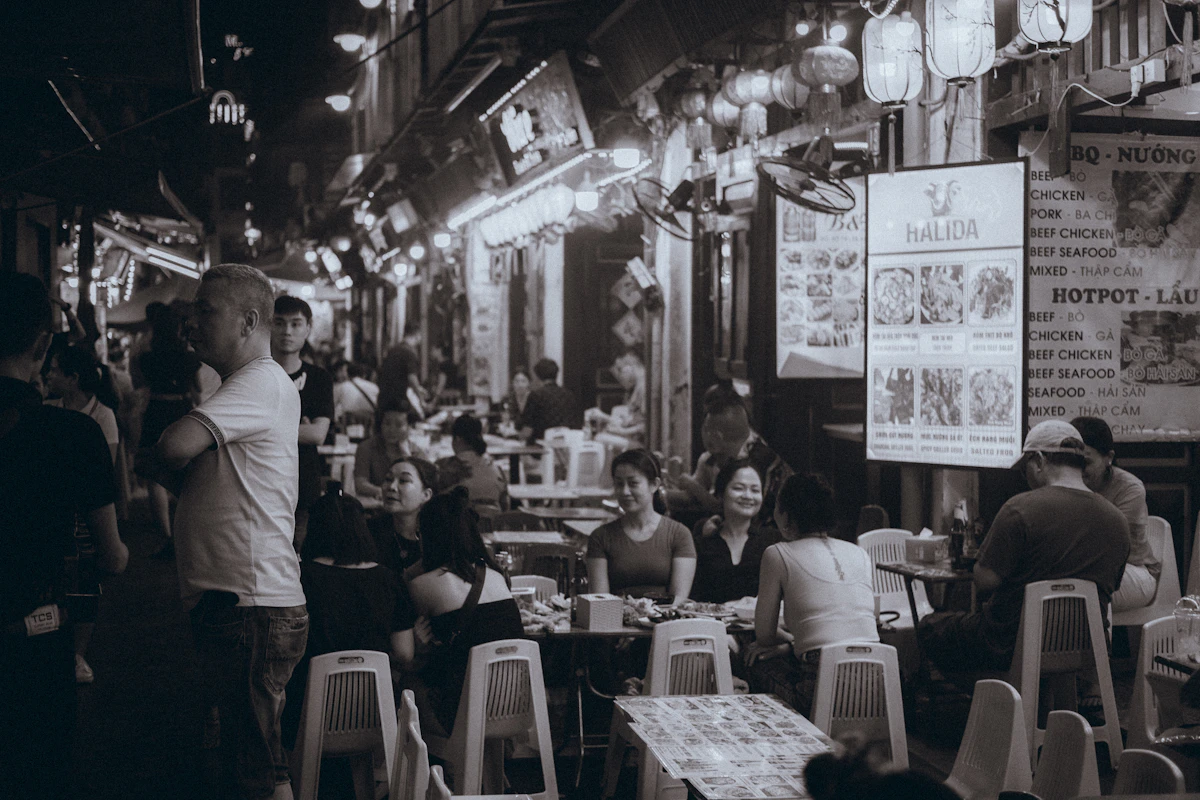
The first time I walked into Chatuchak Market in Bangkok, I had a list of five things I wanted to buy. I walked out with twelve items, no list, and a Bob Marley t-shirt I never asked for. That's just what happens at Southeast Asian markets: they swallow you whole. But once you figure out the rhythm, all that beautiful chaos starts making a kind of weird sense, usually somewhere around your second or third visit.
The street markets of Bangkok, Hanoi, and Bali are three of the most intense shopping and food experiences in all of Asia. And here's the thing: they are nothing alike. Lumping them together is one of the most common mistakes travelers make before they arrive. Each one runs on its own logic, its own hours, its own pricing reality, and its own set of traps. Here's the quick version before we get into each one:
- Bangkok has the largest weekend market in Asia and a late-night street food scene that nothing in the region can really touch.
- Hanoi offers markets that still feel genuinely local, with prices that stay surprisingly low if you know where to look.
- Bali blends real traditional craftsmanship with a very polished tourist machine. Beautiful, but you have to learn how to filter.
Chatuchak and the Markets of Bangkok: Glorious, Sweaty, Organized Chaos
Chatuchak Weekend Market is the largest weekend market in Asia. Full stop. It covers over 35 acres, holds around 15,000 stalls, and pulls in somewhere between 100,000 and 200,000 visitors every Saturday and Sunday. Those numbers come from Bangkok's tourism authority, and I'll personally vouch for them because I spent two consecutive Saturdays there and still found entire sections on day two that I had completely missed on day one.
The market is organized into numbered sections: vintage clothing in sections 2 and 3, plants and home decor in 2B, ceramics in section 7, and food scattered across multiple spots throughout the map. The official map is available on the Chatuchak Weekend Market website, though honestly, it only gets you so far because vendors rearrange pretty frequently. The Chatuchak app (available for both Android and iOS) has a category search function that works a lot better in practice.
What does it actually cost to shop there? Even without bargaining, prices are already low by American standards. A shirt runs anywhere from 150 to 300 baht (roughly $4 to $8 USD). A decent leather bag might go for 500 to 900 baht ($14 to $25 USD). Decorative items, ceramics, and vintage clothing tend to have more room for negotiation built into that first price.
How to Bargain at Chatuchak Without Being Rude About It
Bargaining in Bangkok comes with its own unwritten rules. Rule one: do not ask for a price if you have zero intention of buying. Sounds obvious, but you would be surprised how often people do this and create unnecessary awkwardness. Rule two: a reasonable counteroffer is somewhere around 60 to 70 percent of the asking price, not 30 percent. I have watched travelers throw out absurdly low numbers and turn what should have been a friendly transaction into something uncomfortable for everyone involved.
What actually works: buying multiple items from the same vendor and negotiating the whole bundle together. A 15 to 20 percent discount on the total is completely normal in that situation, and most vendors will go there without much resistance.
Look, maybe I'm oversimplifying things a little, but the core point is this: Chatuchak is not a place where you "beat" the vendor. These are professional merchants who have been running their stalls for years. The goal is to land on a price that feels fair to both sides, not to walk away feeling like you won something.
Beyond Chatuchak, Bangkok has several other markets worth your time. The Pak Khlong Talat Flower Market runs 24 hours and hits its peak somewhere between 2 and 5 AM, which sounds insane until you actually go and realize it is one of the most visually stunning things you can do in the city for free. Asiatique the Riverfront on the Chao Phraya River is more touristy with higher prices, but the setting along the water is genuinely atmospheric and worth a few hours. And Or Tor Kor Market is where Bangkok's restaurant chefs actually shop for fresh produce, which tells you everything you need to know about the quality.
Hanoi: The Markets the Influencers Haven't Ruined Yet
Hanoi still has something that Bangkok lost years ago: markets where local people are actually buying things for their real, everyday lives. Not everything is staged for someone with a camera and a content calendar.
Dong Xuan Market is the largest market in the city, has been running for over a century in the Old Quarter, and spreads across four floors covering textiles, wholesale clothing, spices, kitchen tools, and flowers. Prices here are among the lowest you will find in any Southeast Asian market that tourists can still easily access. A hand-embroidered fabric bag goes for roughly 80,000 to 150,000 Vietnamese dong (about $3 to $6 USD). A bag of spices? Under a dollar.
The trap at Dong Xuan is the shops along the outer perimeter, especially the ones facing Dong Xuan Street and Hang Chieu Street. Those are clearly aimed at tourists and can charge triple what you'll pay if you actually go inside, climb the stairs, and mix with the wholesale vendors. The real market is up on the inner floors, and that's where the good stuff is.
Why You Should Be at the Hanoi Market Before 7 AM
Here's my slightly counterintuitive take: the best time to eat around Hanoi's markets is not noon, not dinnertime, it's between 5 and 7 in the morning. The stalls selling bún bò (beef noodle soup) and bánh cuốn (steamed rice rolls) that appear around the market at that hour offer a quality and a price that genuinely disappears as the day goes on. A full bowl of bún bò on Hang Giay Street costs between 35,000 and 50,000 dong, which is about $1.50 to $2 USD. The "tourist-friendly" version of the same dish at a nearby restaurant with an English menu can cost four times that.
The Hanoi Night Market (Chợ đêm phố cổ) runs Friday through Sunday evenings in the Old Quarter streets and it's fine, but to be straight with you: it's significantly more touristy than Dong Xuan. Great for a first-night introduction to the city, not the place you keep coming back to if you've been traveling around Asia for a while.
One practical thing I really wish someone had told me before my first trip: Hanoi market vendors generally don't take cards. Bring Vietnamese dong in cash. From my personal experience, Vietcombank ATMs tend to charge lower fees on foreign cards than most other options in the city, though that can vary depending on your home bank.
Bali: Real Craftsmanship Inside a Very Polished Tourist Show
Bali is genuinely hard to read. And I say that with real affection, because I've been twice and I still think it's simultaneously one of the most overhyped and underrated destinations in Asia. Both things are true at the same time. Sometimes I'm not even sure whether what I feel there is admiration or just exhaustion from all the "spiritual awakening on the Island of the Gods" messaging everywhere you look.
Sukawati Market, located in southern Bali between Sanur and Ubud, is the main craft market on the island. Two floors packed with sarongs, hand-carved wooden masks, ikat textiles, statues, and religious offerings. Tourist prices start comically high: a decorative sarong might open at 200,000 rupiah (around $12 USD) and land at 40,000 rupiah (about $2.50 USD) after five minutes of calm negotiation. That gap is not an exception. It is the standard operating procedure.
What genuinely surprised me at Sukawati: the high-quality wood carvings made by actual craftsmen from nearby villages are sitting in the stalls toward the back of the second floor. Not the ones you see first when you walk in, those tend to be more mass-produced. You have to walk deeper in.
A quick but important aside: Bali has an enormous souvenir industry where a lot of what looks like "local handicrafts" is actually manufactured in Java or imported from China. That's not automatically a problem, but if you're paying artisan prices for something that came off an assembly line, someone is not being straight with you. The difference shows up in the wood's weight, the irregular tool marks, and the slight imperfections you get with handmade pieces. Factory-made carvings are too symmetrical. A craftsman in Mas, a village near Ubud where the same family has been carving for four generations, explained this to me and I have never shopped for woodwork the same way since.
Ubud Market is the most photographed market in Bali, and that popularity comes with a cost. The first stalls you see when you enter from Jalan Raya Ubud are pure tourist territory. Move further inside and prices get somewhat more reasonable. For actual local food, the morning market at Ubud that runs from about 5 to 7 AM in the same square is a completely different experience: exotic tropical fruits at local prices, jaja (traditional Balinese sweets), freshly made sate lilit. By 8 AM, most of that is already gone.
Is Bargaining Actually Worth It? An Honest Answer
A lot of travelers get so fixated on bargaining down to the absolute lowest possible price that they lose perspective on something important. At markets like these, the difference between the tourist price and the local price on small items is usually somewhere between $1 and $3. For most visitors, that's genuinely nothing. For the vendor, it can actually matter.
Bargaining makes real sense on mid-range and higher-priced items (anything above $10 USD), on multiple purchases from the same stall, and when the opening price is clearly inflated to double or more what's reasonable. On anything under $2, spending five minutes haggling back and forth doesn't really benefit anyone.
If you're trying to stretch your travel budget across the whole trip, there are honestly much more effective places to focus than grinding over small market purchases. Choosing the right accommodation category, timing your flights, and understanding regional airline rules will move the needle a lot more than winning an extra dollar off a sarong.
What to Bring to the Market (And What to Leave at the Hotel)
Small backpack, local currency in cash, comfortable shoes, and clothes you can move in. That's the whole list. I have watched people show up to Chatuchak dragging a rolling suitcase and genuinely suffer through the narrow crowded aisles. Don't do that to yourself.
If you're planning to buy in volume, textiles, clothing, or crafts, packing a lightweight foldable tote bag is a cheap and practical solution. When flying budget airlines around the region, keeping your main luggage carry-on only is worth thinking about in advance. Airlines like AirAsia and Vietjet have specific cabin bag rules and the fees for checking a bag at the gate add up fast when you're hopping between Bangkok, Hanoi, and Bali.
Timing Your Visit to Each Market
This actually changes everything:
- Bangkok: Chatuchak runs Saturdays and Sundays, 9 AM to 6 PM. Avoid arriving between 11 AM and 2 PM if you can. The heat plus the crowds at that window are genuinely brutal. The 9 to 11 AM window is the sweet spot.
- Hanoi: Old Quarter markets operate every day. The weekend night market runs Friday through Sunday, 6 PM to 11 PM. November through January is the dry, cooler season and makes walking around the city significantly more comfortable.
- Bali: Ubud Market is open daily, but the local morning section disappears before 8 AM. The dry season runs May through September and is the most comfortable time to visit. During rainy season, November through March, some stalls cut back their hours.
A friend who had been living in Bangkok for several months told me over breakfast one morning that the only real strategy for surviving Chatuchak was to go in with one clear goal and leave before hunger made you irritable. It sounds too simple to be useful. But with the heat and the crowd, your brain genuinely starts to malfunction somewhere around the two-hour mark, and that is exactly when you end up buying a Bob Marley t-shirt you never wanted.
The Tourist Traps Nobody Warns You About
Two patterns that I have seen play out repeatedly across all three destinations:
The "fixed price" sign: Some stalls post signs saying fixed price or no bargaining. At Chatuchak, this is occasionally genuine, particularly for vintage or designer items. At Ubud Market, it is almost never true. The sign is an opening tactic, not a policy.
The artificial urgency move: When a vendor tells you "only today" or "this is the last one," that is almost never accurate. I have gone back to the same stall three days later and found the exact same "last piece" still sitting there waiting for its next owner. Manufactured urgency is a universal sales tool. It's not a real market condition.
Honestly, after ten years and more Asian markets than I can actually count, I still don't have a perfect formula for knowing when I've hit the right price. Sometimes I walk away convinced I got a great deal and then spot the identical item two stalls down for half what I paid. Sometimes I barely negotiate and the vendor accepts immediately, which always means I should have pushed a little further. That's just how the market works. It's not a puzzle to solve. It's a place to be present in, eat well at, and let take you somewhere unexpected, even if that somewhere is the wrong side of a Bob Marley t-shirt.
Compartir artículo