Argentine Steakhouse in Madrid: Why Chamberí Is Worth It
Discover why Chamberí is Madrid's best neighborhood for authentic Argentine BBQ. What to order, what to pay, and tips no travel guide tells you.
There's a specific moment I keep coming back to, years after it happened. I'd just spent three weeks eating my way through Spain on a budget, surviving mostly on the classic "menú del día" lunch deals, when a Buenos Aires-born taxi driver in Madrid looked at me in the rearview mirror and said with complete conviction: "If you want a real parrilla in this city, you go to Chamberí." No address. No name of a restaurant. Just that.
I'd spent months in South America before this trip and I knew exactly what a proper Argentine grill meant. So I took the guy seriously.
What I found that day was something I genuinely wasn't expecting: a city that, without any official recognition or tourism campaign, has quietly built one of the strongest circuits of Argentine steakhouses in all of Europe. And the Chamberí neighborhood sits right at the center of it.
Why Chamberí Became Madrid's Argentine BBQ Neighborhood
This isn't some random geographical coincidence. Chamberí has a long-established Rioplatense community, made up largely of Argentine and Uruguayan immigrants who arrived in different waves over the decades and simply never left. They brought their culture with them, and the parrilla is, for that community, something close to a religious institution. I'm not being dramatic about that.
Piantao-Chamberí is one of the names getting serious attention lately among people hunting for that authentic grill experience in central Madrid. The word "piantao" comes from lunfardo, the Argentine slang rooted in Buenos Aires street culture, and it roughly translates to something like "crazy" or "a little unhinged," but said with affection. That name alone tells you something about the philosophy: this isn't a restaurant pretending to be an Argentine steakhouse. It's an Argentine steakhouse that happens to exist in Madrid. There's a real difference between those two things.
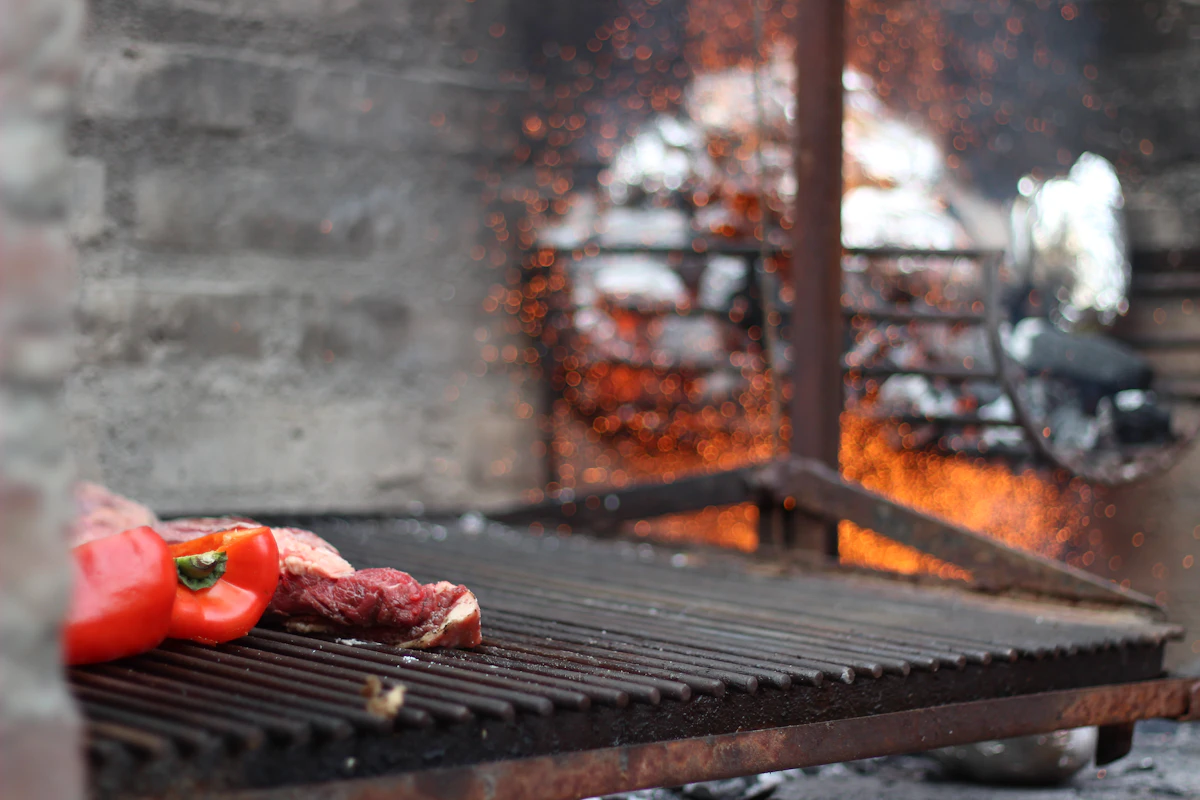
What separates genuinely great Argentine asadores from the imitations, in any city in the world, is what I'd call the liturgy. That word sounds dramatic, but it's the right one. There's a specific order to how the cuts arrive at the table. There's a timeline that isn't up for negotiation. There's a way of managing the fire that doesn't allow shortcuts. When a steakhouse breaks that rhythm to speed things up or to cater to local tastes, something important gets lost. The best places in Chamberí understand this completely.
What to Order (and What to Skip) at an Argentine Steakhouse in Madrid
Here's the thing: at a proper Argentine asador, you don't just order whatever sounds good on the menu. There's a logic to it, and following that logic is the difference between a good meal and a great one.
Cuts you absolutely need to try:
- Entraña (skirt steak). This is the cut that separates people who know from people who don't. It's cheaper than tenderloin, but when it's cooked right, it beats almost everything else on the menu in terms of flavor. In Madrid, expect to pay around $20-27 USD depending on the spot.
- Vacío (flank steak). Long, with that strip of fat on the side that you absolutely should not cut off, with a fibrous texture that needs real time over the coals. If your vacío shows up in under 20 minutes, something went wrong.
- Chorizo and morcilla as starters. This is not optional. These are your appetizers while you wait for the main cuts. Argentine morcilla is notably different from Spanish blood sausage. It's milder, more aromatic, with a different spice profile. Order it.
- Provoleta. Grilled provolone cheese with oregano and a little char on the outside. Usually runs about $8-12 USD. If it arrives cold in the middle, send it back. No hesitation.
What I'd skip: the bife de chorizo (ribeye-adjacent cut) if I'm not genuinely starving, because portions are massive and prices on premium cuts can push past $35 USD. The ojo de bife (eye of ribeye) I save for days when I'm eating without looking at the check.
Quick side note that's actually useful if you end up at a very traditional spot with Argentine staff: the first time I ordered "a bife" in Buenos Aires, the waiter nearly laughed. Because in Argentine slang, "un bife" on its own means "a slap." You need to specify: bife de chorizo, bife de costilla. In Madrid the menus are usually explained clearly, but worth knowing.
How Much Does an Argentine Steakhouse in Madrid Actually Cost in 2026
Real numbers, no sugarcoating. Budget between $28 and $62 USD per person with drinks.
Here's roughly how that breaks down:
| Item | Estimated Cost (USD) |
|---|---|
| Shared starter (chorizo + morcilla + provoleta) for two | $20-28 |
| Main cut per person | $20-36 |
| House wine by the glass | $4-7 |
| Decent bottle of Malbec | $22-34 |
| Dessert | $7-9 |
My honest average for a full dinner done right: around $45 USD per person. That's not cheap, but it's not unreasonable for central Madrid either, where a solid dinner at any decent restaurant rarely comes in under $33 USD per person anymore.
If you're trying to stretch your travel budget across multiple cities and want a sense of how Madrid stacks up against other European destinations, checking out guides to the most affordable European cities for 2026 gives you useful context for planning your food budget across a longer trip.
The Wine Is Half the Experience
I don't see enough travel writers making this point, and it's a real gap.
Ordering Spanish wine at an Argentine steakhouse is perfectly acceptable. But it's a little like listening to your favorite song through one earbud. A Malbec from Mendoza paired with entraña is a combination that has decades of history behind it. This isn't a marketing claim. These flavors were genuinely built for each other.
More and more Argentine asadores in Madrid are carrying actual imported wine lists from Argentina and Uruguay. Uruguayan Tannat with fattier cuts is a pairing that keeps popping up on these menus and is consistently underrated. I'd rather spend an extra $5-6 on a glass of something Rioplatense than play it safe with a Rioja, which is saying something because Spanish Rioja is genuinely excellent.
If you're curious about Spanish grapes that also pair beautifully with red meat, there are some fantastic Garnacha producers in the Gredos mountains outside Madrid that are worth learning about. But at an Argentine steakhouse, lean into the imported stuff at least once.
Is Chamberí Worth Going Out of Your Way For, or Are Other Neighborhoods Just as Good?
Fair question. Madrid has Argentine steakhouses scattered all over the city, and some spots in neighborhoods like Lavapiés, Malasaña, and the southern districts are genuinely solid. What Chamberí has is density and a long track record. When you have three or four legitimately good asadores within a few blocks of each other, real competition exists. The ones that aren't doing it right simply close. The neighborhood self-selects for quality.
Outside of Chamberí, the places I've tried in central Madrid tend to share one frustrating problem: they adapt the cuts for Spanish palates. The entraña comes out more cooked than it should be. The kitchen hedges on doneness "just in case." There's a visible nervousness about serving meat with a genuinely red center. At a good Chamberí asador, when you ask for medium rare, the waiter will ask if you're sure. That small moment of pushback is actually the right sign.
Honestly, sometimes I'm not entirely sure whether I'm going to these places because the food is exceptional or because they bring back something from the months I spent living around the Río de la Plata. Probably both. Either way, the recommendation holds.
If you're building a full Madrid itinerary and want to experience the neighborhood beyond just the restaurants, checking the local neighborhood festival guides for Madrid's summer events is worth doing. Some barrios organize street events with food stalls, and occasionally you'll stumble on a pop-up parrilla that's worth more than any restaurant meal.
Practical Tips Nobody Gives You Before You Walk In
Four things I learned the uncomfortable way:
- Make a reservation. Especially Thursday through Saturday nights. The good asadores in Chamberí fill up. Showing up without a reservation on a Friday at 9 PM means you're probably looking at an 11 PM table if you're lucky.
- Don't arrive starving. The parrilla operates on its own timeline. If you show up ravenous and start rushing the kitchen, the result suffers. Have a light snack beforehand if you're the impatient type.
- Talk through the doneness before you order. Argentine and Spanish cooks use the same words to mean different things. "A punto" in Argentina is not the same as "a punto" in Spain. Specifically say you want the center pink-red, or that you prefer it more cooked. Don't assume shared vocabulary.
- The dulce de leche dessert is a trap. A very good trap, but a trap. After a full starter and a complete main cut, the pancake with dulce de leche sounds like a great idea right up until it arrives. Split it with someone.
For travelers flying into Madrid for a weekend trip from elsewhere in Europe, keeping your packing minimal and organized makes the whole thing easier. Packing cubes and compression organizers make a real difference when you're doing a short city trip without checking a bag.
Madrid Has More Food Layers Than Most Visitors Ever See
The standard narrative of Madrid gastronomy focuses on cocido madrileño, calamari sandwiches, and jamón tapas. All of that is real and worth experiencing. But Madrid is fundamentally a city shaped by immigration, and that shows up in the food at the neighborhood level in ways that most tourist guides completely ignore.
Chamberí, Lavapiés, Tetuán: each has a distinct culinary identity built by communities that arrived and stayed. The Argentine steakhouse in Chamberí is not an ethnic novelty restaurant or a tourist curiosity. It's part of the actual fabric of the neighborhood. The people eating there on a Tuesday night are locals, second-generation Argentines, and yes, occasionally a traveler who followed the advice of a Buenos Aires cab driver.
The official Madrid tourism resources have information about neighborhood routes and cultural communities, but the honest truth is that the best local spots never appear in official guides. That's a universal law of travel that I haven't seen disproven yet.
For longer trips where you're moving between multiple European cities, having the right bag matters as much as the itinerary. A solid 50-liter tactical backpack that fits in overhead train compartments and distributes weight properly is the difference between arriving energized and arriving destroyed. Speaking of trains, traveling through Europe by rail in 2026 remains one of the best ways to move between capital cities if you know how to book ahead correctly.
An Honest Take That Goes Against the Food Guide Consensus
Most Madrid food guides and "best Argentine restaurants" roundups emphasize the premium cuts: eye of ribeye, tenderloin, chef's special cuts. I understand why. They photograph beautifully. They command high prices. They collect the four-star reviews.
But here's the reality: you measure the quality of an Argentine asador by the entraña or the vacío, not the tenderloin. Tenderloin is genuinely hard to ruin. Skirt steak, if it doesn't get the right time over the coals, if the fire wasn't managed properly, if the cook was rushing, turns into something chewy and deeply unsatisfying. Ordering entraña is the real test. If it arrives correctly, the rest of the kitchen is almost certainly in good shape too.
The other thing nobody mentions: the bread basket matters. A serious Argentine asador serves warm table bread, not the cold packaged stuff from an industrial bakery. It sounds minor. It isn't.
I don't have a definitive answer for which is objectively the single best Argentine steakhouse in Madrid in 2026. Rankings shift, chefs move around, owners open new spots. What I know is this: if you're in Chamberí on a Friday evening and you catch the smell of charcoal drifting out from a doorway, walk in and ask if they have a table. Sometimes that's genuinely all the planning you need.
Compartir artículo